User Experience Agencies: 7 Ways to Pick the Right One
By David Herskowitz, Founder and Creative Director
Seven checks for choosing a user experience agency, and four Splash websites. A website is from $15,000. Brand and website together is from $30,000.
Key takeaways
- Pick by the job, the problem in the case study, the research they can show, a test before the build, and whether they design only or also build.
- Score every firm on the same checks. A directory listing is a way to start a list, not a decision.
- At Splash Creative, brand identity is from $15,000, a website is from $15,000, and brand and website together is from $30,000. A Shopify store is from about $20,000. Ongoing partnerships are from $2,500/month.
- Splash Creative does not publish a week count for a website. A focused identity takes 4 to 6 weeks. Full brand strategy and identity takes 8 to 12 weeks.
- The four projects are Alias Intelligence, SwiftHealth, Eurotech, and CoverWhale. Each note stays inside that case study.
Web design
Your website should reflect how the business works.
We design and build websites that help people understand your offer, find the information that matters, and take a considered next step. Brand, content, user experience, and development inform each other.
Websites from $15,000.
By David Herskowitz, Founder and Creative Director, Splash Creative. November 22, 2026.
To pick a user experience agency, write the job down first, then test every candidate on the same evidence. Read case studies for the problem they solved, ask to see the research, confirm how a design is tested before anyone builds it, and decide whether you need design only or design and build. A website is from $15,000. Brand identity is from $15,000. Brand and website together is from $30,000. Those are starting points. The proposal sets the fee.
The four projects later in this article are published Splash Creative websites. Each note stays inside that case study. This article does not add a traffic, conversion, or sales figure.
Define the job before you name an agency
An agency that is strong at early concept work can be the wrong fit for a live product with years of usage data. The reverse is also true. Write the job before you collect names.
Three stages cover most briefs:
- Early concept. You have an idea or a rough prototype and need research, structure, and a first design direction. Look for a team that can test an assumption before anything is built.
- Live product. You have users, and something is underperforming. Look for a team that starts from how people already use the product.
- Redesign. You are replacing an existing experience. Look for a team that can say what to keep, what to change, and how people will move from the old version to the new one. What to settle before a redesign is the longer pass at that decision.
Then add the constraints of the industry. A fintech product, a healthcare portal, and a consumer store do not share the same rules for data, trust, or compliance. Ask for published work inside those limits.
Grand View Research's UX services market report says the large-enterprise segment accounted for over 65.0% of market revenue in 2025. That figure is a share of spending, not a list of which studios will take a smaller account. Use it as a reason to ask whether the published work matches your stage and your scale.
Finish with one paragraph: the stage, the industry, the problem, and what a useful outcome looks like. Every later step measures a candidate against it.
Web design is the practice of shaping a site around the offer and the next step. Website design and development is the engagement: structure, content, design, development, and the integrations the proposal names. Branding is the wider practice when the position and the site are one scope.
Read the portfolio for the problem
A portfolio of polished screens shows that a team can make things look considered. It does not show that the work solved anything. Read each case study as the story of a problem, and check that the story is actually there.
For each project, look for four things: the problem the client faced, what the team did, what changed afterward, and which part the team owned. A strong page answers all four in plain language. A weak one shows mockups and adjectives.
Use this as a red-flag list:
- No stated problem. The page opens on the finished design. If you cannot tell what was wrong, you cannot tell what was fixed.
- No outcome the page will stand behind. There is no before and after, and no qualitative result from users or the client. Do not treat a missing number as a failure when the page never claimed one. Treat a page that implies a result it does not state as a reason to ask.
- Screens only. You see interfaces and no process: no flows, no research notes, no decision explained.
- Unclear role. The page says the team "worked on" a product and does not say what it owned. Ask what they designed, what they advised on, and what someone else handled.
- No users in the story. If the people who use the product never appear, the design may rest on assumptions.
- Every project looks the same. A uniform style across very different clients can mean the team applied a template.
One missing item is not automatic grounds to walk away. Clients often limit what a studio can publish. A pattern is different. If most of the work fails most of the checks, treat the portfolio as marketing.
When a public page is thin, ask about the project directly. A team that did the work can talk through the problem, the constraints, and the result.
Ask to see the research
An agency that does research has documents, recordings, and findings. An agency that only claims to do research has a process slide. Ask to see the artifacts, anonymized if the client work is confidential.
Ask for these:
- A research plan. It should state the questions, the method, who was recruited, and why.
- An interview guide or a test script. Look for open questions, not leading ones.
- A synthesis document. This shows how raw notes became themes, such as an affinity map or a journey map.
- Usability findings. Look for a specific problem on a specific screen, with a severity and a recommended fix.
Then read what you receive. "Users want a cleaner interface" is an opinion. "Six of eight participants could not find the shipping options" is evidence. Check that a recommendation traces back to something a participant did or said.
A Forrester Consulting study commissioned by UserTesting (August 2025) reports a 415% ROI for the composite organization in that study, along with a payback period of less than six months. The page is about UserTesting's own product, and the study was commissioned by the vendor. Read it as a description of that study, not as a return you should expect from hiring an agency. It still supports a simpler point: ask for research before design, not only after launch.
If a firm will not show any research material, even redacted, that is part of the answer. If it hands over a polished deck and nothing underneath, ask to speak with the person who ran the sessions.
Ask how a design is tested before it is built
Validation is how a team knows a design works before you pay to build it. Ask exactly how they test, with whom, and what happens when a test fails.
The answers you want are specific. They test a prototype with people from your audience, not with colleagues. They define a success metric up front, such as task completion or time to a defined step, so "it tested well" has a meaning. They plan time to revise after the test, not only time to run it.
Press on three points:
- Method. Moderated sessions, unmoderated tests, and a test on a live site answer different questions. A good team can say which one fits your stage.
- Participants. Ask how they recruit and how many. The people in the test should match your customers.
- A failed test. Ask what happened on a past project when testing contradicted the design. The story tells you whether a test changes the work or only decorates it.
Get the plan in writing, with the metric, before the handoff date is set.
Choose design-only or design and build
A design-only team delivers research, flows, and screens, then hands them to your developers or to another vendor. A design-and-build team carries the work through to a working product. The difference matters because a design decision is easy to lose at the handoff.
Design-only fits when you have an engineering team that wants specs and a clear system, and you want to keep the build. The risk sits at the seam. Developers can read a static screen differently from the way it was meant, and nobody owns the gap.
Design and build fits a team without a dedicated engineering bench, or anyone who wants one party accountable for the live result. You then rely on that vendor's technical judgment, so ask to see work that was built, not only work that was drawn.
Splash Creative is a founder-led studio in Englewood, New Jersey. David Herskowitz leads the work, with a consistent senior team from the first conversation through the work that follows. The studio proposes the work around the business need, with scope, timing, and fee explained before kickoff. How we work is that sequence.
If the project is a store, the build is part of the experience. Ecommerce design covers Shopify and ecommerce work, where the product page and the checkout are the path a buyer actually takes. A team that designs and builds the same checkout can walk you through both. Shopify is the store practice.
Whichever model you choose, ask who is accountable for the experience once it ships.
Seven checks, side by side
Use the same six questions on every firm, then add the fee. A shortlist of three to five is enough. More names make it harder to hold the standard.
| Check | What a useful answer includes | Weak answer |
|---|---|---|
| 1. The job | Published work at your stage, inside your constraints | "We work with everyone" |
| 2. The case study | The problem, what they did, what changed, and what they owned | Screens and adjectives |
| 3. Research | A plan, a guide or script, synthesis, and findings tied to screens | A process slide and no notes |
| 4. A test before the build | The method, the participants, the metric, and a revision after a failed test | "It tested well" |
| 5. Design only, or design and build | A named owner for the live experience | A handoff with nobody accountable |
| 6. The fee | A written scope, what each phase produces, and what a change costs | A number before anyone asks about the product |
| 7. The same score | Every firm marked on the same scale | A favorite from the pitch |
What the work costs
Cost follows scope, so expect a range and then a written proposal. Be wary of a quote that arrives before anyone asks about the product.
Splash Creative is at 34 S Dean St, Suite 206, Englewood, NJ 07631. There is no New York City office. The studio serves New York City from Englewood, and it works with remote clients in the US and worldwide.
Project work is a fixed scope and a fixed fee, agreed in writing before the work starts. There is no hourly billing on project work. These are starting points. The proposal sets the fee for the scope.
| Scope | Starting point | Timing |
|---|---|---|
| Website | from $15,000 | Set in the written proposal |
| Brand identity | from $15,000 | A focused identity takes 4 to 6 weeks. Full brand strategy and identity takes 8 to 12 weeks. |
| Brand and website | from $30,000 | The website schedule is set in the written proposal |
| Shopify store | from about $20,000 | Set in the written proposal |
| Ongoing partnership | from $2,500/month | Set in the written agreement |
Pricing is where those starting points are explained. What a website costs is the longer page on why website quotes vary. What a Shopify store costs uses the same Shopify floor. Brand identity is the identity engagement on its own. Branding is the wider practice when the position and the site are one scope.
Splash Creative does not publish a week count for a website. The schedule depends on the page list, the research, and how fast approvals come back. When the engagement also includes brand identity, a focused identity takes 4 to 6 weeks. Full brand strategy and identity takes 8 to 12 weeks. How long a brand identity takes walks those phases. The website phase stays in the proposal.
A site on its own uses the website floor, from $15,000, when the identity is already settled. Brand and website together, from $30,000, is the scope when the identity is open and the site is how people will meet the company. A store uses the Shopify floor, from about $20,000. If you want to talk through which of those fits, book a call and say what you are working on.
In Setup's 2025 Marketing Relationship Survey, dissatisfaction with value and dissatisfaction with delivery were each cited by 61% of clients among the reasons they ended an agency relationship. The survey is about marketing agency relationships, not UX work alone, and the 2025 edition drew about 100 responses from agencies and brands. Read it as a reason to ask what each phase produces and what you can use if you stop after it. A low fee with a vague scope is where a value dispute starts.
Shortlist three to five, then use the same checks
Directories and referrals are a way to build a list. They are not a verdict. A listing is not a certification. Take three to five names, including at least one that is not the firm you already like, and run every one through the table above.
Score each firm on the same scale:
- Does the stage and the industry match the brief?
- Do the case studies show a problem, the work, and an outcome the page will stand behind?
- Can they show research artifacts?
- Do they test with the right people before the build?
- Is the model, design-only or design and build, right for your team?
- Is the fee tied to a scope you can follow?
An in-house team knows the product and stays close to daily decisions. An agency brings range and can start on a defined scope. This page does not publish a cost comparison between the two, because a dependable one would have to hold the scope constant. Decide on fit, on how often you need the help, and on who will still own the work after launch.
Websites from Splash Creative
The checks above are questions for any agency. The projects below are websites Splash Creative has published. Our work is the full set. Web design and development projects is the archive. Custom site design is the service tag. Each note stays inside the case study. None of these case studies states a conversion rate, and this article does not add one.
Alias Intelligence
Alias Intelligence provides due diligence, background screening, and investigative services. The case study says the website suggested innovation but did not explain the services or their value clearly enough.
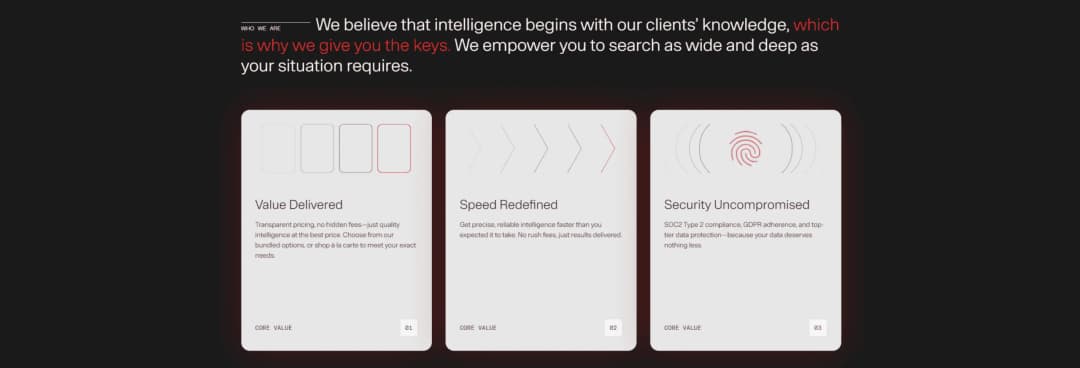
The published scope is copywriting, content structure, and website design. The page says the content was rewritten around practical benefits and organized around how clients evaluate investigative services. Restrained design, clear hierarchy, and early credentials support that explanation. The case study says the result is a more direct introduction to the business and a clearer structure for evaluating the services. It does not report a lead or revenue figure, and this article does not add one.
SwiftHealth
SwiftHealth is a concierge healthcare offer. The case study says Swift Health brings services into customers' homes and online, across several service types, so information structure is part of the design problem. The question on the page is how a visitor could understand the options and find the next step without losing the sense of care and professionalism.
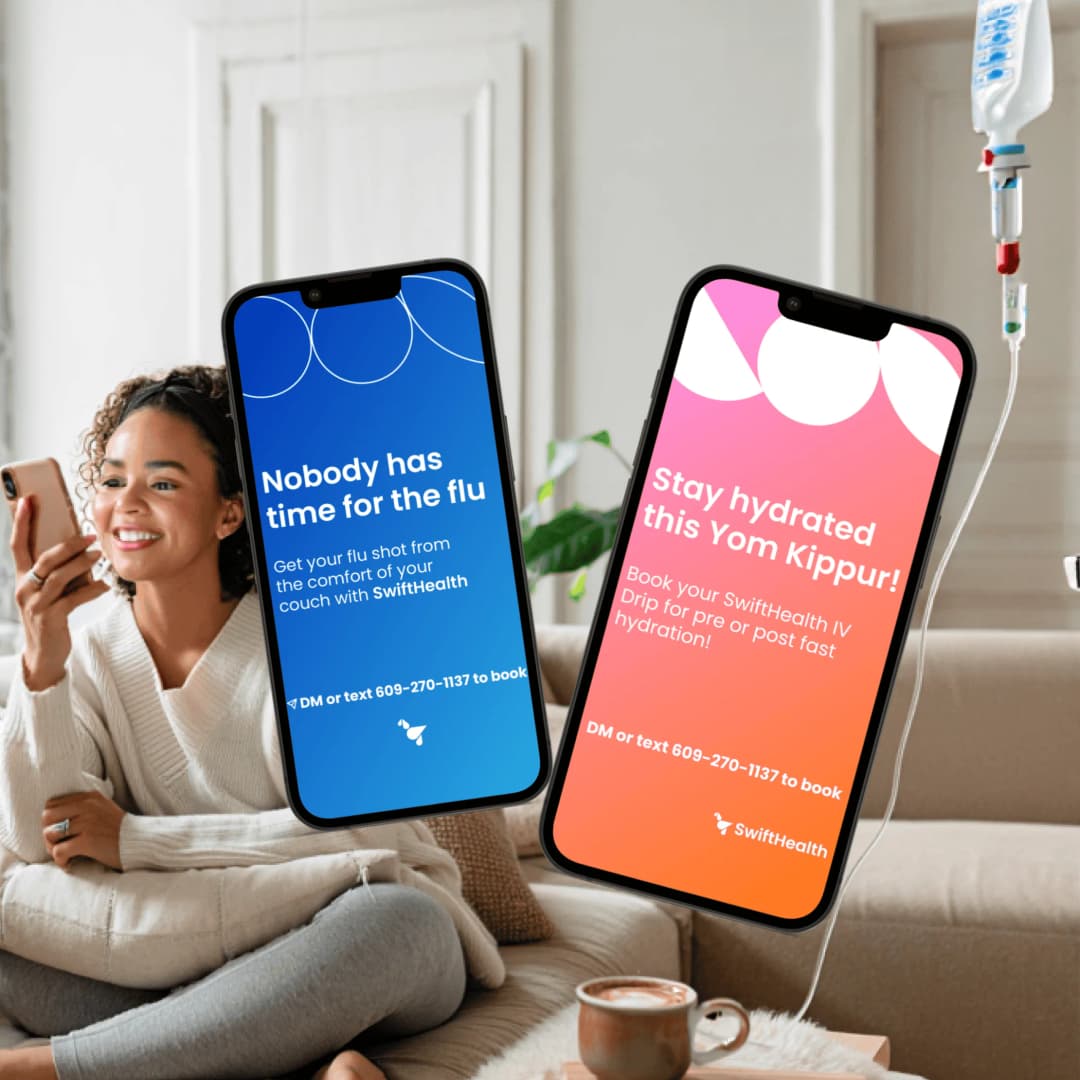
The published scope is identity, messaging, copywriting, and website design. The page says brand messaging, identity, and website structure were connected around a straightforward introduction. Pages organize information around the services and the questions visitors bring. A clear service menu gives options, descriptions, and booking routes a consistent structure. The visual language balances a clinical feel with an approachable tone. The case study says the brand and website provide a coherent way to explain the offer and navigate the services. It does not report a booking figure, and this article does not add one.
Eurotech
Eurotech has designed ergonomic office seating for more than four decades, from task chairs to executive, conference, and specialty seating. The case study says a large catalog is easy to appreciate in a showroom and can look like rows of similar chairs online. The question on the page is how a buyer could find the right chair, and see why it is worth the price, without being a furniture expert.
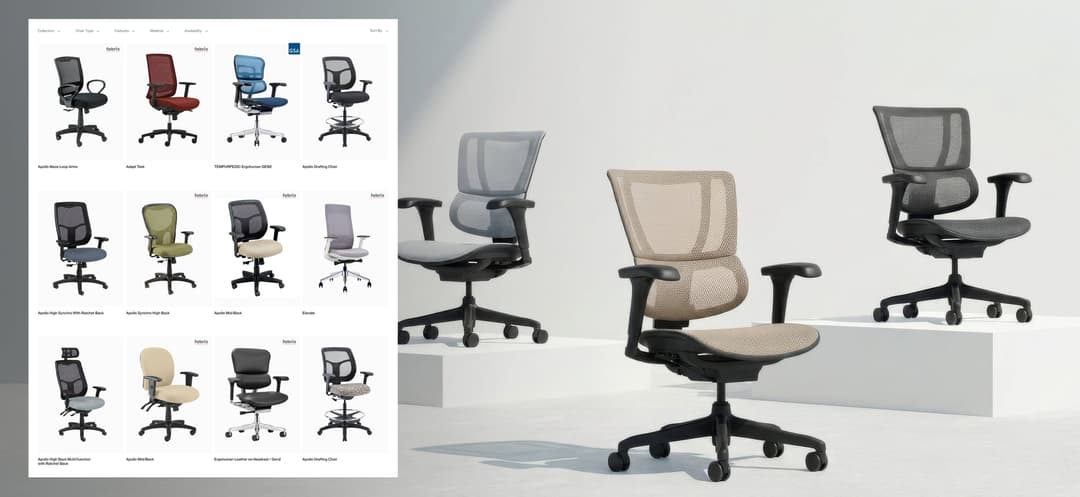
The published scope is website design and sales presentations. The page says the site was designed around how people shop for seating. Buyers filter by collection, chair type, features, and material, then compare models. Flagship chairs get a features page that shows each adjustment in motion, and a configurator lets buyers build their own. Sales presentations for commercial partners use the same visual language. The case study says the site turns a deep catalog into a clear route to the right chair, and the sales materials carry the same story into commercial conversations. It does not report a sales figure, and this article does not add one.
CoverWhale
CoverWhale uses data and technology to help streamline trucking insurance. The case study says the brand and website needed to make that offer understandable to people looking for practical answers. The question on the page is how the identity and the digital experience could communicate speed and reliability without adding more language and complexity.
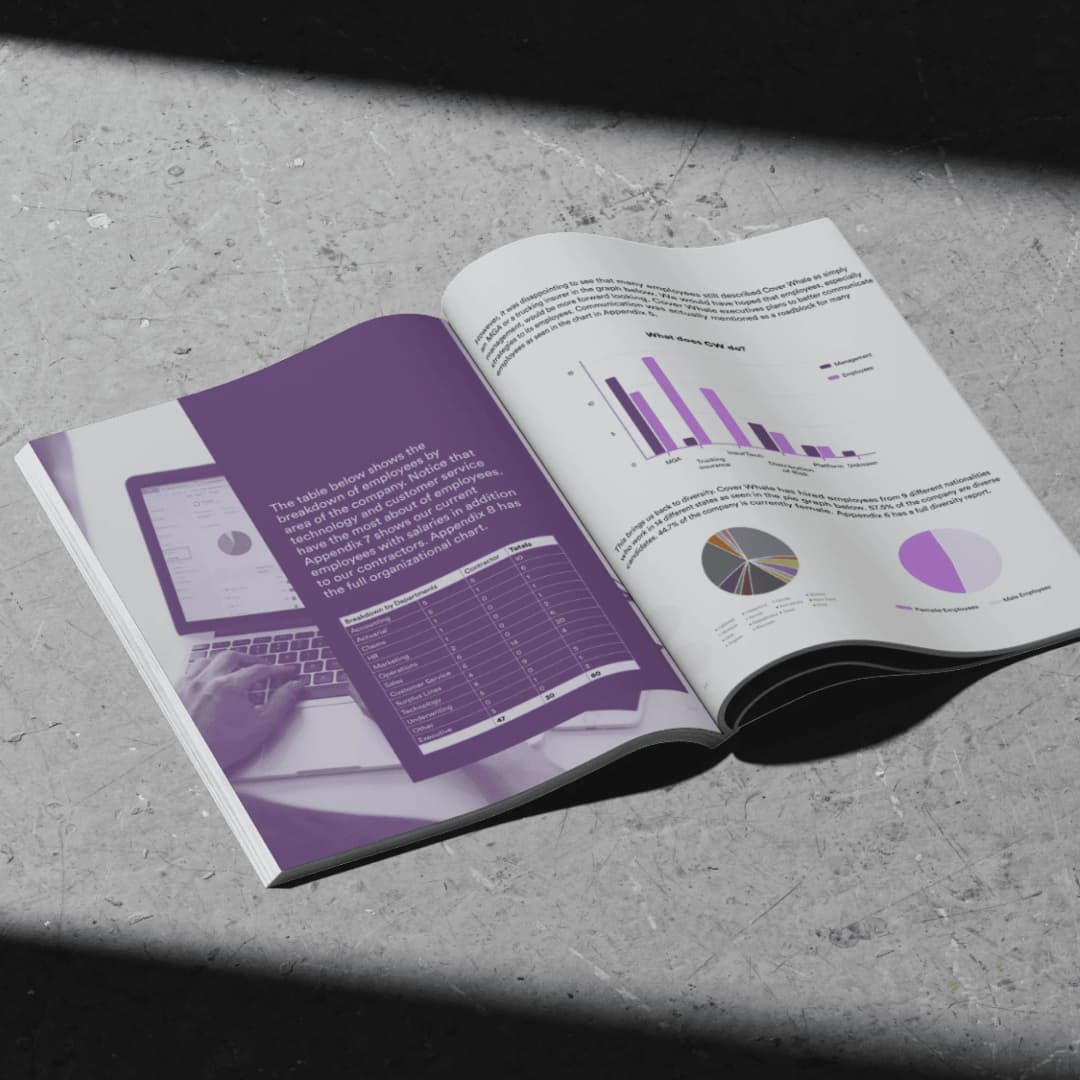
The published scope is brand identity, copywriting, and website design. The page says the brand and website were developed around one direction: make the offer clear and the next step easy to find. The copy prioritizes what the business does and what a visitor needs to know. Page structure and restrained hierarchy carry that explanation from the identity into the site. The case study says the work establishes a clearer introduction and more direct routes into the information visitors need. It does not report a conversion figure, and this article does not add one.
Frequently asked questions
What is the average cost of a UX redesign?
There is no single average that fits every scope. At Splash Creative, a website is from $15,000. Brand identity is from $15,000. Brand and website together is from $30,000. A Shopify store is from about $20,000. Ongoing partnerships are from $2,500/month. These are starting points. The proposal sets the fee for the scope. The same figures are on pricing.
How can I tell if an agency actually does UX research?
Ask for a research plan, an interview guide or test script, a synthesis document, and usability findings, anonymized if the client work is confidential. Useful findings name a specific problem on a specific screen. A polished deck with no underlying notes is a reason to ask who ran the sessions.
Should I hire a UX agency or build an in-house team?
Use the team you have when the work is ongoing and the skills are already in the building. Use an agency when you need research, design, and sometimes a build, on a defined scope, and then the load drops. Compare fit and how often you need the help. This page does not publish a cost comparison between the two.
How long does a UX agency project usually take?
The website schedule is the one in the written proposal. It depends on the page list, the research, and how fast approvals come back. Splash Creative does not publish a week count for a website. When the engagement also includes brand identity, a focused identity takes 4 to 6 weeks. Full brand strategy and identity takes 8 to 12 weeks. How long a brand identity takes walks those phases.
Are agency directories a reliable way to choose a UX partner?
They are a way to build a list. A listing is not a decision. Run each name through the same checks: stage and industry, case studies that state a problem, research you can see, a test plan before the build, the right delivery model, and a fee you can follow.
What should a case study show before I hire?
The client, the problem, and what was made, on a page you can open. A measured result counts only when that page already states it. Alias Intelligence, SwiftHealth, Eurotech, and CoverWhale are four published Splash Creative projects. This article does not add an outcome.
Have a related question?
Tell us what you're working on. We'll help determine whether there is a useful project to explore.
“Splash delivers powerful brand ID, slick websites and UX, beautiful graphic design, and intelligent software solutions. Great team, great experience, great creative partners.”