Web Design for Construction Companies: Ideas That Win Bids
By David Herskowitz, Founder and Creative Director
Features for a construction website that supports a bid: named projects, credentials, a phone path, and a short estimate form. A website is from $15,000.
Key takeaways
- This page is the feature list for a construction website that has to support a bid. The public homepage roundup is a separate article.
- The seven features are named projects, credentials beside the inquiry, a phone number that dials, one path per market, a short estimate request, a project page someone can forward, and a sales deck that matches the site.
- At Splash Creative, brand identity is from $15,000, a website is from $15,000, and brand and website together is from $30,000. A Shopify store is from about $20,000. Ongoing partnerships are from $2,500/month.
- The four projects are Cross Country Installations and Service, Agus Holdings, Eurotech, and Everest Marble. Each note stays inside that case study.
Web design
Your website should reflect how the business works.
We design and build websites that help people understand your offer, find the information that matters, and take a considered next step. Brand, content, user experience, and development inform each other.
Websites from $15,000.
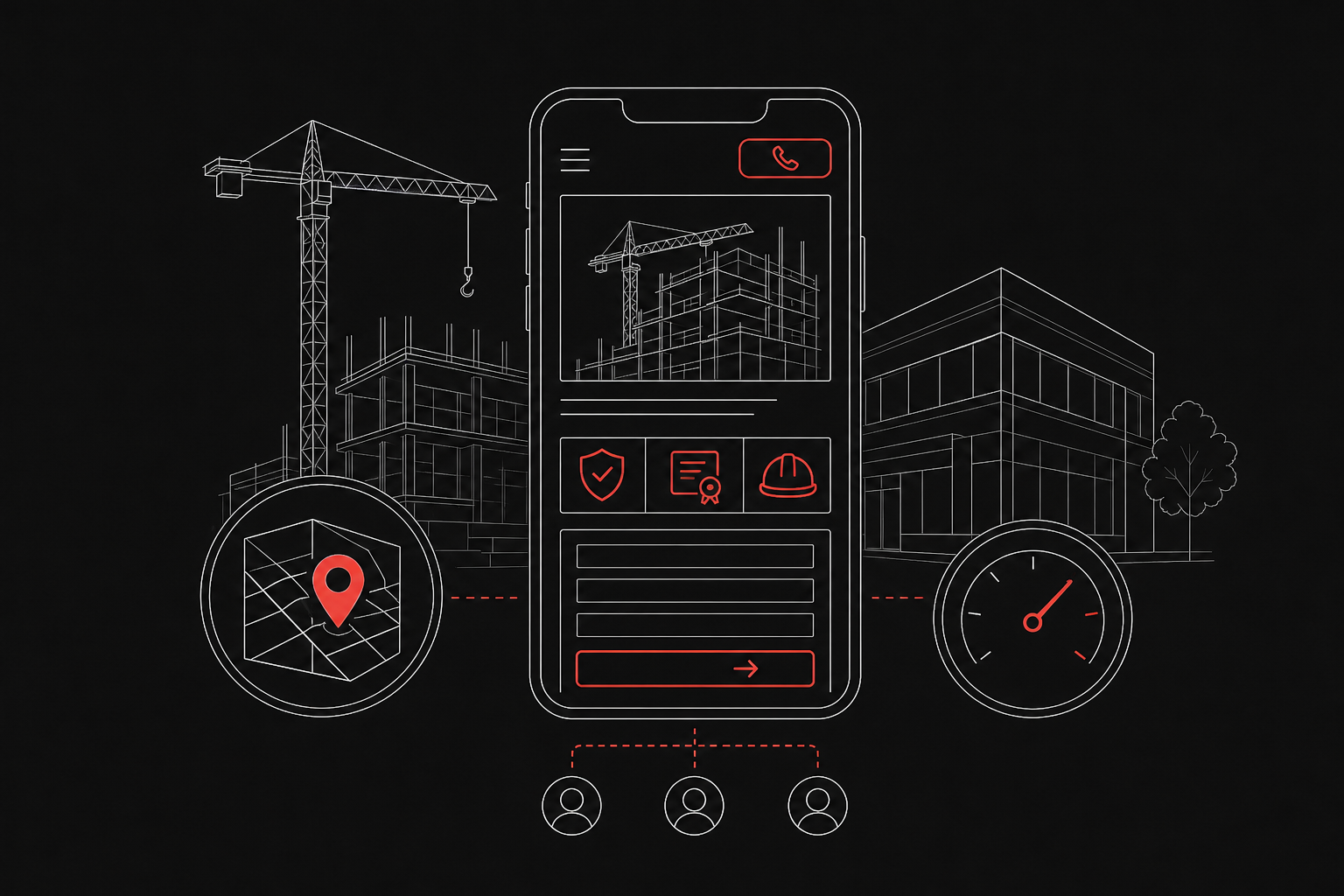
By David Herskowitz, Founder and Creative Director, Splash Creative. November 19, 2026.
A construction website supports a bid when someone comparing firms can see the work, the credentials, and a way to ask, without hunting for them. Brand identity is from $15,000. A website is from $15,000. Brand and website together is from $30,000. Those are starting points. The proposal sets the fee.
This page is the feature list. Websites for building construction: 7 examples is the roundup of public homepages, and it also walks four Splash Creative projects, including a pre-construction residential site. Read that page to see how those homepages are organized. Stay here for the decisions that make a bid easier to judge.
A different job from the example roundup
The example roundup is a reading list of public homepages. This page is the set of features to put on your own site so a person with a bid in front of them can decide. Use the roundup when you want to see how other companies label projects and markets. Use this page when you are deciding what to build.
Web design is the practice of shaping the site around the offer and the next step. Website design and development is the engagement: structure, content, custom design, development, and the integrations the proposal names. Branding for construction companies in New Jersey is the companion note when the identity is part of the same problem.
Seven features that support a bid
These are the parts a buyer uses while comparing firms. Use the proof you actually have. Leave off any license, award, or project you cannot stand behind.
| Feature | What the buyer is judging | Where it goes |
|---|---|---|
| Named projects | Whether you have done this kind of work, in a place they recognize | Homepage and a project page |
| Credentials | Whether the firm is allowed to do the job | Beside the inquiry |
| A phone number that dials | Whether they can reach you from a phone | The first screen, on every page |
| One path per market | Whether you do their kind of work | The homepage, as separate entries |
| A short estimate request | Whether asking is easier than starting over | The service page and the project page |
| A page someone can forward | Whether a colleague can review the job without a call | The project page |
| A deck that matches the site | Whether the meeting and the website agree | The site and the sales materials |
Named projects, with a place and a type of work
"Kitchen addition, Montclair" tells a buyer more than "Project 14." A project page should name the kind of work and the town or city, then add a short description and a few photographs. An untitled photo does not tell someone whether you have done their kind of job.
Credentials beside the inquiry
Licenses, insurance, and safety credentials belong next to the ask, on the homepage and on the project page. A PDF on an About page is easy to miss during a comparison. Publish the credentials you can stand behind.
A phone number that dials
A buyer may open the page on a phone, on a site or in a truck. Put the phone number on the first screen of every page, and make it dial on touch. Read that screen on a phone before launch. The first screen should still show the work, the number, and the start of the estimate request. This article does not publish a load-time number.
One path per market or service
A visitor with a hospital renovation and a visitor with a home addition are making different decisions. Give each market or service you actually perform its own entry, with the projects that match it. One long scroll of mixed work asks the buyer to sort the portfolio.
A short estimate request
The form should collect what someone needs in order to call back: a name, a way to reply, the type of project, and the location. Keep the phone number visible next to the form, so a person who would rather talk can do that instead.
A project page someone can forward
Owners and procurement teams pass a link to a colleague. The page should make sense without a phone call: the scope, the place, the photographs, and the next step. Detail that lives only in a sales deck never reaches the colleague who was not in the meeting.
A sales deck that matches the site
The leave-behind and the website should make the same case, in the same visual language, with the same facts. Two introductions force the buyer to decide which one is current.
Put the features in this order
Build the site in the order a buyer evaluates you. What you do, where you have done it, why they should believe you, and how to reach you.
- Name the work and the buyer. A stranger should understand the trade in the first screen. "Custom home builder for families in Bergen County" is a headline. "Quality you can trust" is a slogan. Web design in Bergen County is the local page for companies in that county. The headline example is wording, not a claim about a client.
- Label projects so they can be forwarded. Add the kind of work, the town or city, a sentence on the scope, and two or three photographs.
- Put credentials next to the inquiry. Licensing, insurance, and safety credentials belong on the homepage and beside the ask. Use the proof you actually have.
- Make the phone path work on a phone. Keep the menu to what a buyer needs, put the number on the first screen, and make it dial on touch.
- Keep the estimate request short. A service page and a project page should each lead to that form or to a call.
- Match the site and the sales materials. The deck used in the meeting should carry the same facts as the page the buyer opens later.
Keep the business name, address, and phone number the same on the site and on your Google Business Profile.
After launch, see which pages draw inquiries and tighten the ones that do not. A shorter form, or a project label that names the town, is a change you can check. This article does not publish a conversion rate for that change.
Projects from Splash Creative
The features above are a checklist. The projects below are websites Splash Creative has designed for an installation company, a developer, a seating manufacturer, and a stone supplier. Web design and development projects is the archive. Custom site design is the service tag. Our work is the full set. Each note stays inside the case study. None of these pages states a bid win rate, a lead count, or a sales figure, and this article does not add one.
Agus Holdings, Cross Country Installations and Service, and Everest Marble also appear in the example roundup. The notes here stay with the design decision. Eurotech is the project that roundup does not include. 1511 Ocean Terrace, the pre-construction residential site, is covered there.
Cross Country Installations and Service
Cross Country Installations and Service deploys sanitation and facility equipment nationwide. The decision this site shows is evidence a procurement team can find: the site is organized around operational capabilities, experience, and the client roster, and the copy addresses the person evaluating a partner for a wider rollout.
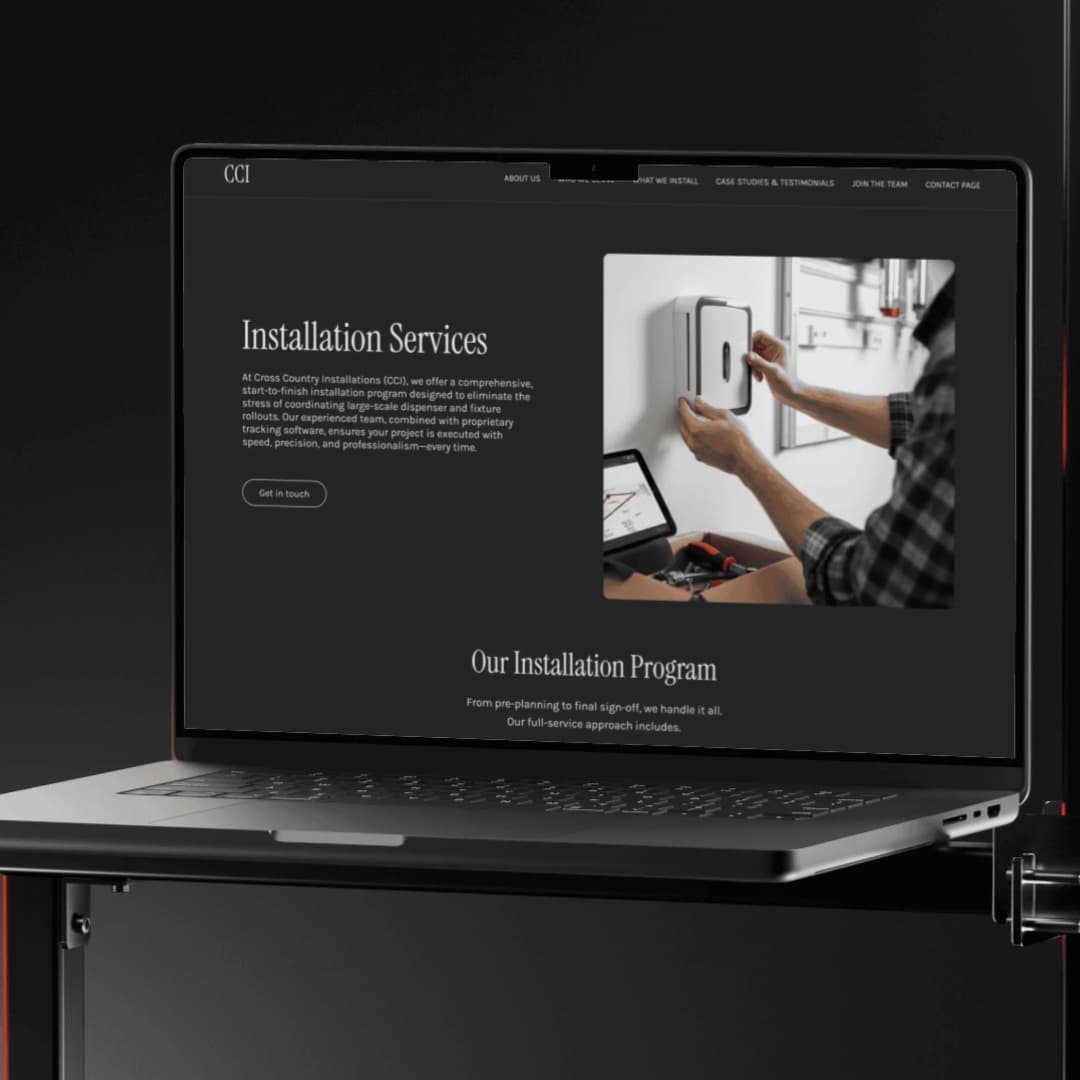
The case study says the website needed to communicate the scale and experience of the operation to procurement teams and facility managers. The published scope is website design and copywriting. It says the website gives that experience a clear structure and makes the evidence easier for prospective clients to find. It does not report a win rate, and this article does not add one.
Agus Holdings
Agus Holdings is a family-run real estate investment and development firm focused on retail and mixed-use properties. The decision this site shows is a portfolio a visitor can enter by scale, geography, and focus.
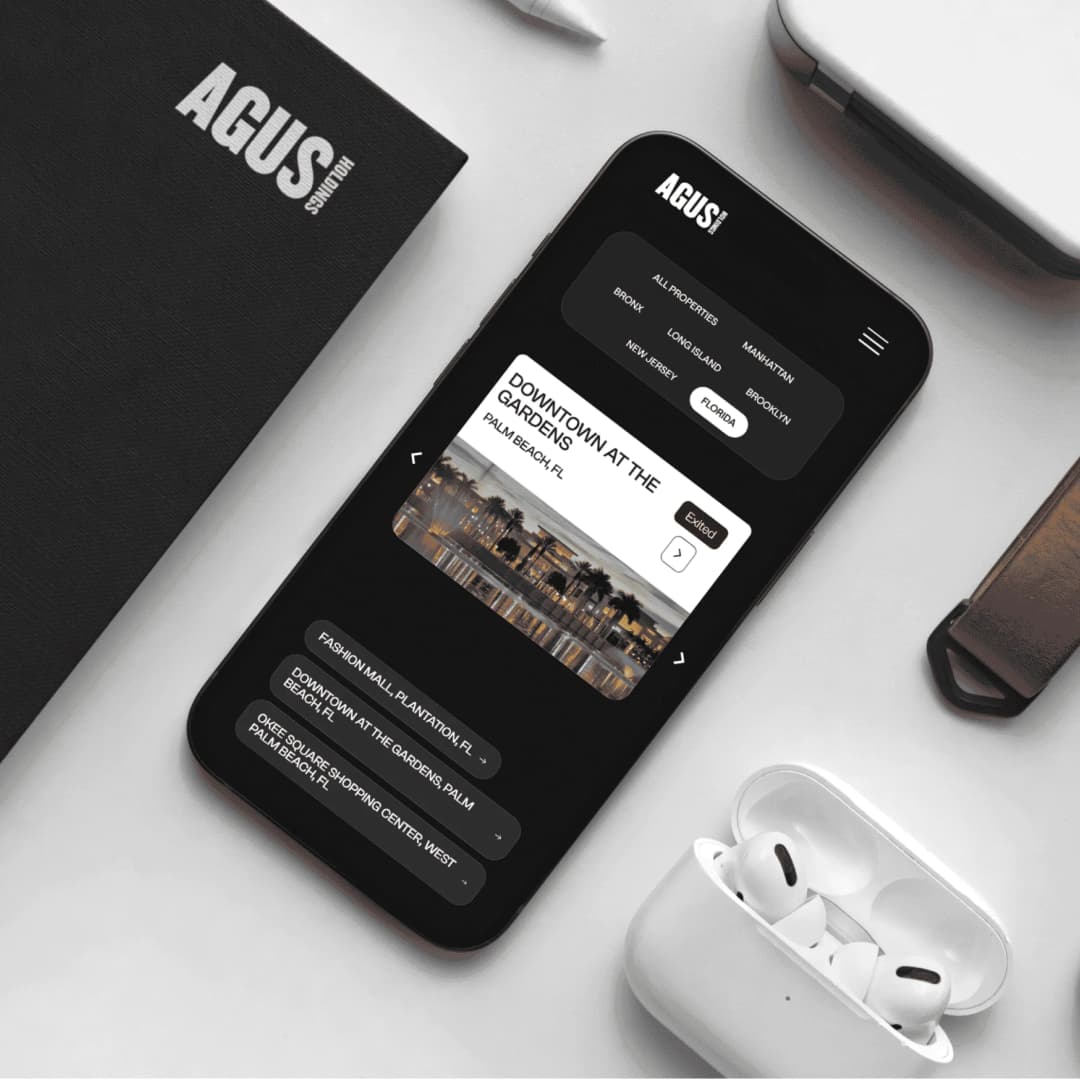
The case study says the existing uninterrupted scroll gave visitors little help understanding the portfolio's scale, geography, or focus. The portfolio was reorganized and the navigation was redesigned around those distinctions, with messaging and asset information working together. It says visitors have a structured way to explore the holdings and understand individual properties in context. The published scope is website structure, messaging, and design. The case study does not report a traffic or inquiry figure, and this article does not add one.
Eurotech
Eurotech has designed ergonomic office seating for more than four decades, from task chairs to executive, conference, and specialty seating. The useful decision for a contractor or a supplier is the specification path. A buyer who is not a specialist can narrow a large catalog, and the sales materials make the same case as the site.
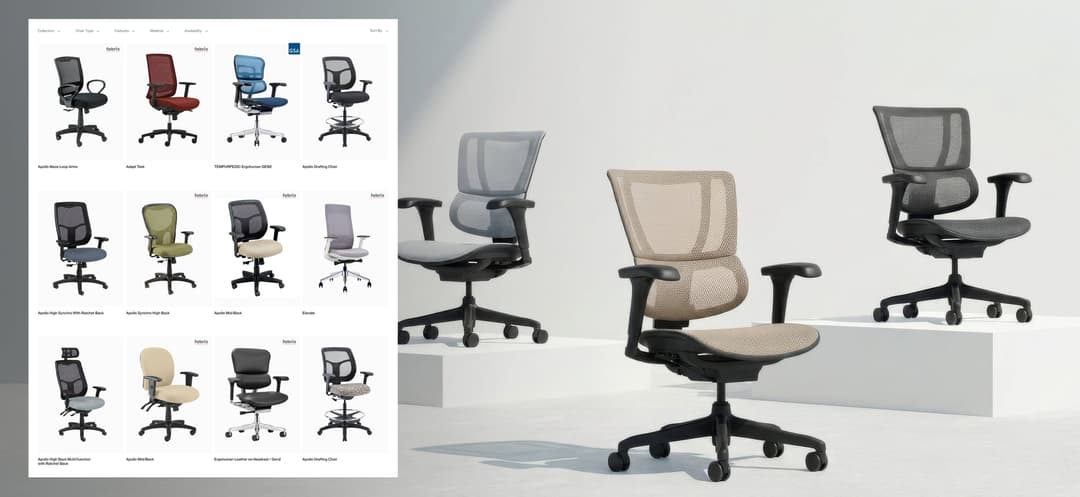
The case study says a large catalog of well-engineered chairs is easy to appreciate in a showroom and can look like rows of similar chairs online. The question on the case study is how a buyer could find the right chair, and see why it is worth the price, without being a furniture expert. Buyers filter by collection, chair type, features, and material, then compare models. Flagship chairs get a features page that shows each adjustment in motion, and a configurator lets buyers build their own. Sales presentations for Eurotech's commercial partners use the same visual language, so the brand makes the same case in a meeting as it does online. The published scope is website design and sales presentations. The case study does not report a sales figure, and this article does not add one.
Everest Marble
Everest Marble supplies natural stone and other surface materials to designers, contractors, and homeowners. The decision this site shows is a catalog a specifier can browse, compare, and carry into a client conversation.
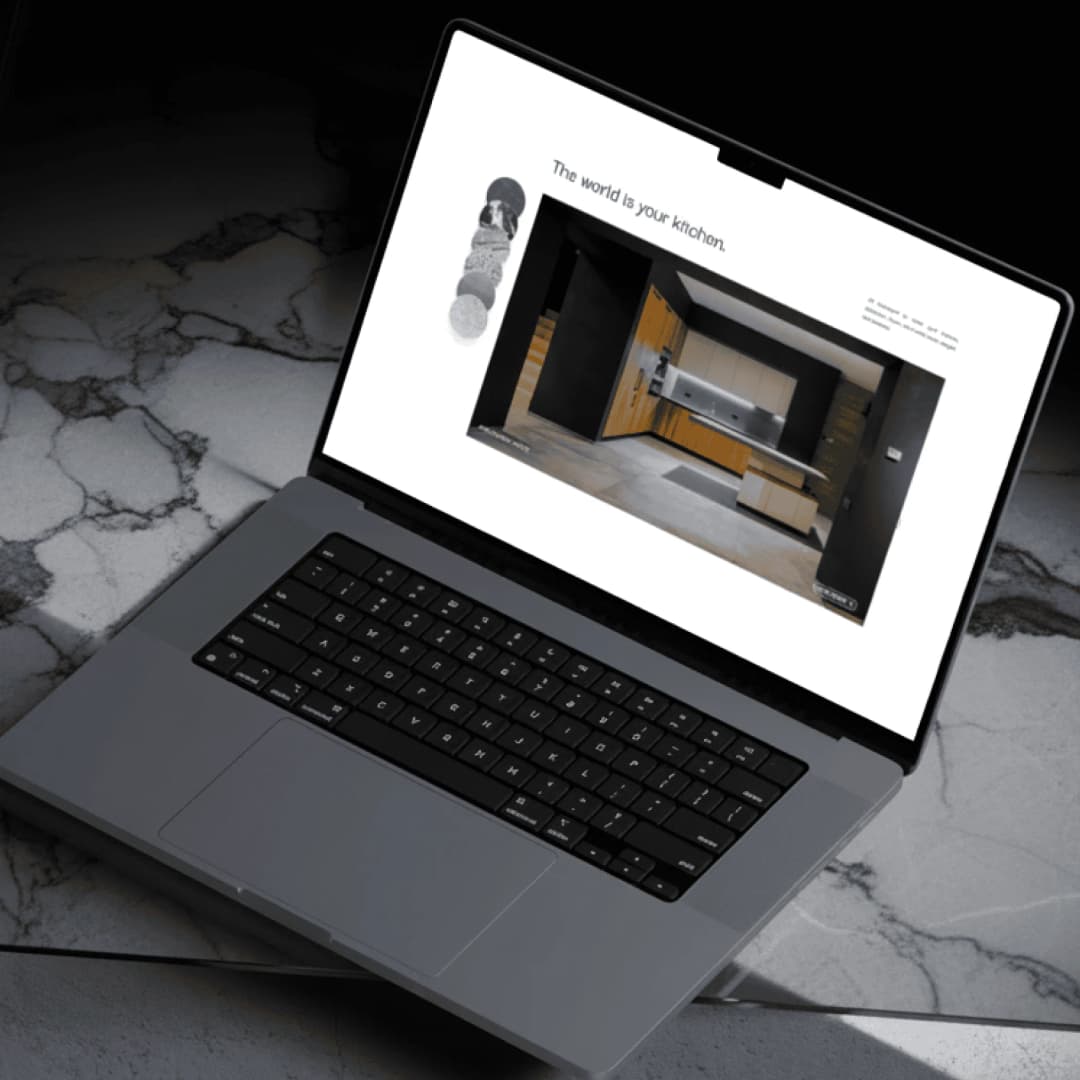
The case study says visitors needed a better way to browse the inventory and share options with clients. The inventory is organized around browsing and comparison, with downloadable tearsheets for individual products. A restrained design keeps attention on the materials. The published scope is website design, catalog structure, and product tearsheets. It says the site supports both discovery and the practical task of taking a product into a client conversation. The case study does not report a sales figure, and this article does not add one.
What the work costs
Splash Creative is a branding and web design agency at 34 S Dean St, Suite 206, Englewood, NJ 07631. There is no New York City office. David Herskowitz leads the work, with a consistent senior team from the first conversation through the work that follows. The studio serves New York City and Northern New Jersey, and remote clients in the US and worldwide.
Project work is a fixed scope and a fixed fee, agreed in writing before the work starts. These are starting points. The proposal sets the fee for the scope.
| Scope | Starting point | Timing |
|---|---|---|
| Brand identity | from $15,000 | A focused identity takes 4 to 6 weeks. Full brand strategy and identity takes 8 to 12 weeks. |
| Website | from $15,000 | Set in the written proposal |
| Brand and website | from $30,000 | The website schedule is set in the written proposal |
| Shopify store | from about $20,000 | Set in the written proposal |
| Ongoing partnership | from $2,500/month | Set in the written agreement |
Pricing is where those starting points are explained. What a website costs is the longer page on why website quotes vary. Brand identity is the identity engagement on its own. Branding is the wider practice when the position and the site are one scope. How we work is the sequence: understand the business, put the scope and the fee in writing, agree the direction, then make the work.
A construction company website uses the website floor, from $15,000, when the identity is already settled. Brand and website together, from $30,000, is the scope when the identity is open and the site is how people will meet the firm. Brand identity on its own is from $15,000. Splash Creative does not publish a week count for a website. When the engagement also includes brand identity, a focused identity takes 4 to 6 weeks, and full brand strategy and identity takes 8 to 12 weeks. How long a brand identity takes walks those phases. If you want to talk through a build, book a call and tell us what you are working on.
Frequently asked questions
What should a construction website include before a bid?
Named projects with a place and a type of work, the credentials you can stand behind, a phone number that dials from the first screen, a separate path for each market you actually serve, and a short estimate request. A project page should make sense when someone forwards it. The sales deck should match the site.
Where should licenses and insurance appear?
Beside the inquiry, on the homepage and on project pages, not only in a PDF on an About page. Publish the credentials you can stand behind. If you do not have a given certificate, leave it off.
Should the phone number be on the first screen?
Yes. A buyer may open the page on a phone. Put the number on the first screen of every page and make it dial on touch. Keep the same number on the site and on your Google Business Profile.
How long should an estimate request be?
Long enough to call the person back: a name, a way to reply, the type of project, and the location. A long application is a reason to call the next firm. Keep the phone number visible next to the form.
How much does Splash Creative charge for a construction company website?
Brand identity is from $15,000. A website is from $15,000. Brand and website together is from $30,000. A Shopify store is from about $20,000. Ongoing partnerships are from $2,500/month. These are starting points. The proposal sets the fee for the scope. Project work is a fixed scope and a fixed fee, agreed in writing. The same figures are on pricing.
How long does Splash Creative take to build a construction website?
The website schedule is the one in the written proposal. It depends on the page list, the photography, and how fast approvals come back. Splash Creative does not publish a week count for a website. When the engagement also includes brand identity, a focused identity takes 4 to 6 weeks. Full brand strategy and identity takes 8 to 12 weeks. How long a brand identity takes walks those phases.
Where is the roundup of construction website examples?
The public homepage roundup is Websites for building construction: 7 examples. That page reads seven company homepages and four Splash Creative projects, including a pre-construction residential site. This page is the feature list, and it includes Eurotech, which that roundup does not cover.
Have a related question?
Tell us what you're working on. We'll help determine whether there is a useful project to explore.
“Splash delivers powerful brand ID, slick websites and UX, beautiful graphic design, and intelligent software solutions. Great team, great experience, great creative partners.”