
How long does a rebrand take?A brand and website timeline
Focused identity takes 4-6 weeks. A full brand strategy and identity takes 8-12 weeks. What happens at each stage of a brand and website project.
By David Herskowitz, Founder and Creative Director, Splash Creative. October 30, 2026.
A focused brand identity takes 4-6 weeks. A full brand strategy and identity takes 8-12 weeks. When the website is part of the same project, that phase runs through its own stages, and the schedule is set in the written scope.
Two timelines we publish
Splash Creative is a branding and web design studio in Englewood, NJ. We work with clients in New York City and Northern New Jersey, and with clients farther away. The question we get at the start of a rebrand is almost always the same: how long does a rebrand take, and what actually happens between the first call and launch?
Two ranges are published. Everything else is dated in the proposal.
| Engagement | Timing | Starting point |
|---|---|---|
| Focused brand identity | 4-6 weeks | from $15,000 |
| Full brand strategy and identity | 8-12 weeks | Fee set in the proposal. A brand identity starts at $15,000. |
| Website | Set in the written scope | from $15,000 |
| Brand and website together | Set in the written scope | from $30,000 |
Project work is a fixed scope and a fixed fee, agreed in writing. No hourly billing on project work.
A focused identity is the right frame when the positioning is already clear and the job is the visual system: logo, color, type, and the guidelines for using them. Four to six weeks covers that work when feedback comes back in one place, on the dates in the schedule.
A full brand strategy and identity is the longer published range, 8-12 weeks, because the direction has to be settled before the visual system can be finished. Research and positioning tell the identity what it has to do. That range covers strategy and identity. When the website is part of the same project, it is added as its own phase and timed in the same written scope.
How we work walks the same sequence and says timing depends on the engagement. Pricing is where the starting points are explained. Branding, web design, and rebranding describe the work each one covers.
What moves the date
On how we work, the factors we plan around are scope, integrations, content readiness, approvals, and your team's availability. We set a schedule for the engagement. If something changes, we discuss the effect on timing and cost before we proceed.
Those factors show up on almost every brand and website project:
- Scope. A new name, a new positioning, and a new site is a different job from an identity update on a site that already works. The written scope says which one you bought.
- Content readiness. Pages wait on copy, photography, product information, and legal review. Design can move while those are still open. Launch waits for them.
- Approvals. We ask for feedback in one consolidated round at the points that matter. Scattered comments consume time the schedule treated as design time.
- Integrations. A marketing site with a short page list is a different build from a Shopify store, a portal, or a site tied to a system you already run. The technical review happens before a date is promised.
- Who is available. The same senior team stays on the work. Your side needs a person who can answer questions and approve the rounds named in the schedule.
The date for a brand and website project belongs in the proposal, because these factors change from one company to the next.
Understand the business
We start with the business. We talk about your customers, what is working, what is getting in the way, and what success would look like. Bring the brief you have, even if it is unfinished. We will ask questions and test the assumptions in it.
On a rebrand, this is where we sort what to keep. A name, a color, a way of speaking to customers, or a site structure can be worth carrying forward. Rebranding starts with that assessment. The first decision is what should change, and what the business would lose by changing it.
This stage is short next to design, and a focused identity still includes it inside the 4-6 weeks. The brief is how the later stages stay inside the scope you signed.
Shape the engagement
We recommend a scope, explain the decisions behind it, and set deliverables, responsibilities, timing, and fees in writing. The plan reflects what you already have, including any strategy or assets worth keeping.
This document is the brand and website project timeline for your engagement. It names the stages, the rounds of review, and the dates those stages are meant to hit. If the work changes later, we talk about the effect on timing and cost before we proceed. The commercial structure stays a fixed scope and a fixed fee.
The starting points, so you can tell which conversation you are in before that proposal exists:
- Brand identity from $15,000.
- A website from $15,000.
- Brand strategy, identity, and website together from $30,000.
Those are floors for the kind of engagement. Pricing explains how we think about the investment. The proposal is the fee, the deliverables, and the schedule.
Establish the direction
Research, positioning, content structure, or a technical review may come first. We agree on the thinking the work needs, and we use the workshops that fit that thinking.
On a full brand strategy and identity, this is a real share of the 8-12 weeks. Positioning, the audience, and the message have to be clear enough that design has something specific to express. On a focused identity, that direction is usually already decided, which is why the published range is 4-6 weeks.
On a brand and website project, direction covers both. The identity needs a point of view. The website needs a page list, a reader for each page, and an honest read on technical constraints. Doing that once, with one team, is the reason to combine the work. Branding and web design stay in the same engagement, with the same people in the reviews.
What you should have at the end of this stage is a direction you can point at: who the work is for, what it has to say, and which pages or materials have to carry it. Design starts from that, which is why a late change of direction is a schedule conversation, held before the work continues.
Make the identity tangible
Design is developed in real applications. Color, type, and the logo system are tried on the things the business actually uses: a page, a deck, a sign, a package, a social post, whatever the scope includes. Copy is considered with the layout. We share work at meaningful points and ask for clear, consolidated feedback. Oak Funding, a real estate lender, is one place to see it: logo, color, type, and guidelines rooted in stability and growth, continued onto the website in the same engagement.
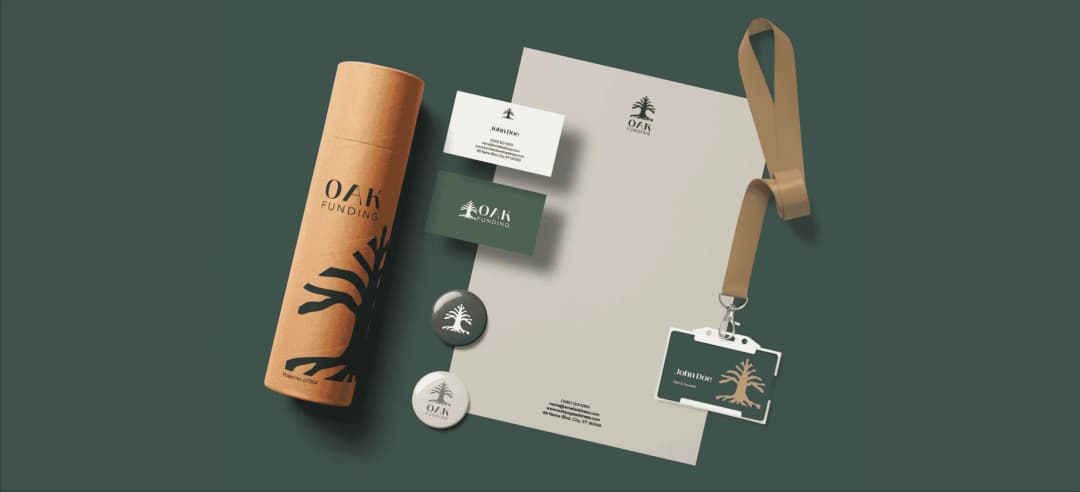
A focused identity, at 4-6 weeks, concentrates here once the brief is settled. A full brand strategy and identity, at 8-12 weeks, reaches this stage after the direction is agreed. Guidelines are part of the finish. They record how the system is used, in the hands of the people who will keep using it.
What you should be able to use at the end of the identity work is a logo system, color, typography, and guidelines, plus the working files. The exact list is the one in the scope. Brand identity and brand strategy are the two service pages that sit under this phase.
Make the website tangible
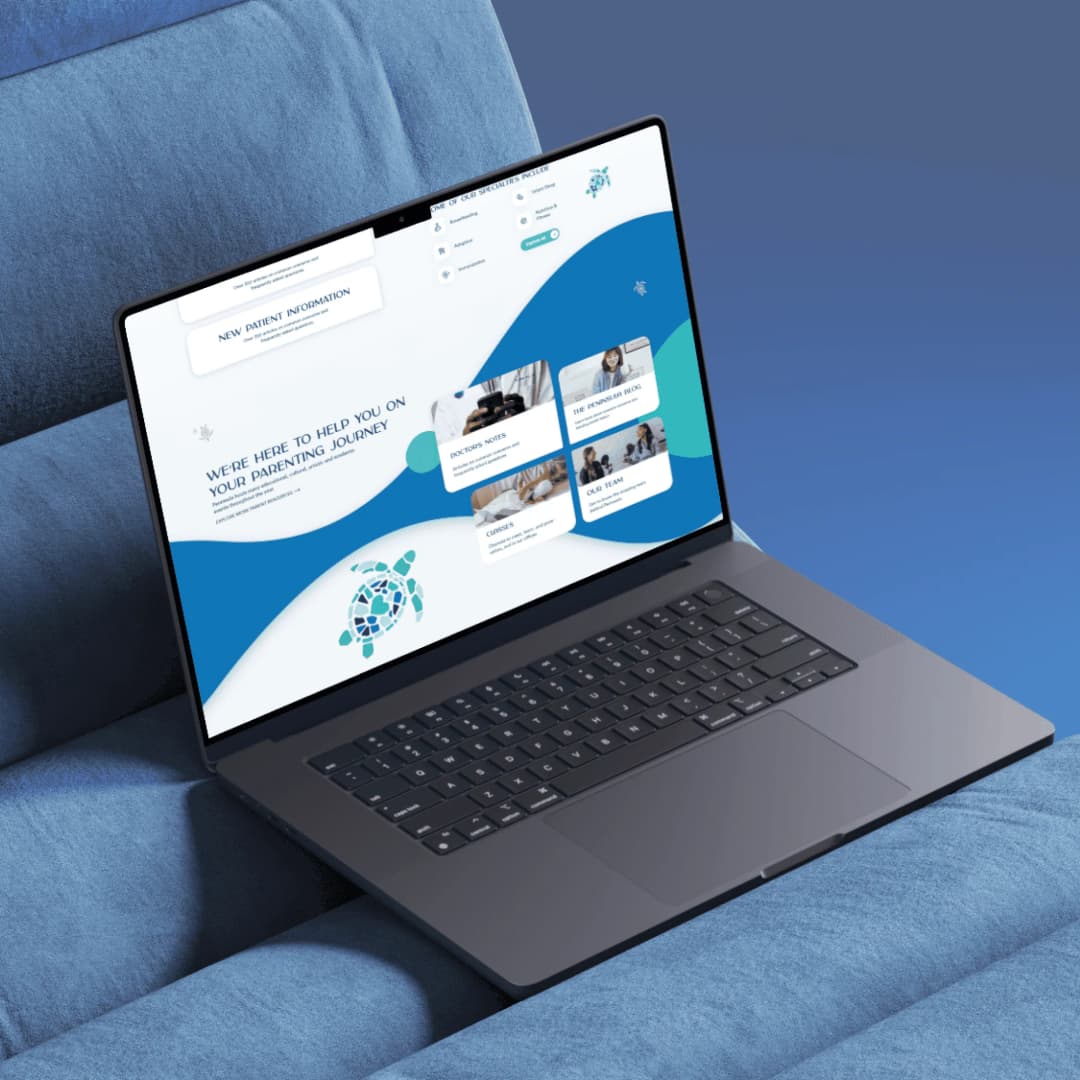
The website phase is timed in the written scope. Peninsula Pediatrics, a doctor-founded practice in Rockaway Park, New York, is one finished example: an identity with warmth and a sense of place, and a website families use to find practical information. Inside the schedule, the work follows a sequence you can see in the reviews:
- Structure. The page list, what each page has to do, and the content that has to exist before a layout is honest.
- Design in the layout. Screens are designed with real copy where we have it, and with clearly marked gaps where we do not. Type, color, and imagery are the identity, present in the layout from the first round.
- Build. We design and develop the site. WordPress and Shopify are the platforms we build on, chosen for how the business sells and how your team will maintain the result.
- Content in the pages. Photography, product information, bios, and legal copy go into the templates.
- Review. Consolidated feedback at the points in the schedule, then the changes that feedback called for. An idea that changes the scope goes back to the written agreement before it goes into the build.
A website on its own starts at $15,000. Combined with brand strategy and identity, the engagement starts at $30,000. The length of the build follows the page count, the integrations, and how ready the content is. Those are scope questions. Web design and the web design service describe the work. The proposal dates it.
Brand and website, in one scope
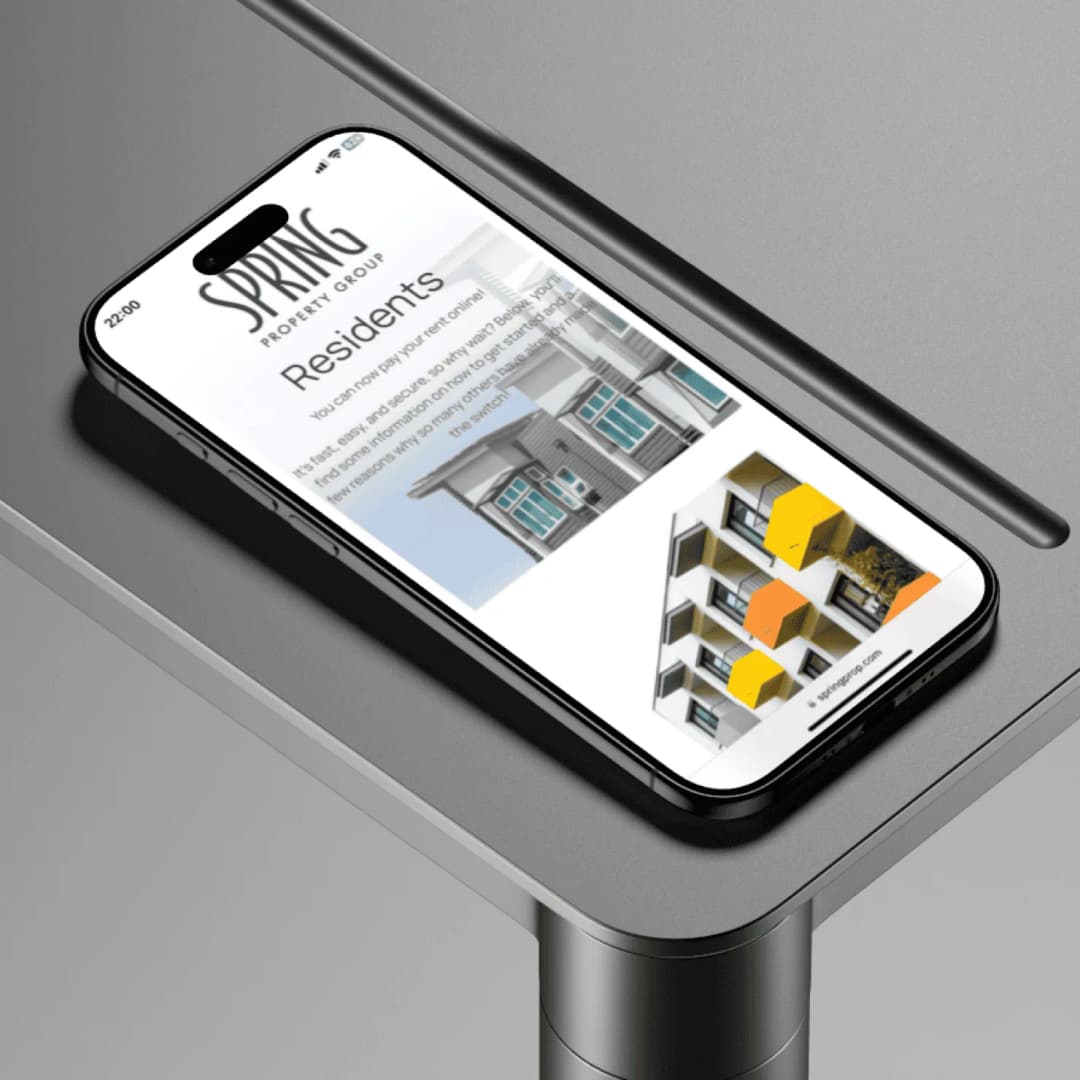
The reason to commission both together is sequence. The identity is tested on the website while it can still change. The website is designed by the people who know why the type and the message are what they are. One scope, one fee, one schedule. Spring Property Group is that shape of project: a brand and a website for prospective partners, investors, and residents, each with a reason of their own for visiting. The project page shows how the identity and the site were organized around those people.
This is the shape of a brand and website project timeline. The stages on this page all happen. The dates are the dates in the scope. A focused identity (4-6 weeks) and a full brand strategy and identity (8-12 weeks) describe the brand portion. The website stages above are added in the same document, with their own review points, when the site is part of the engagement.
Prepare for use
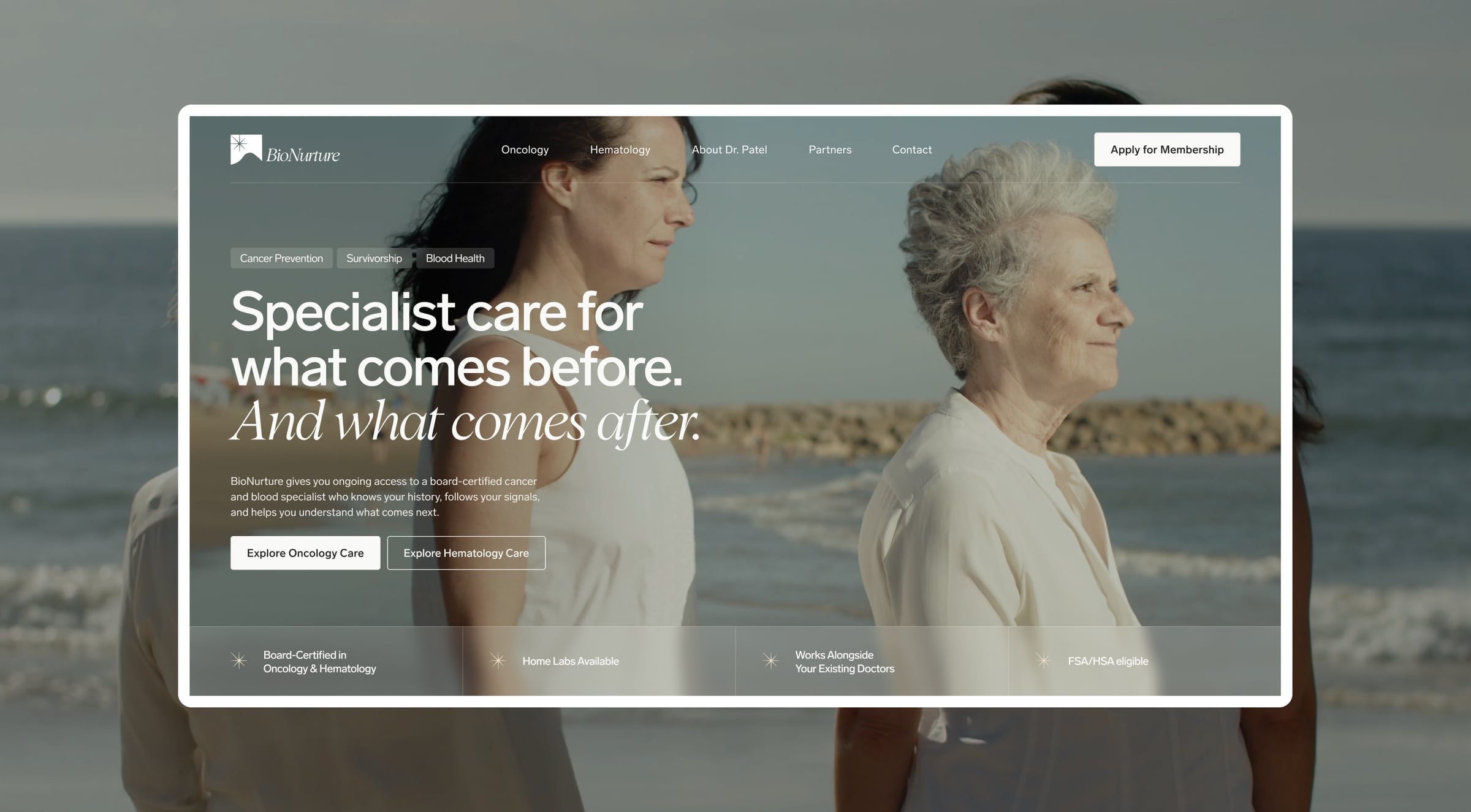
Testing, content checks, technical checks, working files, and training are planned into the scope that needs them. Launch responsibilities are agreed, so everyone knows what has to happen and who owns it. BioNurture, a physician-led oncology and hematology practice, is the project in the picture at the top of this article and in the frame here: identity, copy, and website, so a new visitor can understand the practice and apply for membership, and so the same identity lives on the site and in the physical space.
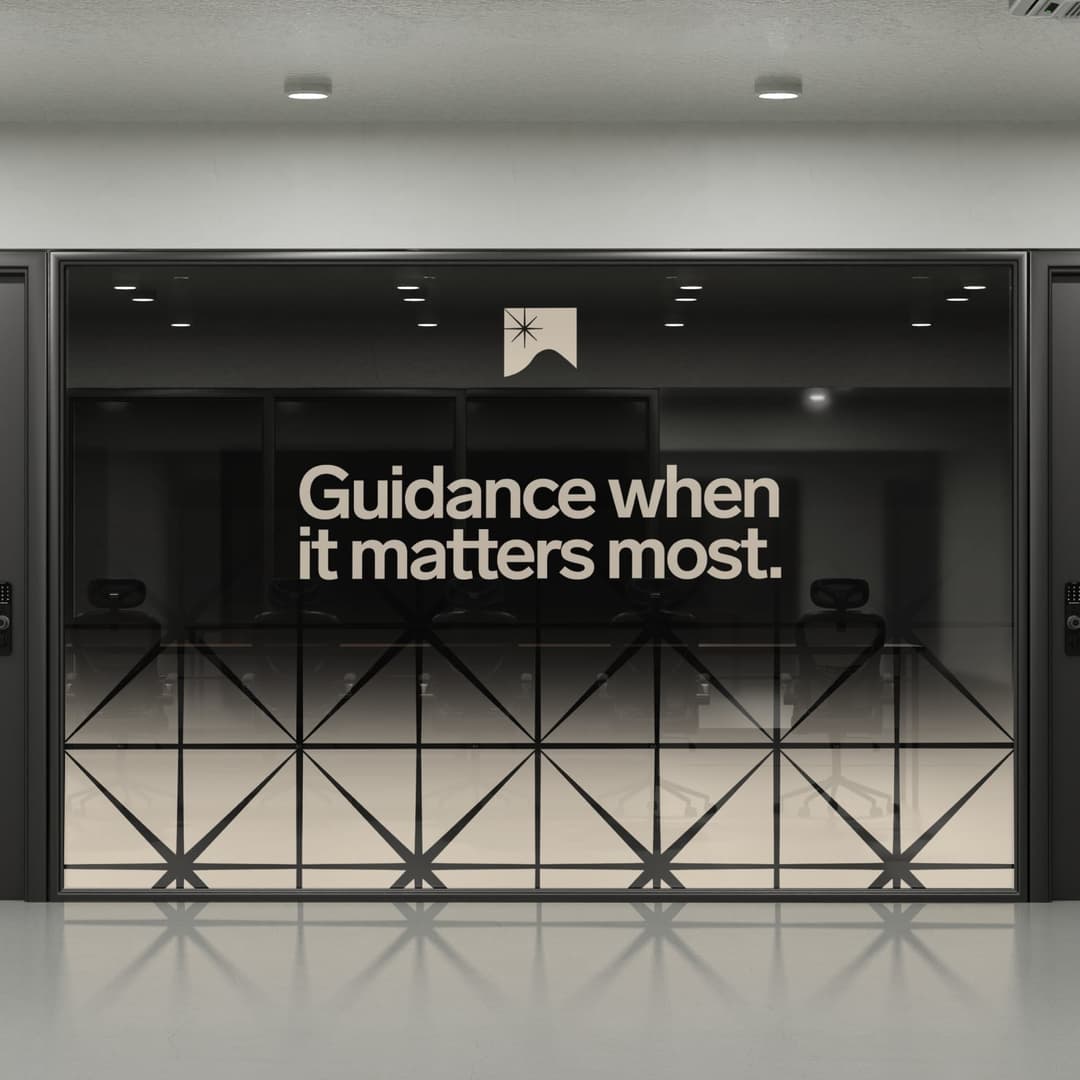
For a rebrand, this is also the rollout. The new identity shows up on the website on purpose. Guidelines, files, and a handoff with the people who will use them are part of preparing the work. Launch means the identity is in use: on the site, in the files, and with the team that has to keep it consistent. Rebranding includes that rollout planning when the engagement calls for it. The homepage at the top of this article is BioNurture's website. The frame in this section is the same identity in the space.
Decide what comes next
Some engagements end with the handoff. Others continue into campaigns, optimization, and ongoing creative support. We agree on that next stage together. It is a separate decision from the project you just finished, with its own scope.
How to read a rebrand against these ranges
A rebrand is a decision about what should change. The timeline follows that decision.
If the strategy is sound and the identity is the problem, a focused identity at 4-6 weeks may be the project. If the positioning has to be rebuilt, full brand strategy and identity at 8-12 weeks is the published range. If the website is how customers meet that brand, the website stages are part of the same scope, timed in the proposal. Brand and website together starts at $30,000.
Use the ranges to tell which conversation you are in. Use the proposal for the date. How we work is the process. Pricing is the investment. Branding, web design, and rebranding are the practices those stages belong to.
Frequently asked questions
How long does a rebrand take?
A focused brand identity takes 4-6 weeks. A full brand strategy and identity takes 8-12 weeks. When the rebrand includes the website, the website phase is scheduled in the written scope, alongside the fee and the deliverables.
How long does a brand and website project take?
The brand portion follows the range that matches the work: 4-6 weeks for a focused identity, or 8-12 weeks for a full brand strategy and identity. The website portion is timed in the same written scope, from the page list, the integrations, content readiness, and the approval rounds. The proposal states that schedule before the project starts.
What happens at each stage?
We understand the business, shape the engagement in writing, establish the direction, make the identity tangible, make the website tangible, prepare the work for use, and agree on what comes next. The website phase runs through structure, layout, build, content, and review. The combined schedule is the one in the scope.
How much does a brand and website project cost?
Brand identity starts at $15,000. A website starts at $15,000. Brand strategy, identity, and website together start at $30,000. The fee is a fixed scope and a fixed fee, agreed in writing. No hourly billing on project work.
What changes the schedule after kickoff?
The proposal sets the schedule with the fee and the deliverables. If the scope changes, we discuss the effect on timing and cost before we proceed. Approvals, content readiness, and integrations are the factors named before kickoff, because they are the ones that move a date.
Who does the work?
A consistent senior team. David Herskowitz, founder and creative director, is involved where the engagement needs his input, and the people doing the work stay close to the conversation. Splash Creative is in Englewood, NJ, and works with clients in New York City and Northern New Jersey.