Websites for Building Construction: 7 Examples
By David Herskowitz, Founder and Creative Director
Seven real construction company websites, what each homepage shows, and four Splash Creative projects. A website is from $15,000.
Key takeaways
- The seven examples are public homepages: Turner, Suffolk, DPR, Clark, Whiting-Turner, Mortenson, and Toll Brothers. Each note stays with what that page shows.
- A home builder site starts with place and the home. A contractor site starts with the market, the project, and a way to get in touch.
- At Splash Creative, a website is from $15,000. Brand identity is from $15,000. Brand and website together is from $30,000.
- The four projects below are Splash Creative websites: Agus Holdings, Cross Country Installations and Service, Everest Marble, and 1511 Ocean Terrace. Each note stays inside that case study.
Web design
Your website should reflect how the business works.
We design and build websites that help people understand your offer, find the information that matters, and take a considered next step. Brand, content, user experience, and development inform each other.
Websites from $15,000.
By David Herskowitz, Founder and Creative Director, Splash Creative. November 13, 2026.
A construction website has to answer three questions before it has a look: what you build, where you have built it, and how to ask about a project. The seven sites below are public homepages from real companies. Each note stays with what that page shows. None of them is a Splash Creative client, and this article does not add a traffic, lead, or conversion figure for any of them.
The four projects after the steps are Splash Creative websites for a developer, an installation company, a stone supplier, and a pre-construction residential project. The case study is the record. The feature list for a site that has to support a bid is Web design for construction companies. That page includes Eurotech, which this roundup does not.
Seven construction websites
These seven are a reading list, not a ranking. Six are contractors or builders of commercial and institutional work. Toll Brothers is a home builder, included because that homepage is organized around a different decision.
| Company | Homepage | What a buyer can see first |
|---|---|---|
| Turner Construction | turnerconstruction.com | Large, complex projects, with safety, community, and a published New York headquarters |
| Suffolk | suffolk.com | Markets such as hospitals, labs, airports, and casinos, plus the scale figures the page prints |
| DPR Construction | dpr.com | A self-performing general contractor, with the work split by market |
| Clark Construction | clarkconstruction.com | Named projects, a short note on several of them, and a way to get in touch |
| Whiting-Turner | whiting-turner.com | Featured projects labeled with a building name and a city |
| Mortenson | mortenson.com | Building and development, with markets, cities, and named projects |
| Toll Brothers | tollbrothers.com | Search by community, quick move-in home, design, and region |
Any number in the notes below is one that company prints on its own homepage. This article does not treat those numbers as a benchmark for a smaller firm.
Turner Construction
Turner Construction opens on "Making a Difference." The page presents the company as a builder of large, complex projects, then gives a visitor three ways in: a project, a career, and a set of commitments. Those commitments include safety and wellness, environmental sustainability, and community. The page also publishes a headquarters address in New York. The useful order is the plain one. The company says what it builds, and it puts safety where a buyer can see it, rather than leaving credentials to a PDF.
Suffolk
Suffolk says its teams bring local knowledge and national resources to projects across the country. The homepage names the kinds of work: hospitals, labs, airports, and casinos. The same page states that Suffolk has been building since 1982, that it is No. 7 on ENR's list of Top Construction Management-at-Risk Firms, that it has 17 national office locations, and that annual revenue is $13 billion. Those four figures are Suffolk's, printed on that page. The page also links to how the company builds, to projects, to careers, and to communities. A buyer can see the type of work and a published account of scale on the first screen.
DPR Construction
DPR Construction uses the line "We Exist to Build Great Things" and describes itself as a self-performing general contractor focused on highly complex and technical projects. The homepage then sorts the work by market: mission critical, healthcare, higher education, hospitality, manufacturing, office, and research and development. That split is the part worth copying. A visitor with a hospital and a visitor with a manufacturing plant are not sent down the same introduction.
Clark Construction
Clark Construction leads with "Building What Matters, Together" and a row of named projects, including the Johns Hopkins University Bloomberg Center, the Verstandig Pavilion at MedStar Georgetown University Hospital, and Amazon Tower Juno at Nashville Yards. Further down, some projects get a short description in the company's words. The page describes Metropolitan Park as a LEED Platinum-certified Virginia headquarters for Amazon, and it describes the Alamo exhibit in San Antonio as a 24,000-square-foot artifact facility. The page also offers a way to get in touch. The habit to take is the label: a project has a name, a place, and a next step on the same page.
Whiting-Turner
The Whiting-Turner Contracting Company opens with "Working Together" and a featured-project list. Each item is a building and a city. The list includes the Mandy and Dennis Weinman Cancer Building at Sinai Hospital in Baltimore, the Under Armour Global Headquarters in Baltimore, and the Ho'ōla Early Phase Clinical Research Center in Honolulu, among others. The page states that Whiting-Turner provides construction management, general contracting, design-build, and integrated project delivery. It also has sections for safety, inclusion, and quality. A project here is a place and a building, not an untitled photo.
Mortenson
Mortenson is titled on the page as construction and real estate development. The homepage describes the company as a top 25 builder and developer, and it names markets that include renewable energy, sports and entertainment, data centers, and healthcare. It shows work by city, including an Abilene data center development and a Polar Semiconductor manufacturing facility renovation in Bloomington, Minnesota. The page is doing two jobs: it says Mortenson both builds and develops, and it lets a visitor enter through a market or a place.
Toll Brothers
Toll Brothers is a home builder, and the homepage is built for someone choosing a house. The first paths are a search for new-home communities, quick move-in homes, and home designs. Below that, the page lists regions, including Northern New Jersey, Central New Jersey, New York, Long Island, and Westchester. The page also says Toll Brothers was named the No. 1 home builder on Fortune's 2026 World's Most Admired Companies list. That line is the company's own. What a smaller builder can use is the structure: location first, then the home, then a way to look.
Home builders and commercial contractors
The Toll Brothers homepage and the six contractor homepages are organized around different questions. A household is choosing a place to live. A developer, a hospital, or a facilities team is choosing a firm for a job. The site should answer the question that buyer is actually asking.
| Question | Home builder | Commercial or institutional contractor |
|---|---|---|
| Where this shows up | The Toll Brothers homepage | The Turner, Suffolk, DPR, Clark, Whiting-Turner, and Mortenson homepages |
| First path | A region, a community, a move-in home, or a design | A market, a named project, or a city |
| What the first screen is for | Help someone picture a house in a place they already care about | Show the kind of building the firm takes on, and that the firm is easy to reach |
| Proof the page uses | Locations, designs, and the recognition line the company prints | Named projects. On some of these pages, safety, markets, or a scale figure the company prints |
A firm that does both kinds of work can still use one site. Give each buyer an entry, the way DPR gives each market its own entry, and do not make a homeowner read a capability statement written for a procurement team. Web design is the practice of making that path obvious: the site should help someone understand the offer, find the relevant work, and take a next step.
How to build a construction website
Build the site in the order a buyer evaluates you. What you do, where you have done it, why they should believe you, and how to reach you.
- Name the work and the buyer. A stranger should understand the trade in the first screen. "Custom home builder for families in Bergen County" is a headline. "Quality you can trust" is not. Web design in Bergen County is the local page for companies in that county. The headline example is wording, not a claim about a client.
- Label projects by place and type of work. "Kitchen addition, Montclair" tells a buyer more than "Project 14." Add the scope in a sentence and two or three photographs. Whiting-Turner's list is the large-firm version of the same habit: a building name and a city.
- Put proof next to the inquiry. Licensing, insurance, awards, and a short client note belong on the homepage and beside the ask, not only on an About page. Turner puts safety on the homepage. Use the proof you actually have. Do not borrow another firm's awards.
- Make the phone path work on a job site. Many of these visits happen on a phone, in a driveway or on a site. Keep the menu to what a buyer needs, make the phone number dial on touch, and read the page on a phone before launch.
- Give each important page one next step. A service page leads to a quote or a call. A project page leads to a similar project or a quote. Clark's homepage puts a contact path on the same page as the work. Keep the form to a name, a way to reply, the type of project, and the location.
After launch, see which pages draw inquiries and tighten the ones that do not. A shorter form, or a project label that names the town, is a change you can check. This article does not publish a conversion rate for that change.
Name the places you actually work. A project page that says the town lets someone nearby see that the work is relevant. Keep the business name, address, and phone number the same on the site and anywhere else you publish them. A page for a town is worth adding when a real project or a real service sits behind it.
Website design and development is the Splash Creative scope for that build: structure, content, design, and the platform named in the proposal. Branding for construction companies in New Jersey is the companion note when the identity is part of the same problem.
Websites from Splash Creative
The steps above are a way to read a construction site. The projects below are websites Splash Creative has designed for companies whose work is a building, an installation, a material, or a development. Web design and development projects is the archive. Custom site design is the service tag. Our work is the full set. Each note stays inside the case study. None of these pages states a traffic or sales figure, and this article does not add one.
Agus Holdings
Agus Holdings is a family-run real estate investment and development firm focused on retail and mixed-use properties. The case study says the existing uninterrupted scroll gave visitors little help understanding the portfolio's scale, geography, or focus.
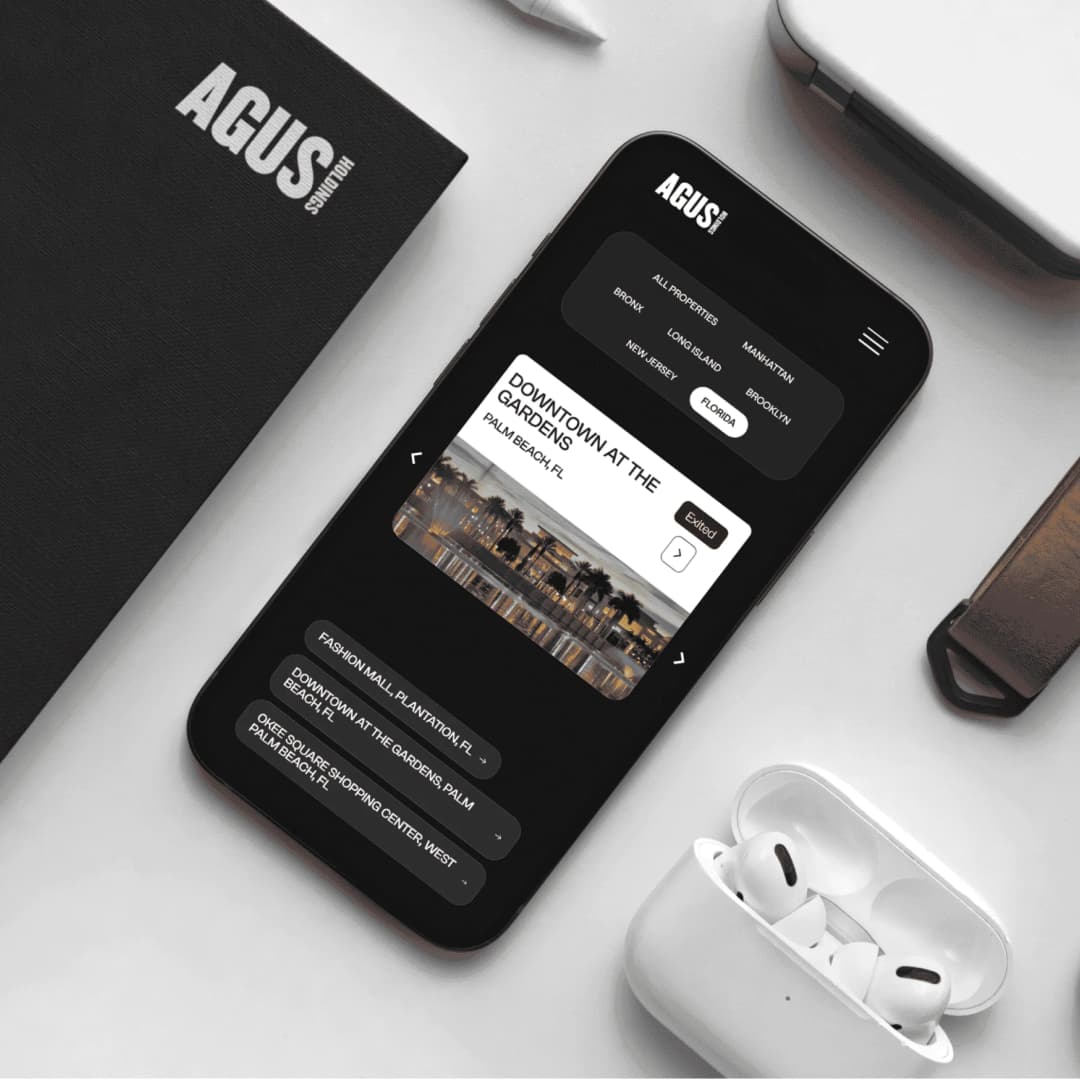
The case study says the portfolio was reorganized and the navigation was redesigned around those distinctions, with messaging and asset information working together. It says visitors have a structured way to explore the holdings and understand individual properties in context. The published scope is website structure, messaging, and design. The case study does not report a traffic or inquiry figure, and this article does not add one.
Cross Country Installations and Service
Cross Country Installations and Service deploys sanitation and facility equipment nationwide. The project page says the website needed to communicate the scale and experience of the operation to procurement teams and facility managers.
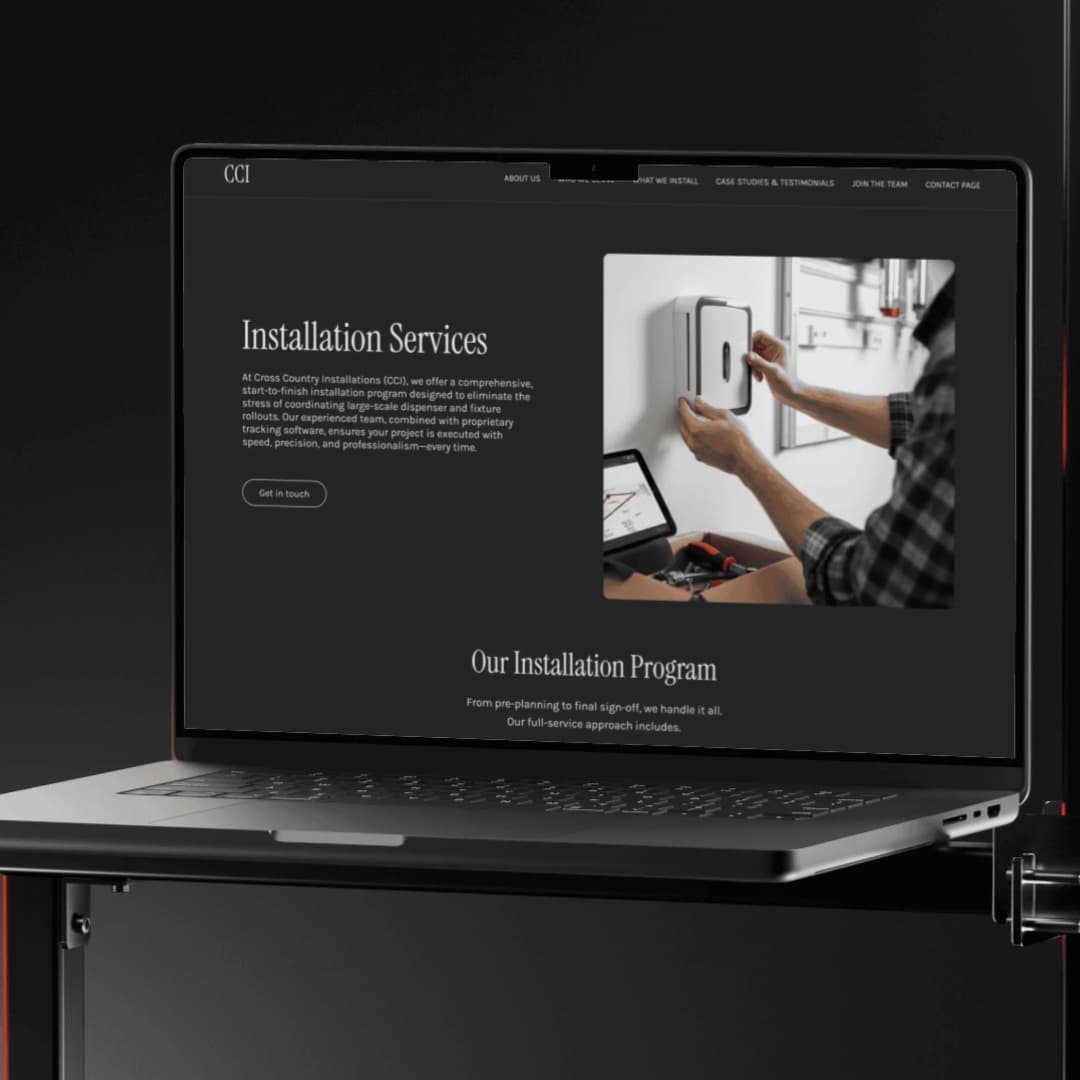
The published scope is website design and copywriting. The page says the site is structured around operational capabilities, experience, and the client roster, and the copy addresses the person evaluating a partner for a wider rollout. It says the website gives that experience a clear structure and makes the evidence easier for prospective clients to find.
Everest Marble
Everest Marble supplies natural stone and other surface materials to designers, contractors, and homeowners. The case study says visitors needed a better way to browse the inventory and share options with clients.
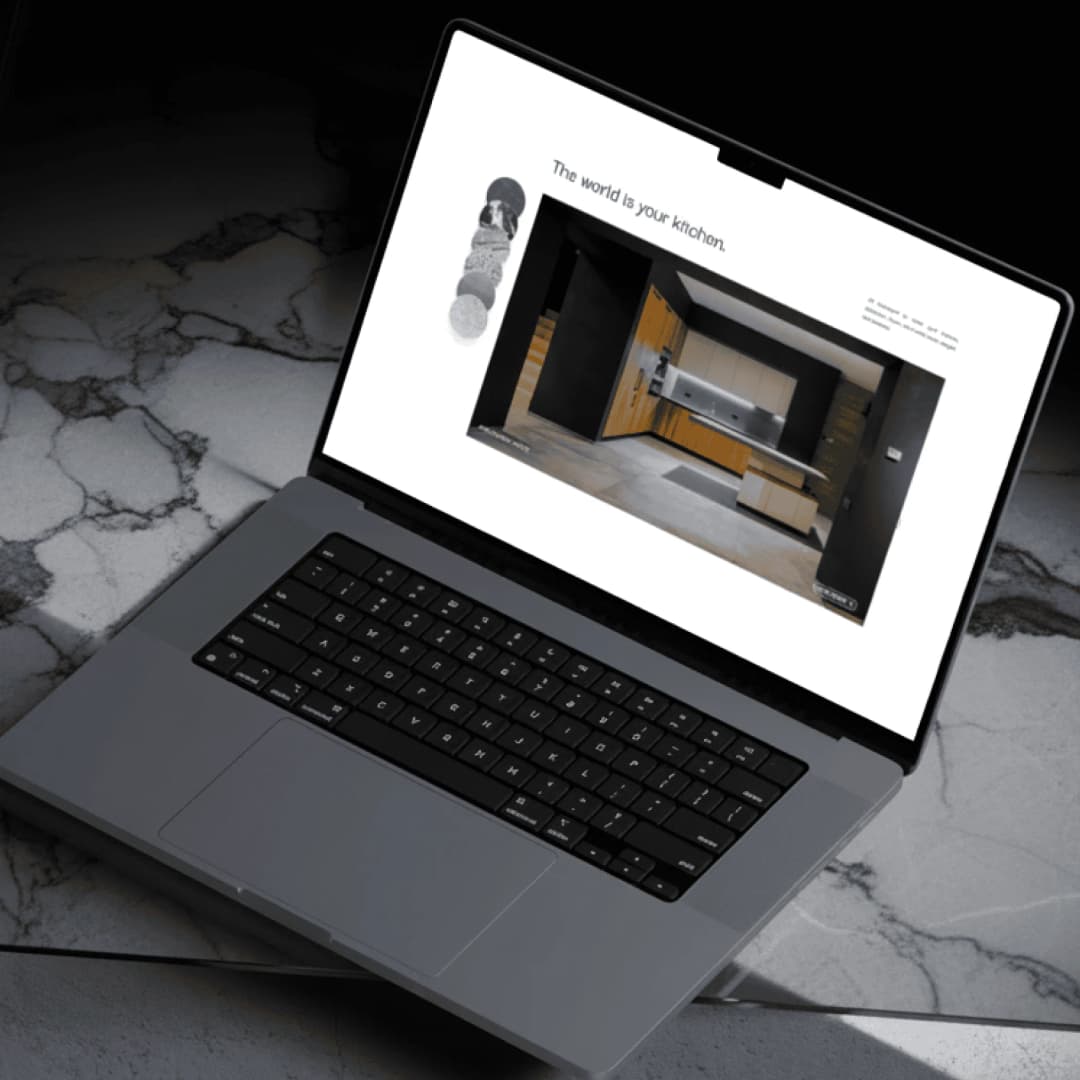
The published scope is website design, catalog structure, and product tearsheets. The page says the inventory is organized around browsing and comparison, with downloadable tearsheets for individual products, and that a restrained design keeps attention on the materials. It says the site supports both discovery and the practical task of taking a product into a client conversation. The case study does not report a sales figure, and this article does not add one.
1511 Ocean Terrace
1511 Ocean Terrace is a new development of modern residences in Seaside Heights, on the Jersey Shore. The case study says selling before construction means asking buyers to commit to homes they cannot walk through yet.
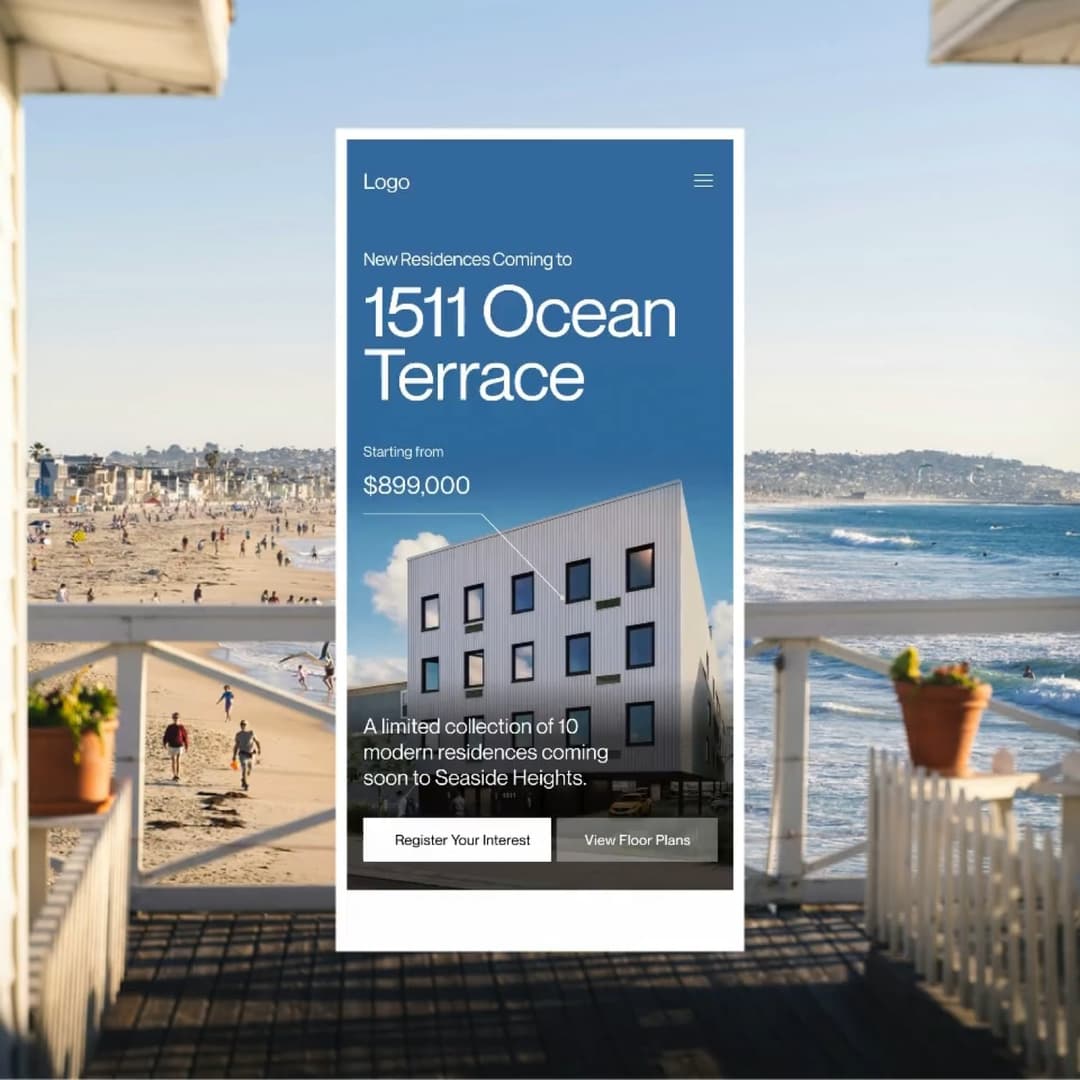
The published scope is a pre-construction website. The page says the site leads with life at the shore, then answers the practical questions in order: renderings of the building, the residences with floor plans and details, and a simple way to register interest. It says the layout is open and light, and that it works on a phone as well as on a desktop. It says the development has one clear place to send interested buyers, with what they need to picture the residences and take the next step. The case study does not report a sales figure, and this article does not add one.
What the work costs
Splash Creative is a branding and web design agency at 34 S Dean St, Suite 206, Englewood, NJ 07631. There is no New York City office. David Herskowitz leads the work, with a consistent senior team from the first conversation through the work that follows. The studio serves New York City and Northern New Jersey, and remote clients in the US and worldwide.
Project work is a fixed scope and a fixed fee, agreed in writing before the work starts. These are starting points. The proposal sets the fee for the scope.
| Scope | Starting point | Timing |
|---|---|---|
| Website | from $15,000 | Set in the written proposal |
| Brand identity | from $15,000 | A focused identity takes 4 to 6 weeks. Full brand strategy and identity takes 8 to 12 weeks. |
| Brand and website | from $30,000 | The website schedule is set in the written proposal |
| Shopify store | from about $20,000 | Set in the written proposal |
| Ongoing partnership | from $2,500/month | Set in the written agreement |
Pricing is where those starting points are explained. What a website costs is the longer page on why website quotes vary. Brand identity is the identity engagement on its own. Branding is the wider practice when the position and the site are one scope. How we work is the sequence: understand the business, put the scope and the fee in writing, agree the direction, then make the work.
A construction marketing site uses the website floor, from $15,000. Brand and website together, from $30,000, is the scope when the identity is not finished and the website is how people will meet the firm. If you want to talk through a build, book a call and tell us what you are working on.
Frequently asked questions
What should a construction website say first?
What you build, where you build it, and how to ask about a project. Name the trade and the buyer, show a real project, and put a phone number or a short inquiry where that project is. The seven homepages in this article each do some version of that, in the way that fits their work.
How much does Splash Creative charge for a construction website?
A website is from $15,000. Brand identity is from $15,000. Brand and website together is from $30,000. A Shopify store is from about $20,000. Ongoing partnerships are from $2,500/month. These are starting points. The proposal sets the fee for the scope. Project work is a fixed scope and a fixed fee, agreed in writing. The same figures are on pricing.
How is a home builder website different from a commercial contractor website?
A home builder site, such as the Toll Brothers homepage, starts with a place and a home: communities, move-in homes, and designs. A commercial contractor site, such as DPR or Clark, starts with a market or a named project and a way to talk about a job. Use the path that matches the decision your buyer is making.
Should a construction site have a page for every town it works in?
Publish a place page when you have a real project or a real service there. A town page with no job behind it does not help a buyer decide. Keep your business name, address, and phone number the same wherever they appear.
How long does a construction website take?
The website schedule is the one in the written proposal. It depends on the page list, the photography, and how fast approvals come back. When the engagement also includes brand identity, a focused identity takes 4 to 6 weeks. Full brand strategy and identity takes 8 to 12 weeks. How long a brand identity takes walks those phases.
When should a construction firm hire a web design studio?
Hire when the current site makes the work hard to understand, hard to show by project, or hard to inquire from on a phone. Web design is that practice, from $15,000. Website design and development is the engagement. If the identity is also open, brand and website together is from $30,000. Branding is that wider practice.
Have a related question?
Tell us what you're working on. We'll help determine whether there is a useful project to explore.
“Splash delivers powerful brand ID, slick websites and UX, beautiful graphic design, and intelligent software solutions. Great team, great experience, great creative partners.”