Web Design RFP: How to Write One Agencies Respond To
By David Herskowitz, Founder and Creative Director
How to write a web design RFP agencies can answer: objectives, a budget range, migration scope, and the weights you will use to score bids.
Key takeaways
- A web design RFP agencies can compare states the business objectives, a budget range, what must move from the current site, and the weights you will use to score bids.
- Chykalophia's 2026 study of 79 public website redesign RFPs found that 20 of 79 stated a budget. Where those RFPs published scoring weights, price was a median 15%.
- At Splash Creative, brand identity is from $15,000, a website is from $15,000, and brand and website together is from $30,000. A focused identity takes 4 to 6 weeks. Full brand strategy and identity takes 8 to 12 weeks.
- The website schedule is the one in the written proposal. This page does not publish a week count for a site.
Web design
Your website should reflect how the business works.
We design and build websites that help people understand your offer, find the information that matters, and take a considered next step. Brand, content, user experience, and development inform each other.
Websites from $15,000.
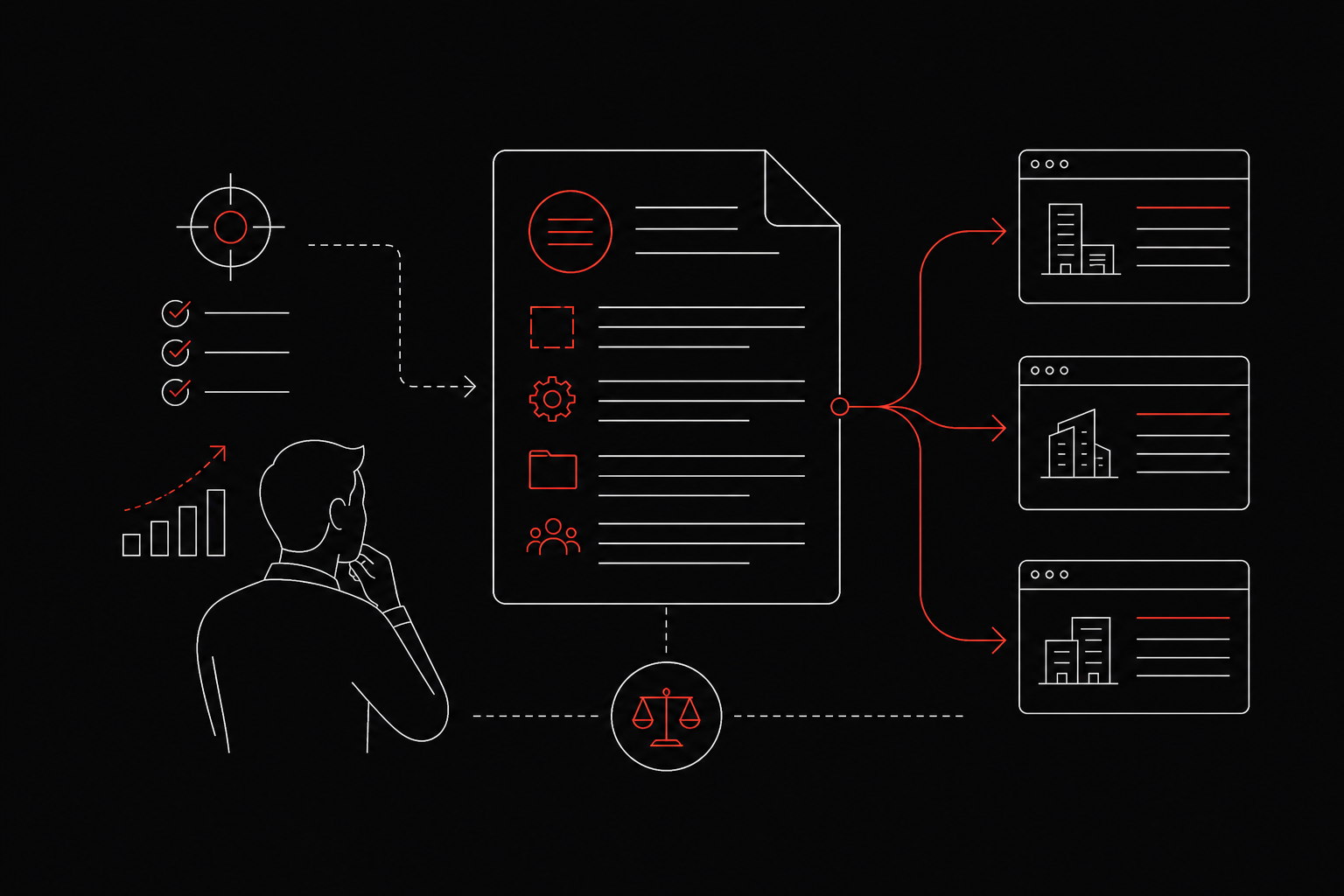
By David Herskowitz, Founder and Creative Director, Splash Creative. November 17, 2026.
A web design RFP gets comparable bids when it states the business objectives, discloses a budget range, says what has to move from the current site, and publishes the weights you will use to score responses. A list of pages, with the budget hidden and no scoring method, produces proposals you cannot compare.
You do not need an RFP for every site. This guide is the document to send when several people must defend the choice, or when the scope is large enough that side-by-side bids are worth the time.
What a web design RFP is for
A web design RFP (request for proposal) is the document you send to more than one agency so each can propose how it would solve the problem, at what price, and on what schedule. The point is bids written against the same brief.
Design and development are often one project and two prices. Keep them in separate sections so an agency can price each one. Web design is the practice of shaping the site around the offer and the next step. Website design and development is the engagement: page structure, custom design, development, the integrations you agree, search foundations, testing, and handoff, with migration defined where it is relevant.
Skip the formal document when you already trust two or three agencies, when the project is small, or when speed matters more than a scored comparison. A short brief and a written proposal can do that job. The sections below are still the questions that brief should answer.
How to write the RFP
Write it in three passes. Learn what you actually need, set the parameters, then draft the document. Drafting first is how a wishlist becomes the scope.
- Audit the current site. List what it fails to do, what sales and support keep explaining, and every request stakeholders have already made. Put that in one place before you write a requirement.
- Sort the list. Separate must-haves from nice-to-haves. Agencies price the list you send. An unsorted wishlist raises every bid.
- Rank the job of the site. Capture leads, sell products, support customers, or recruit. Say which job comes first.
- Name the people and the hours. Who approves, who supplies content, and how quickly they respond. Slow approvals change the schedule and the fee. Say so in the document.
- Set the range and the window. Decide the budget range and the response deadline before you ask anyone to write a proposal.
- Separate design from technical needs. One section for audience, structure, and content. Another for platform, integrations, and development.
- Open with objectives. The business result first. Requirements underneath, labeled as items an agency may challenge.
- Publish the rules. Deadline, format, page limit, the contact for questions, and the date you will decide.
Start with the business result
State the problem, then the features. "We need a blog, a pricing page, and a login" only tells an agency how many pages to count. "Qualified demo requests stall on the pricing page, and we want more of them from the same traffic" tells an agency what to solve.
Write each objective so you could check it later. Raise qualified demo requests. Cut the support questions that a page should answer. Support a product line the current site was not built for. Move the offer upmarket. If you already track a number, include today's figure and say you do not have a target yet when that is the truth. An invented target produces a proposal aimed at a number you do not measure.
Name the two or three outcomes that matter most. If everything is a priority, bidders guess, and the guess usually adds scope.
Keep the feature list short and under the objectives. Label it as requirements the agency may challenge. You want a response that solves the problem, including a recommendation to drop a feature that does not serve it.
Sections the document needs
Use this as the checklist. Add a section when the project needs it. Do not add one to look complete.
- Company background. What you do, who you sell to, and what the current site does well and badly. Two or three short paragraphs.
- Objectives. The results from the previous section, in order.
- Scope. What the agency will deliver: strategy, design, content, development, migration, launch support, training. Say what is out of scope.
- Design. Audience, brand constraints, existing assets, and the pages or templates you already know you need.
- Technical requirements. Current platform, integrations, hosting, accessibility, and any performance target you already measure. Keep this apart from design.
- Content and migration. What exists, who writes new copy, and what must move.
- Deliverables and ownership. Files, source code, the accounts, and who owns the finished work.
- Budget range and response window. The next section.
- Evaluation criteria. The weights you will actually use.
- Submission rules. Deadline, format, page limit, the contact for questions, and the decision date.
A short document is easier to answer. If a senior person on your side will not read a section, cut it.
Disclose the budget and the response window
A budget range is what makes the bids comparable. Without one, a templated site and a custom build land in the same pile, and you cannot tell which is the better use of the money. State a range, say what it includes, and ask anyone well outside it to explain why.
Public documents often leave the number out. Chykalophia's 2026 study read 79 public website redesign RFPs issued in the US from late 2024 through October 2026. Twenty of the 79 stated a budget, about 1 in 4. The sample is government, nonprofit, education, and tribal issuers. The study found no RFPs from private companies. Treat it as a picture of public website RFPs, not as a private-sector price list.
Two other public figures are useful only as context. Settle's 2026 mid-year report analyzed 29,591 public RFPs posted from August 2025 through July 2026. Across the 29,493 listings with valid dates, the median time from posting to the submission deadline was 22 days. In the Software, Web and Mobile Development category, the median disclosed budget was $150,000, and only 4.3% of listings in that category disclosed a budget. Those are public-sector listings. They are not a quote, and they are not a Splash Creative price. Set your range from the scope and from what you can spend.
Chykalophia's study says about four weeks, with a question period, was the norm in its website RFP sample. Settle's median across all public categories is 22 days. Publish a window you can review, share the answers with every bidder, and name the person who replies. Leave enough time for a question period and a migration plan.
For a reference point from this studio, the starting points are below. They are floors. The proposal sets the fee, the deliverables, and the schedule.
| Scope | Starting point | Timing |
|---|---|---|
| Website | from $15,000 | Set in the written proposal |
| Brand identity | from $15,000 | A focused identity takes 4 to 6 weeks. Full brand strategy and identity takes 8 to 12 weeks. |
| Brand and website | from $30,000 | The website schedule is set in the written proposal |
| Shopify store | from about $20,000 | Set in the written proposal |
| Ongoing partnership | from $2,500/month | Set in the written agreement |
Pricing is where those starting points are listed. Project work is a fixed scope and a fixed fee, agreed in writing. There is no hourly billing on project work. If the work changes later, the effect on timing and cost is discussed before anyone proceeds. A website on its own uses the website floor, from $15,000, when the identity is already settled. Brand and website together, from $30,000, is the scope when the identity is open and the site is how people will meet the company. A Shopify store uses the Shopify floor, from about $20,000. What a website costs is the longer page on why website quotes vary. What a website redesign costs uses the same floors for a site you already have. Shopify is the store work.
Splash Creative does not publish a week count for a website. When the engagement also includes brand identity, a focused identity takes 4 to 6 weeks, and full brand strategy and identity takes 8 to 12 weeks. How long a brand identity takes walks those phases. The website phase is still dated in the written scope.
Put migration in the scope
A redesign can drop the pages that already bring people in if nobody owns the move. Put search and content migration in the required scope, and make each bidder explain how it will handle them.
- Share the baseline you have. Current organic traffic if you measure it, the pages that already perform, and the queries that lead to a sale or a conversation. If you do not have the numbers, say unknown.
- Ask for a URL inventory. Every current address, and where it will go.
- Ask for redirects. Every changed URL needs a redirect, and the plan should say who tests them.
- Say who writes. Which pages move as they are, which get rewritten, and who writes the new copy.
- Ask for the launch checks. What is reviewed before launch, how long the site is watched after launch, and the name of the person responsible if something breaks.
- Score that answer on its own. Give the migration section a weight, so a polished design presentation cannot skip it.
How to redesign a website without hurting search is the longer checklist for the client side of that move. An agency that skips the migration section has told you how it treats the current site.
Score the responses before you read them
Publish the weights in the RFP, before any proposal arrives. Weights keep a polished deck from beating a clearer plan, and they give you a reason you can show the other stakeholders.
In the Chykalophia study, price was a median 15% of the total score in the website RFPs that published how they score. That is a public-sector reference, not a rule. Raise price only if the budget is fixed. If the plan and the fit matter more, keep price from deciding the winner by itself.
This is a model you can copy and change. The words in the weight column are an order, not a formula. Replace them with percentages that add to 100 if your process requires numbers.
| Criteria | Suggested weight | What a useful answer includes |
|---|---|---|
| Strategy and the objectives | Highest | The bid restates the problem and proposes a direction |
| Relevant work and the named team | High | Comparable projects, and the senior people who will do the work |
| Migration and search | Medium | A URL inventory, redirects, and a named owner after launch |
| Timeline and process | Medium | Milestones and a review cycle your team can keep |
| Price | Medium | A breakdown against the range you published. Where public website RFPs published weights, price was a median 15% (Chykalophia, 2026). |
| References and working style | Lower | Clients you can speak with, and how decisions get made |
Score each response on your own, then compare notes. Headcount is a weak proxy. BidSkim reports that 73% of UK public-sector website development contracts were won by SMEs. That figure is about who won those contracts. It is not a quality score, and it is not a reason to prefer a small team or a large one. Score the relevant work and the people named in the proposal.
Website projects from Splash Creative
The four projects below are published Splash Creative websites. Each note stays inside that project page. None of these pages states a traffic or revenue figure, and this article does not add one. They are examples of the kind of website work an RFP is often trying to buy. Our work is the full set. More notes on hiring for a build are in what a website development agency should show you.
Cross Country Installations and Service
Cross Country Installations and Service deploys sanitation and facility equipment nationwide. The project page says the website needed to communicate the scale and experience of the operation to procurement teams and facility managers.
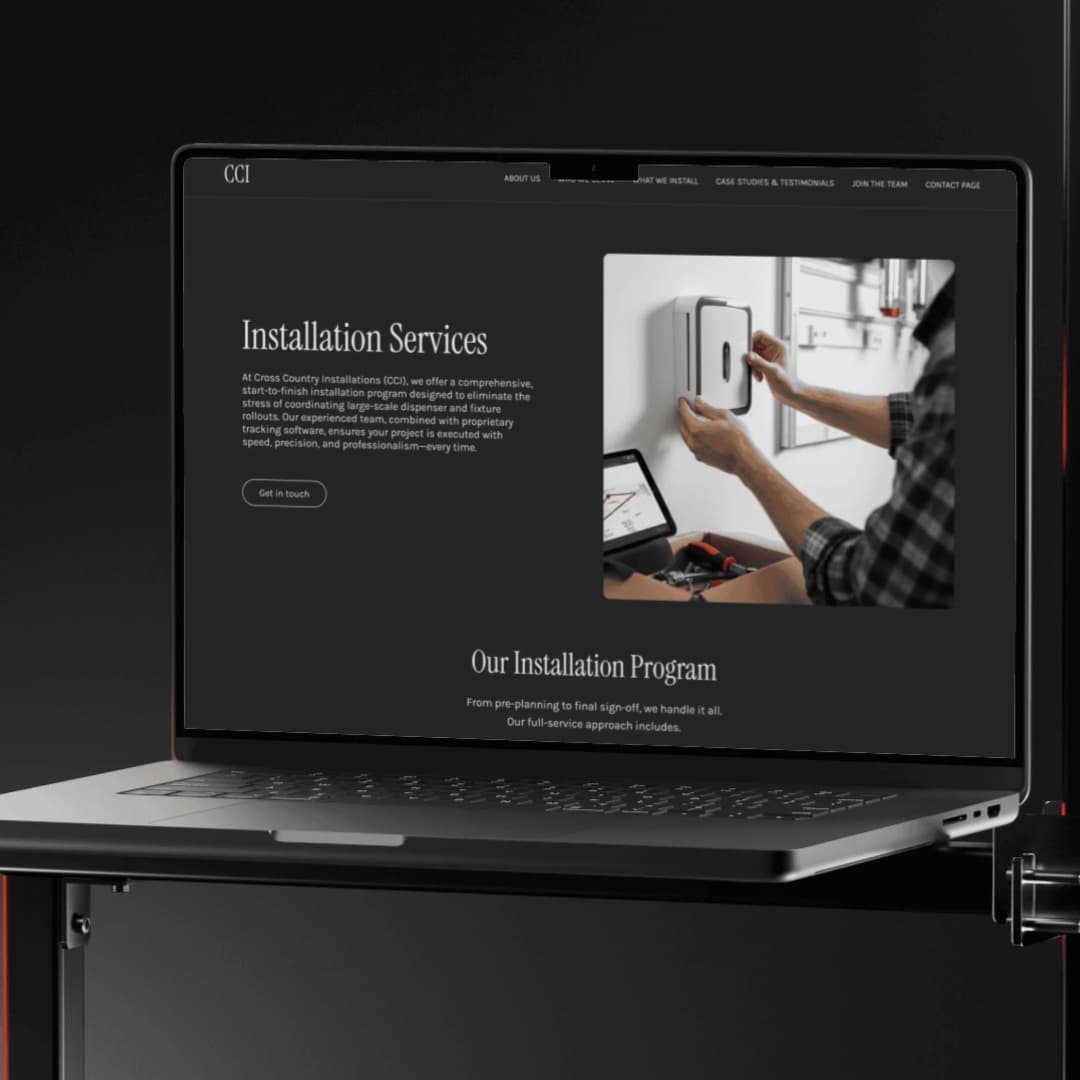
The page lists copywriting and custom site design. It says the site is structured around operational capabilities, experience, and the client roster, and the copy addresses the person evaluating a partner for a wider rollout. It says the website gives that experience a clear structure and makes the evidence easier for prospective clients to find. The page does not report a traffic or revenue figure.
Agus Holdings
Agus Holdings is a family-run real estate investment and development firm focused on retail and mixed-use properties. The project page says the existing uninterrupted scroll gave visitors little help understanding the portfolio's scale, geography, or focus.
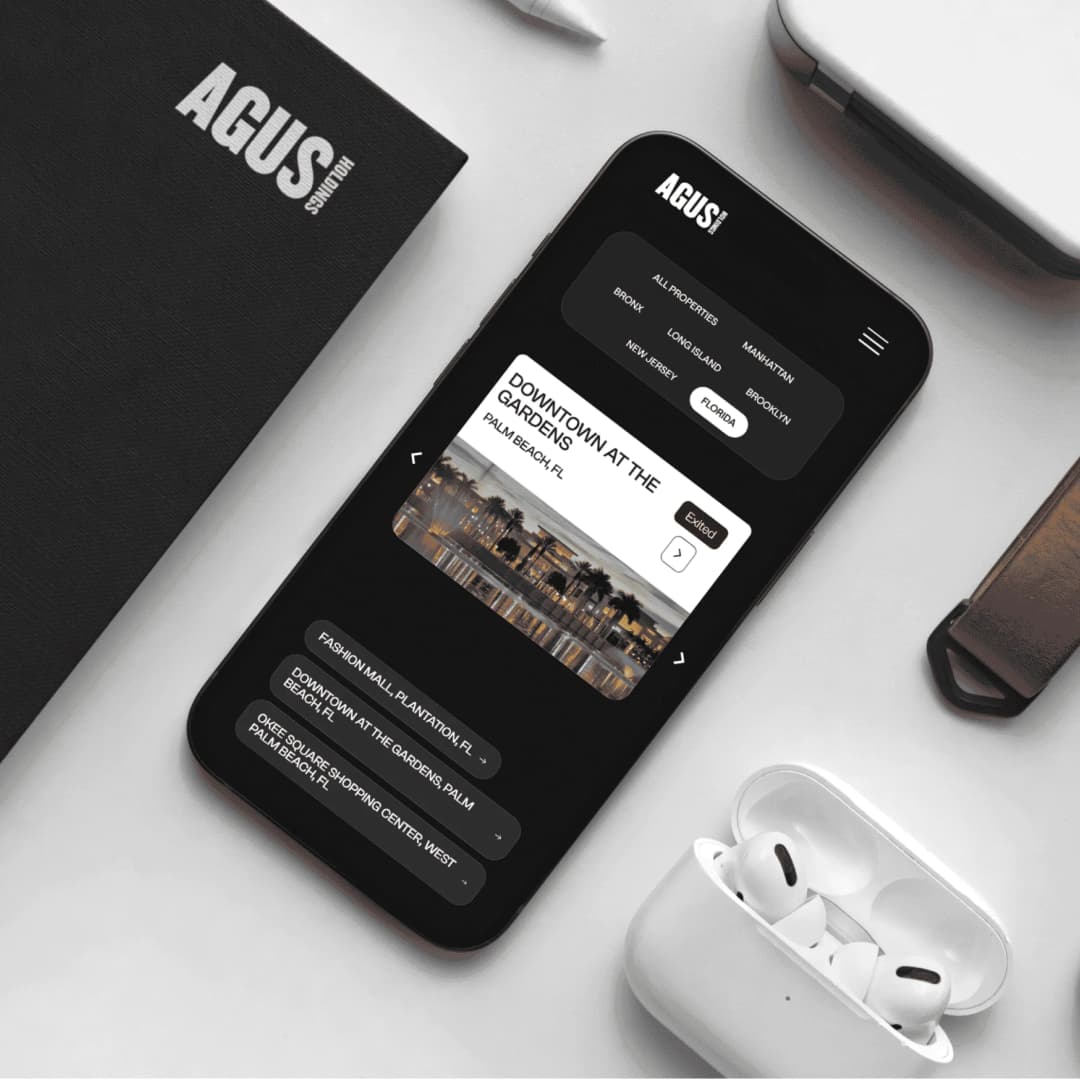
The page lists custom site design. It says the portfolio was reorganized and the navigation redesigned around those distinctions, with messaging and property information working together. It says visitors have a structured way to explore the holdings and understand individual properties in context. The page does not report a traffic or revenue figure.
Alias Intelligence
Alias Intelligence provides due diligence, background screening, and investigative services. The project page says the website suggested innovation but did not explain the services or their value clearly enough.
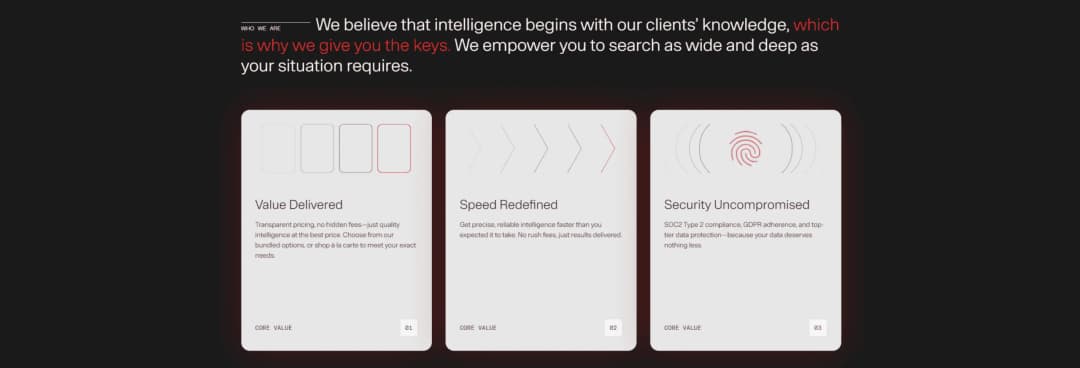
The page lists custom site design. It says the content was rewritten around practical benefits and organized around how clients evaluate investigative services, with restrained design, a clear hierarchy, and credentials placed early. It says the result is a more direct introduction to the business and a clearer structure for evaluating the services. The page does not report a traffic or revenue figure.
Eurotech
Eurotech has designed ergonomic office seating for more than four decades, from task chairs to executive, conference, and specialty seating. The project page says a large catalog is easy to appreciate in a showroom and can look like rows of similar chairs online.
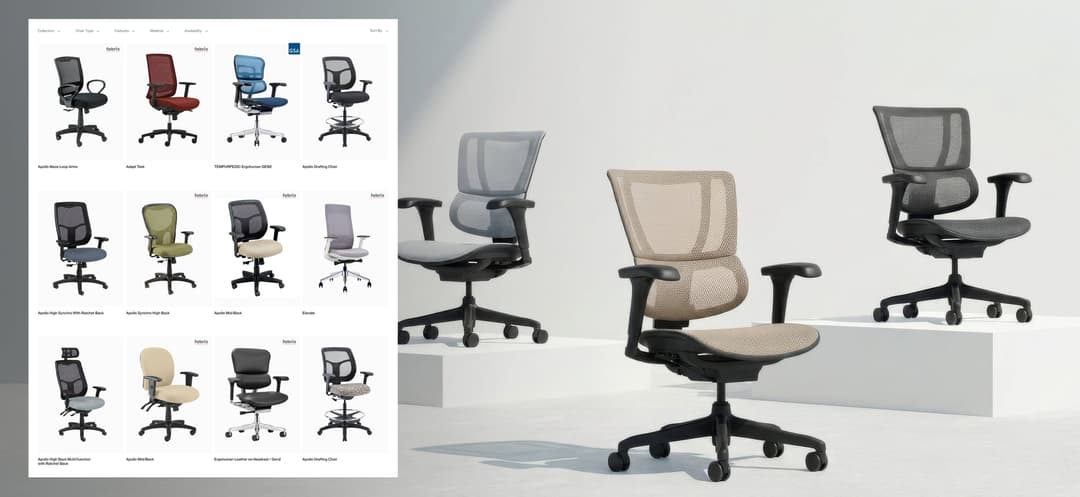
The page lists custom site design, presentations and pitch decks, and brochures and sales materials. It says the website is designed around how people shop for seating: buyers filter by collection, chair type, features, and material, then compare models. Flagship chairs have a features page that shows each adjustment in motion, and a configurator lets buyers build their own. Sales presentations for commercial partners use the same visual language. The page says the site turns the catalog into a route to the right chair, and the sales materials carry the same story into meetings. The page does not report a sales figure.
When a direct conversation is the better path
A direct conversation is the better path when you already know the kind of agency you want and you do not need a scored process to defend the choice. A founder or a B2B team with a clear problem and a rough budget can replace the RFP with a short list and a written proposal.
- Shortlist two or three agencies from referrals and from work that resembles the job. Read the project pages. Filter by the problem and by who will do the work.
- Send a one-page brief: objectives, budget range, and the launch window you have in mind.
- Ask for a written proposal and a call with the people who will do the work.
- Score those proposals with the same table, even if you never publish an RFP.
Splash Creative is a branding and web design agency at 34 S Dean St, Suite 206, Englewood, NJ 07631. There is no New York City office. David Herskowitz leads the work. The studio serves New York City and Northern New Jersey from Englewood, and works with clients farther away. How we work is the sequence: understand the business, put the scope and the fee in writing, agree the direction, then make the work. Web design in Bergen County is the local page. Other website notes are on the web design topic hub.
If you want to talk through a site, book a call and say what you are working on. An unfinished brief is enough to start.
Frequently asked questions
When should you skip a web design RFP?
Skip it when you already trust two or three agencies, the project is small, or you need a decision sooner than a formal process allows. Send a short brief with the objectives, the budget range, and the launch window, and ask for a written proposal. Use an RFP when several people have to defend the choice, or when the scope is large enough that side-by-side bids are worth the time.
What is the difference between a web design RFP and a web development RFP?
A web design RFP covers the audience, the structure, the visual direction, and the content. A web development RFP covers the platform, integrations, hosting, performance, and security. Many projects need both. Write them as separate sections of one document so an agency can price design and technical work on their own terms. Website design and development is the Splash Creative engagement that can include both, as the proposal defines them.
Should a web design RFP disclose the budget?
Yes. A range gives agencies something to design against, so the bids propose comparable solutions. Chykalophia's 2026 study of 79 public website redesign RFPs found that 20 of 79 stated a budget. That sample is government, nonprofit, education, and tribal buyers, not private companies. Your range should come from the scope and what you can spend.
How long should agencies have to respond to a web design RFP?
Settle's 2026 mid-year report analyzed 29,591 public RFPs. Across the 29,493 listings with valid dates, the median response window was 22 days. Chykalophia's website RFP study says about four weeks, plus a question period, was the norm in that sample. Publish the window you can review. These are public-sector figures, not a Splash Creative deadline.
How much of the evaluation score should be price?
Set the weight before bids arrive and publish it. In the Chykalophia study, price was a median 15% of the score in the RFPs that published scoring weights. Treat that as a public-sector reference. Raise the weight only if the budget is truly fixed. Keep it lower when fit and the plan matter more than the lowest number.
How much does Splash Creative charge for a website?
Brand identity is from $15,000. A website is from $15,000. Brand and website together is from $30,000. A Shopify store is from about $20,000. Ongoing partnerships are from $2,500/month. These are starting points. The proposal sets the fee for the scope. Project work is a fixed scope and a fixed fee, agreed in writing. The same figures are on pricing.
How long does a Splash Creative website take?
The website schedule is the one in the written proposal. It depends on the page list, the integrations, and how fast approvals come back. Splash Creative does not publish a week count for a website. When the engagement also includes brand identity, a focused identity takes 4 to 6 weeks. Full brand strategy and identity takes 8 to 12 weeks. How long a brand identity takes walks those phases.
Have a related question?
Tell us what you're working on. We'll help determine whether there is a useful project to explore.
“Splash delivers powerful brand ID, slick websites and UX, beautiful graphic design, and intelligent software solutions. Great team, great experience, great creative partners.”