Brand Strategist Portfolio: How to Show Your Work Well
By David Herskowitz, Founder and Creative Director
How to structure a brand strategist portfolio so the case study shows the decision, the work, and only the outcomes you can actually document. Splash Creative's own pages are the examples.
Key takeaways
- A brand strategist portfolio has to show the decision. A finished logo with no context reads as a design portfolio.
- Three to five case studies is a practical range. Fewer than three is thin. More than five is rarely read.
- If you do not have a number you are allowed to publish, show the brief, the choice, and the work. Do not invent a result.
- Splash Creative's case studies are the examples on this page: Betterness, Oak Funding, CoverWhale, and Elivate. They are real projects, not sample metrics.
- At Splash Creative, brand identity is from $15,000, a website is from $15,000, and brand and website together is from $30,000.
Branding
A brand should make the business easier to understand.
We help businesses work out what they stand for and give that thinking a recognizable form. Positioning, identity, language, and application are developed as one connected system.
Brand identity from $15,000.

By David Herskowitz, Founder and Creative Director, Splash Creative. Updated November 3, 2026.
A brand strategist portfolio is a set of case studies that show how you decided, not only what the work looked like at the end. A design portfolio can lead with the craft. A strategy portfolio has to lead with the situation, the choice, and the thing that choice produced. If a reader can swap your name for another strategist's and the page still holds, the page is not finished.
The pictures on this page are real Splash Creative projects. They are here so you can see what a published case study looks like when the identity, and sometimes the website, had to carry a decision. They are not sample metrics, and they are not a template you should paste a client's numbers into.
What a strategist portfolio has to prove
A hiring manager or a founder is asking a narrower question than "is this attractive." They are asking whether you understood the business problem, whether you can say what you recommended, and whether the work that shipped still has that recommendation in it.
A logo system with no situation tells them about taste. It does not tell them about judgment. The page has to make the judgment visible:
- Who the work was for, in specific terms.
- What was getting in the way.
- The decision you are willing to defend.
- What was made from that decision: a positioning line, a messaging hierarchy, a name, an identity, a site.
- What you are allowed to say happened afterward. If the answer is nothing you can source, stop there.
Splash Creative's brand strategy work is this sequence in a client engagement: the position is agreed before identity design starts. A portfolio case study is the same sequence, told after the fact. Branding is where that position becomes a logo, a system, and the applications the brand has to survive.
How many case studies
Three to five is the useful range for most strategists. Three is enough to show you can do the job more than once. Five is about as many as a busy reader will open. A sixth project can live in an archive. It should not lead.
One case study you can talk through beats five captions. If you are early and you only have two client projects, publish those two and one spec piece, labeled as spec. Padding the set with thin writeups tells the reader you cannot tell your own best work from the rest.
Range matters more than a single industry. A repositioning, a naming decision, and a launch into a new market show different muscles. Three projects in the same category can still work if the decisions are different. Three projects that all say "we modernized the brand" do not.
What to put in each case study
Use the same order every time, so a reader learns how to read you. This is a structure, not a script. Skip a step you did not do, rather than filling it with a general sentence.
- The situation. The client's business, not the project title. What changed, who the buyer is, and what was no longer working. "They needed a rebrand" is not a situation.
- What you looked at. Interviews, a competitive read, a sales-call review, a workshop. Name the method. Then name the two findings that changed the work. Leave the rest out.
- The decision. One sentence. Who it is for, what you are claiming, and what you refused. If a competitor could say the sentence unchanged, it is not a decision yet. The test is the same one on how to write a positioning statement.
- What you handed off. The positioning line, the messaging, the brief to design. Quote the language if you are allowed to. A description of a document is weaker than the document.
- What got made. The identity or the site, credited accurately. If you did not design it, say who did.
- What you can document. A number you have permission to publish, or a concrete change in the work: a new sales deck, a site that replaced three brochures, a name the founder can say out loud. If you cannot document an outcome, do not imply one.
- What you would do differently. Two or three sentences. This is optional. It is useful when it is specific.
Keep a written case study tight enough to read in one sitting. A leave-behind can be two or three slides of the same story. The decision should survive either format.
Show the decision when you did not design the work
Plenty of strategists do not design the identity. That does not empty the portfolio. It changes what you show.
Show the brief, the positioning line, or the messaging hierarchy. If you can, show the final identity next to a line that says which decision each part is carrying, and name the design team. "Visual execution by [studio]. Positioning by [you]." is a complete credit.
A disagreement you had to resolve is also evidence. What the client wanted, what you recommended, and why the recommendation held. That is the job. A guidelines PDF with no decision in front of it is not.
Team projects are normal. Write the sentence a colleague would agree with. "I led the competitive read and wrote the positioning. The identity was designed by a separate team." Vague credit is worse than a narrow one.
What to do about numbers
A number helps when it is yours to share and when it measures the thing the strategy was for. Awareness, qualified inquiries, a price the market held, retention, time to launch in a new segment: any of those can belong, if you have the source and the permission.
A number hurts when it is borrowed, rounded into a story, or attached to work it does not describe. Industry totals and "studies show" lines do not make your project more credible. Neither does "the client saw a significant lift" with no source. If the figure is under an NDA, say what kind of change it was only if the client agreed to that sentence. Otherwise describe the work.
Splash Creative does not publish performance figures on the four projects below. The case studies show the identity and, where it was in scope, the website. This article does not add results those pages do not contain.
Four published case studies
These are Splash Creative projects already on this site. Read them as examples of how a finished identity carries a decision. Do not read them as a claim about revenue, awards, or a before-and-after score.
Betterness
A name and an identity for a company at clinical care, personal growth, education, and community. The name had to feel legitimate and warm, and it had to sound unlike the rest of that category. The system includes the name, a manifesto, voice, and visual guidelines. The case study is the record. This article does not invent a positioning line and put it in their mouth.

Oak Funding
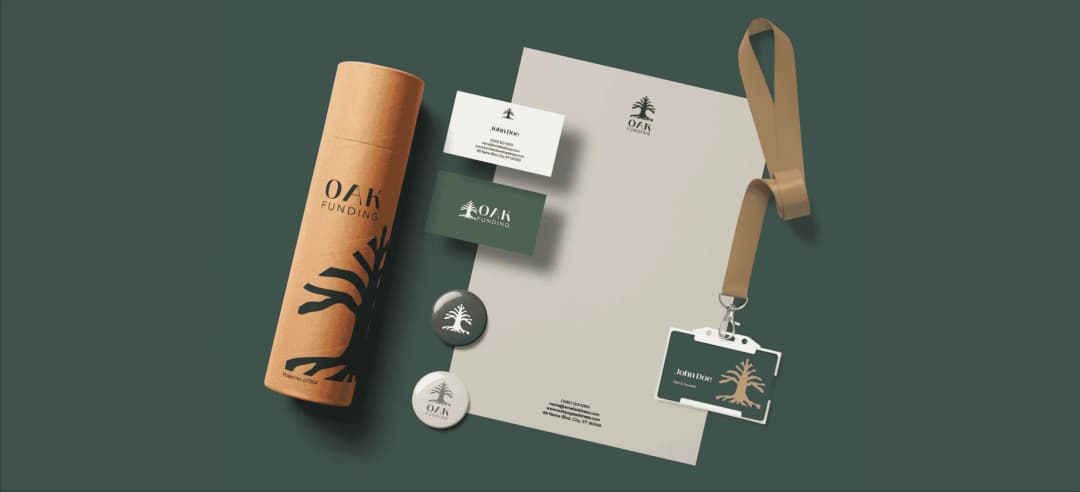
A New York real estate lender. The identity and the website were built from the fact that the firm sits on both sides of the table, as an owner and as a lender, and from a tone of stability and growth. Logo, color, type, guidelines, and the site are the deliverables.
CoverWhale
An InsurTech broker in trucking insurance. Logo, copy, and a website, made so the offer could be understood quickly. It is a useful example when the strategy and the site are one project. At Splash Creative that combined scope is branding plus the website, or the website on its own at web design.

Elivate
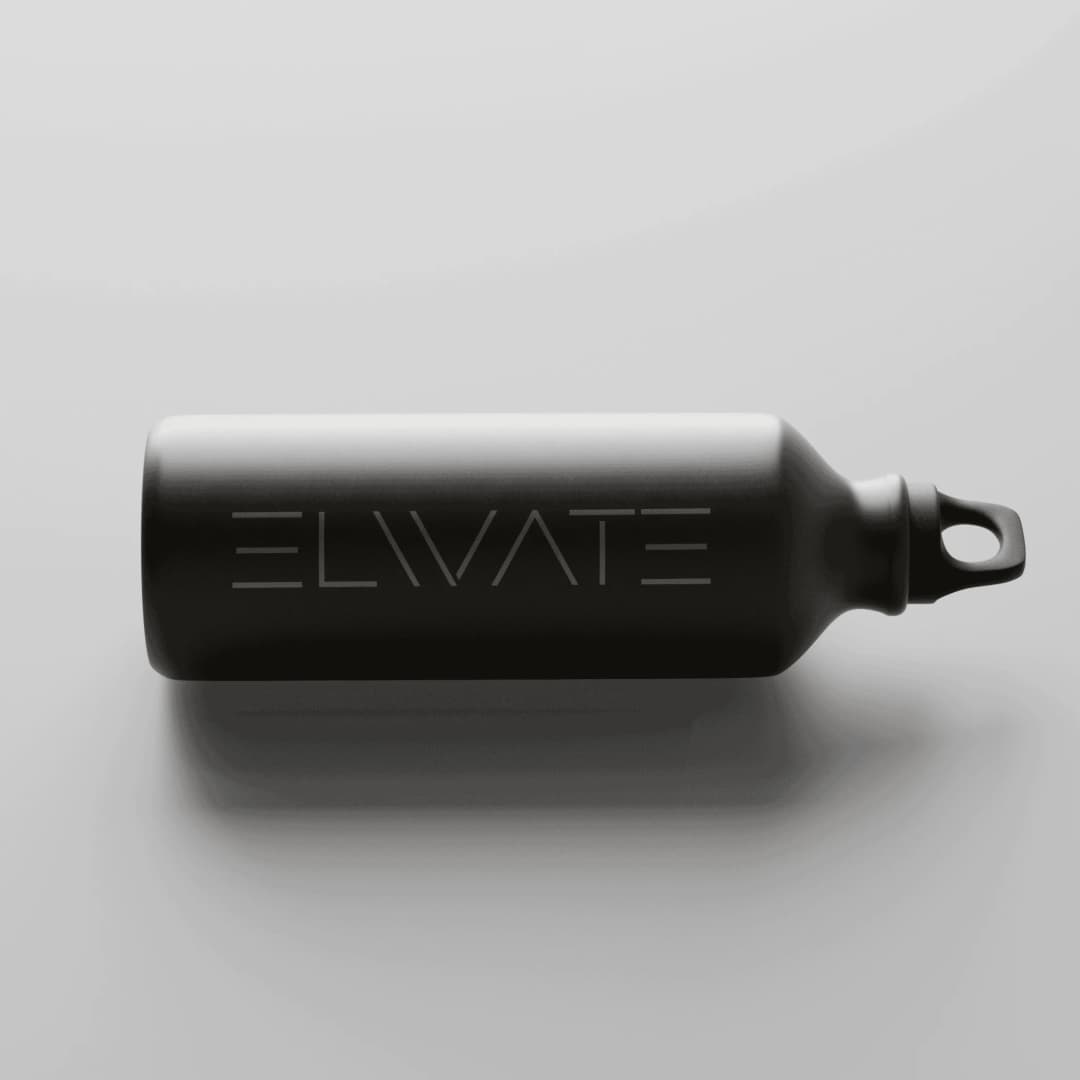
A personal training brand in Englewood, NJ. The identity is a wordmark, color, type, and guidelines, for a category where a lot of brands look the same. The case study shows the mark in use, including signage. It does not show a membership chart, because we do not publish one.
When the work is confidential
An NDA is common. It does not have to mean a blank portfolio.
- Describe the category, the size, and the problem without the brand name, if the agreement allows that.
- Show process you are allowed to show: a redacted brief, a workshop structure, a positioning draft with the proper nouns removed. Read the agreement before you assume a framework is safe.
- Ask. Some clients will allow a private link, or a version with the name removed, and will not allow a public page. Those are different permissions.
- Keep a private set for live conversations. A public site does not have to hold every project you can talk about in a room.
The goal is the thinking. You can usually show that without the files the agreement protects.
A site, a PDF, or both
A website is the piece that works when you are not in the room. It can be updated, sent as a link, and written at the length the story needs. A PDF is the piece you attach to a specific brief, where you control the order and the length. Most strategists end up with both: the site as the full set, the PDF as a cut for one reader.
Keep the PDF short enough to forward, on the order of ten to fifteen pages. Keep the site to the three to five case studies, with one sentence at the top that says who you are for. If the site and the PDF disagree about that sentence, fix the sentence before you design either one.
When the strategy has to become the identity
A positioning line that never becomes a mark, a site, or a sales conversation stays a document. Some strategists have the decision and not the team to make the work. Some founders have outgrown what an internal group can produce. That is the point where a studio is the right next step, and the point where a strategist should say so instead of stretching a PDF.
At Splash Creative, that engagement is branding: position, identity, and the applications. A website is its own scope, or part of the same one. Brand identity is from $15,000. A website is from $15,000. Brand strategy, identity, and website together is from $30,000. The fee is a fixed scope and a fixed fee, agreed in writing before design starts. The same figures are on pricing. David Herskowitz, Founder and Creative Director, leads the work from the studio at 34 S Dean St, Suite 206, Englewood, NJ 07631. There is no New York City office. The studio serves New York City and North Jersey.
If you are building your own portfolio, start with the strongest project and write the decision in one sentence. Then show the work that sentence produced. The format is the second problem.
Frequently asked questions
Can I include student or spec work in a brand strategist portfolio?
Yes, if you label it as spec. A labeled exercise that shows a real decision is more useful than a client project described so vaguely that the decision disappears. Do not present spec work as a client engagement.
How long should each case study be?
Long enough to name the situation, the decision, and what was made. On a website, a few hundred words and the work itself is enough. On a leave-behind, two or three slides. If you cannot say the decision in one sentence, the case study is not ready, whatever the length.
Should I tailor the portfolio for each pitch?
Lead with the project closest to the reader's situation. Keep the other case studies available. You do not need a new writeup for every email.
How do I show research without dumping the data?
Name the method and the finding that changed the recommendation. Interview notes, survey tables, and workshop walls belong in an appendix, or not at all, unless that artifact is the point.
Can I show a team project?
Yes. Say what you did. 'I wrote the positioning and someone else designed the identity' is a credible sentence. A page that implies you did both, when you did not, is not.
Have a related question?
Tell us what you're working on. We'll help determine whether there is a useful project to explore.
“Splash delivers powerful brand ID, slick websites and UX, beautiful graphic design, and intelligent software solutions. Great team, great experience, great creative partners.”