E-Commerce Agency Near Me: 7 Things to Check Before Hiring
By David Herskowitz, Founder and Creative Director
Seven checks before you hire an e-commerce agency, and four Splash Creative Shopify projects. A website is from $15,000. A Shopify store is from about $20,000.
Key takeaways
- Check the platform, published case studies, partner status, the named team, ownership, a migration plan, and post-launch support. Location is a tiebreaker.
- A result counts only when the case study already states it, with the window it was measured in. This article does not add one.
- Splash Creative builds Shopify stores from Englewood, New Jersey. No Shopify Plus Partner badge is published. There is no New York City office.
- Brand identity is from $15,000. A website is from $15,000. Brand and website together is from $30,000. A Shopify store is from about $20,000.
Ecommerce design
Make choosing feel simpler.
An ecommerce experience has to express the brand while helping a customer make a purchase. We design around both, with close attention to the information and interactions that make a buying decision possible.
By David Herskowitz, Founder and Creative Director, Splash Creative. November 16, 2026.
A search for an e-commerce agency near you returns a list. It does not tell you who can build the store. Check seven things before you hire: the platform and the scope, case studies that match the job, partner status you can verify, the people who will do the work, ownership of the store and the data, a plan for search if the store moves, and what happens after launch. Location is the last filter.
The four projects later in this article are published Splash Creative work. Each note stays inside that case study.
Does a local e-commerce agency matter?
Local presence is a convenience. It can make a workshop easier, and it can put you in the same time zone. It does not tell you whether the agency has built a store like yours, or whether the person who sold the project will work on it.
Use location for practical questions. Can you meet when you need to? Can you visit the studio if that matters to you? Then use the seven checks for the rest.
Splash Creative is a branding and web design agency at 34 S Dean St, Suite 206, Englewood, NJ 07631. There is no New York City office. David Herskowitz leads the work. The studio serves New York City and Northern New Jersey, and remote clients in the US and worldwide. Shopify in New Jersey is the local page for store builds. The checks below apply to Splash Creative the same way they apply to any other agency.
Confirm the platform and the scope
Start with the platform you run, or the one you plan to move to. An agency that lists several platforms may still do most of its work on one of them. Ask which one, and ask what that platform will not let them change.
Three questions are enough:
- Which platform do you build on most often?
- What about my current theme, apps, or checkout will limit the build?
- Which of those limits changes the scope you would propose?
A useful answer names the limits. "We can do anything" is not a scope.
Then match the agency to the job. The usual split is strategy, the build, and marketing after the store exists. A rebuild needs the build. Growth on a store that already works needs the marketing. A brand that does not yet have a store needs the identity and the store as one scope, or a clear reason to separate them.
Shopify is Splash Creative's page for that platform. Shopify store builds is the engagement: storefront and product pages, theme work, catalog setup, and the custom features the proposal names. Ecommerce design is the wider practice of shaping the store around the product and the buyer. Web design is the practice when the site is not only a store. Website design and development is that engagement.
Splash Creative builds Shopify stores. No Shopify Plus Partner badge is published. Whether a store needs a particular Shopify plan is a question for the proposal, not a badge.
Ask for case studies, then check partner status
Ask for published work that resembles the job. The same platform matters. So does the shape of the catalog: one product, a fashion range, a weekly menu, a product with an app. An agency's best-known logo may say little about a store like yours.
When you read a case study, look for three things:
- The client and the problem. Named, and specific enough that you can tell whether it is your situation.
- What was made. The pages, the features, the identity, the email, or the campaign. The scope should be on the page.
- A result, only if the page states one. A measured result counts when the page gives the figure and the window it was measured in. A homepage screenshot with no account of the work is a weak answer.
Ask whether you can speak with a client. Treat a refusal as information, not as an insult.
Partner status is a separate check. If an agency names a platform program and a tier, open that platform's partner directory and confirm it. A badge on the agency's own site is not the check. Partner status does not promise a good store. It does tell you the claim is real.
Splash Creative does not publish a Shopify Plus Partner badge. The work to read is the project pages, not a directory listing.
Ask who will do the work
The person in the sales call is not always the person who builds the store. Before you sign, ask for the names of the lead designer and the lead developer on your project. Titles are not names.
Then ask three follow-ups:
- How many other active projects will each of them carry while they are on yours?
- Will the people in the pitch attend the working sessions?
- If one of them leaves, who replaces them, and when do you hear about it?
"We will assign someone at kickoff" means you have not met the team you are hiring. Ask again before you sign.
At Splash Creative, David Herskowitz leads the work, with a consistent senior team from the first conversation through the work that follows. How we work is the sequence: understand the business, put the scope and the fee in writing, agree the direction, then make the work. That is one studio's model. Whatever agency you evaluate, get the names in the proposal.
Confirm who owns the store
Confirm ownership before you sign. Ask for each of these in writing:
- Store and accounts. The store, the domain, and the platform account sit in your name and under your login.
- Custom code. You own the code written for you, or you hold a perpetual license to use and modify it.
- Customer data. Customer records, order history, and analytics belong to you, and you can export them.
- Third-party licenses. The proposal lists every paid theme, app, or plugin, and who holds each license.
- Admin access. You have administrator access during the project, not only at handoff.
- Exit. The contract says what is handed over if the relationship ends, and how quickly.
Have your attorney read the intellectual property and data clauses. This is a contract question as well as a technical one.
Ask how a migration protects search
A platform move is where a store can lose the pages that already rank. If the project includes a move, ask for a written plan before the work starts.
A credible plan covers five steps:
- A crawl of the current site, so the URLs that rank or earn links are listed.
- A redirect map from each old URL to the closest new one.
- Metadata carried over or rewritten on purpose: titles, descriptions, headings, and structured data.
- A staging review of the new store before launch.
- A watch after launch for indexing and crawl errors, with a named owner for the fixes.
Ask the agency to walk through a past migration and to stay with what that project page actually states. "Rankings usually come back" is not a plan.
If you sell in more than one language or currency, say so on the first call. Those requirements change the build. An agency that does not do that work should say so before kickoff.
Ask what happens after launch
Launch is the start of running the store. Before you sign, ask what support looks like when the store is live.
Ask for three things:
- Who you contact, and how support is priced. A retainer, an hourly arrangement, or a fixed window after launch. Get the terms in the proposal.
- What you will review first. Name the pages or flows, and the date of the first review. Do not accept a promise of a conversion rate.
- Which work is in house. Email, search, paid media, and changes to the theme are different jobs. Ask which ones the agency does, and which it hands to someone else.
Ecommerce email is the practice for the messages after a purchase. Email and lifecycle marketing is that engagement. A Klaviyo setup price is not published. Ongoing partnerships are from $2,500 a month. The agreement names what the month includes.
Seven checks, side by side
Use the same questions on every call. If a row has no written answer, do not fill it in yourself.
| Check | What a written answer includes | Weak answer |
|---|---|---|
| 1. Platform and scope | The platform, the limits of your current setup, and whether the job is strategy, a build, or marketing | "We can do anything" |
| 2. Case studies | Named clients, the problem, and what was made. A figure only when that page already states it | A logo or a homepage, with no account of the work |
| 3. Partner status | The program and the tier, confirmed on the platform's directory | A badge you cannot find on the platform's own site |
| 4. Who does the work | The lead designer and developer named in the proposal | "We will assign someone at kickoff" |
| 5. Ownership | Store, code, and data in your name, with an export path | Accounts you cannot access, or no handover terms |
| 6. Search on a migration | A crawl, a redirect map, a staging review, and a watch after launch | "Rankings usually come back" |
| 7. After launch | Support terms and the first review, with no promised conversion rate | Support only "if you need it" |
Stores from Splash Creative
The checks above are questions for any agency. The projects below are Shopify and e-commerce work Splash Creative has published. Our work is the full set. Each note stays inside the case study. This article does not add a sales figure.
Huug
Huug is a New York intimates brand. The case study says the store has to help customers navigate styles and pack sizes, and that the same work continues into the messages customers receive before and after a purchase. It says Huug needed a team that could move between custom Shopify functionality, lifecycle communications, and copy.
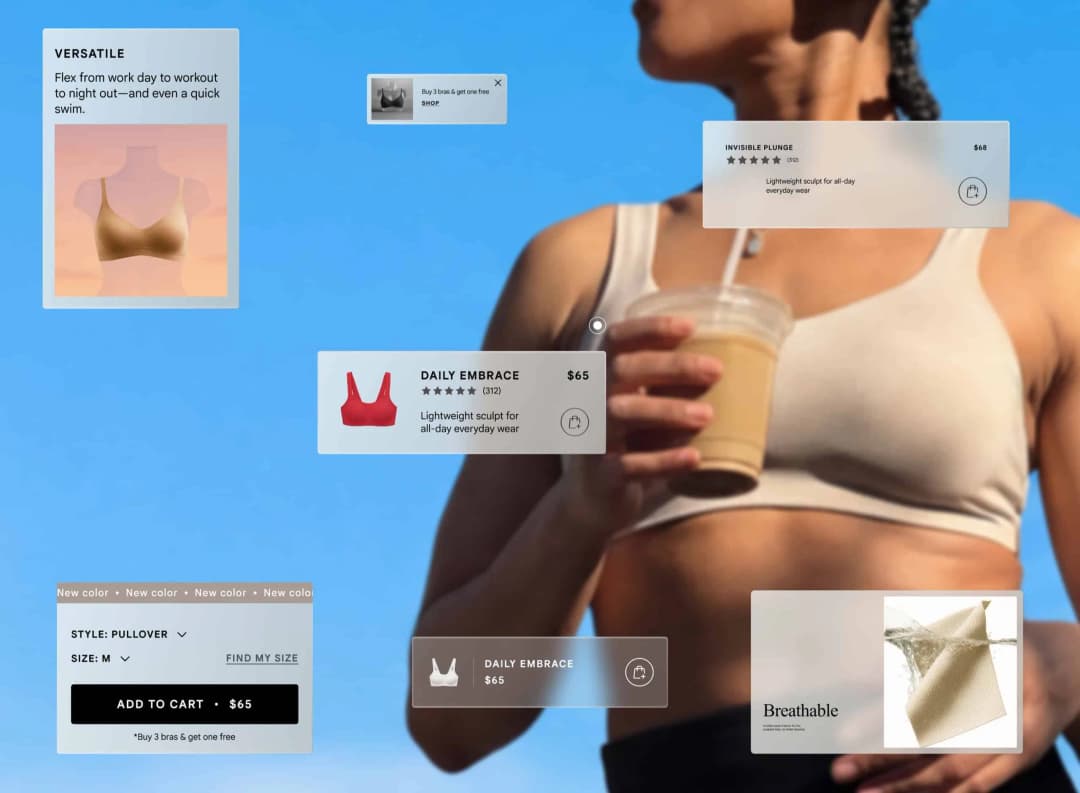
The page says the Shopify work includes custom style selectors and pack-size logic, visual product menus, and a unified badge system. It says the email work was an audit and a rebuild of the Klaviyo flows, with copy across the site, the products, and the email. The case study reports conversion, average order value, first-purchase rate, an upsell acceptance rate, and email-attributed revenue, each with the window it was measured in, and a note on how to read those figures. This article does not restate the numbers. Read them on the case study.
Bettertap
Bettertap is a countertop water system. It filters tap water, pours at each person's preferred temperature, and tracks how much everyone in the household drinks through an app. The case study says it has to win over two habits people already have: drinking from the tap and buying bottled water.
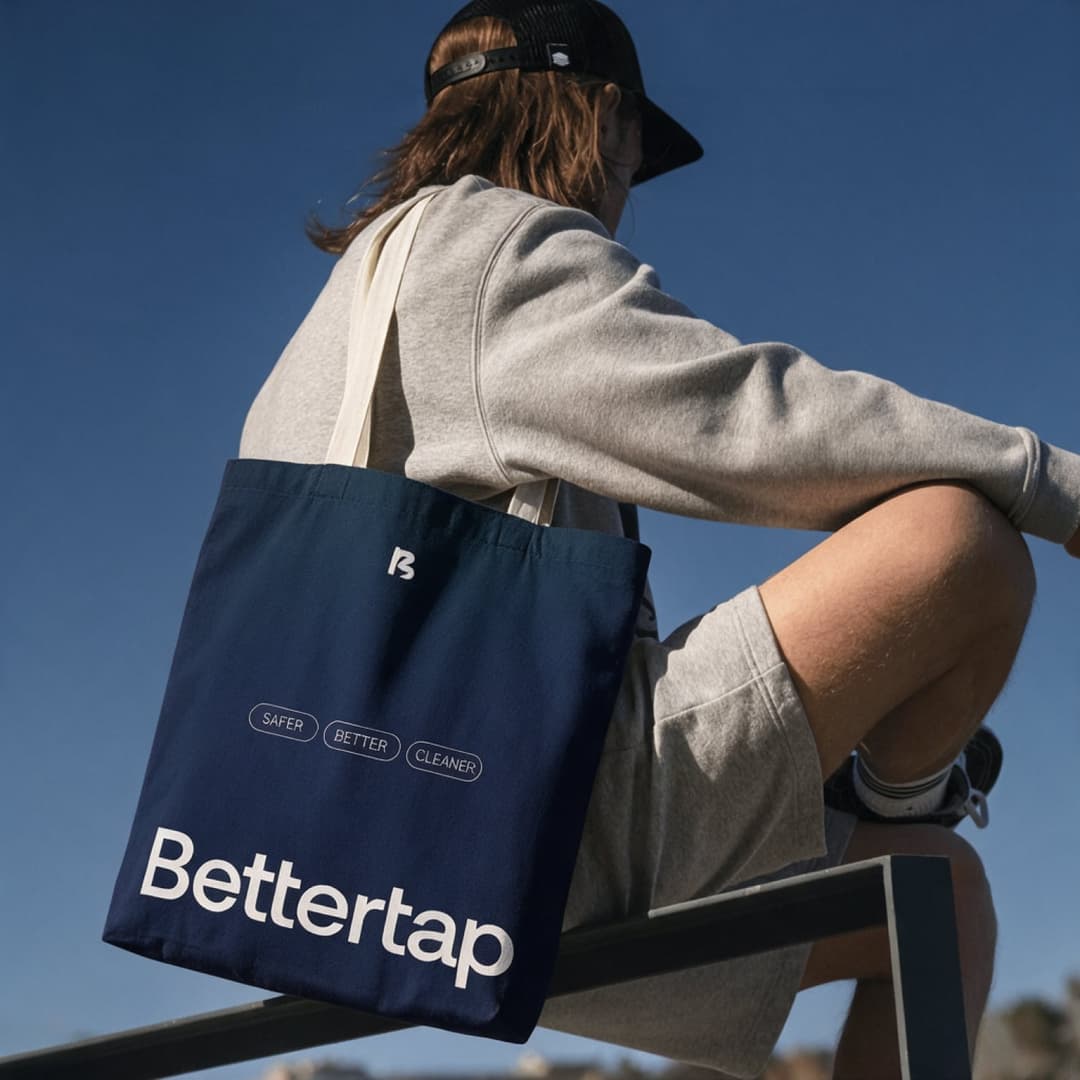
The published scope is brand identity, a Shopify website, and social content. The page says the work includes a wordmark and monogram, a palette of deep navy, green, and cream, and a type system that runs from packaging and merchandise to the website. The Shopify store and social content open with the problem, show the product in kitchens, and explain the app through the people using it. The case study does not report a sales figure, and this article does not add one.
The Absolute Collagen
The Absolute Collagen is a women-owned supplement brand founded by Aliza and Shana. The case study says it makes one product, hydrolyzed bovine collagen from grass-fed, grass-finished cattle, with every lot independently tested. It says that in a category full of blends and big promises, the brand stands out for its restraint, and the previous site did not show that.
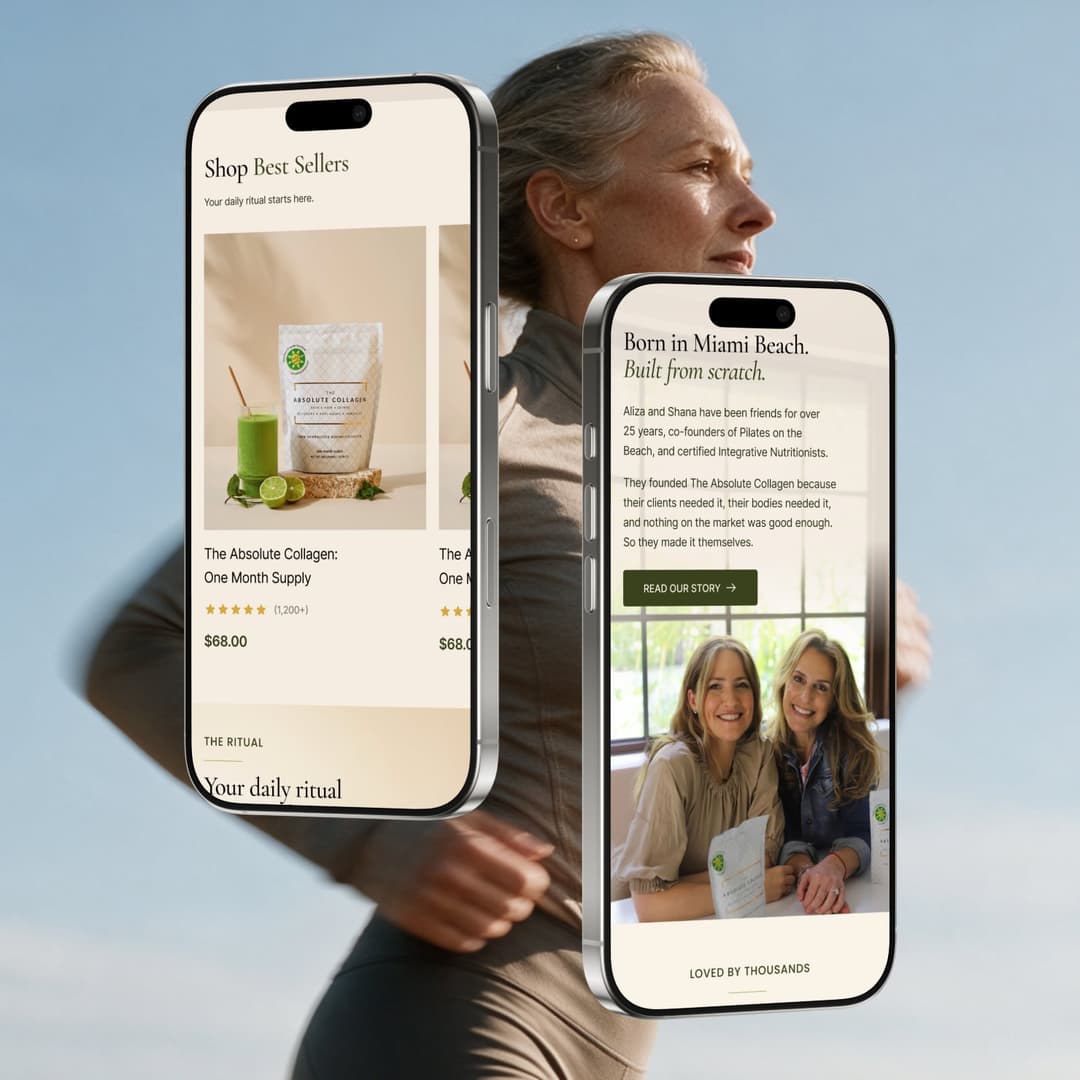
The published scope is a Shopify website redesign and email design. The page says the store was redesigned in a warmer, more editorial direction: cream, olive, and soft gold, sunlit photography, and a calm layout that lets the product and the founders lead. The copy explains what grass-finished means and what the testing covers. The emails carry the same voice through launches, restocks, and subscription reminders. The case study does not report a revenue figure, and this article does not add one.
Mazza by Marlene
Mazza by Marlene makes handmade Sephardic and Syrian prepared foods, fresh every week in Brooklyn and Oakhurst, New Jersey. The case study says everything is certified kosher under JSOR supervision, and that orders for Shabbos, holidays, and catered events each work differently.
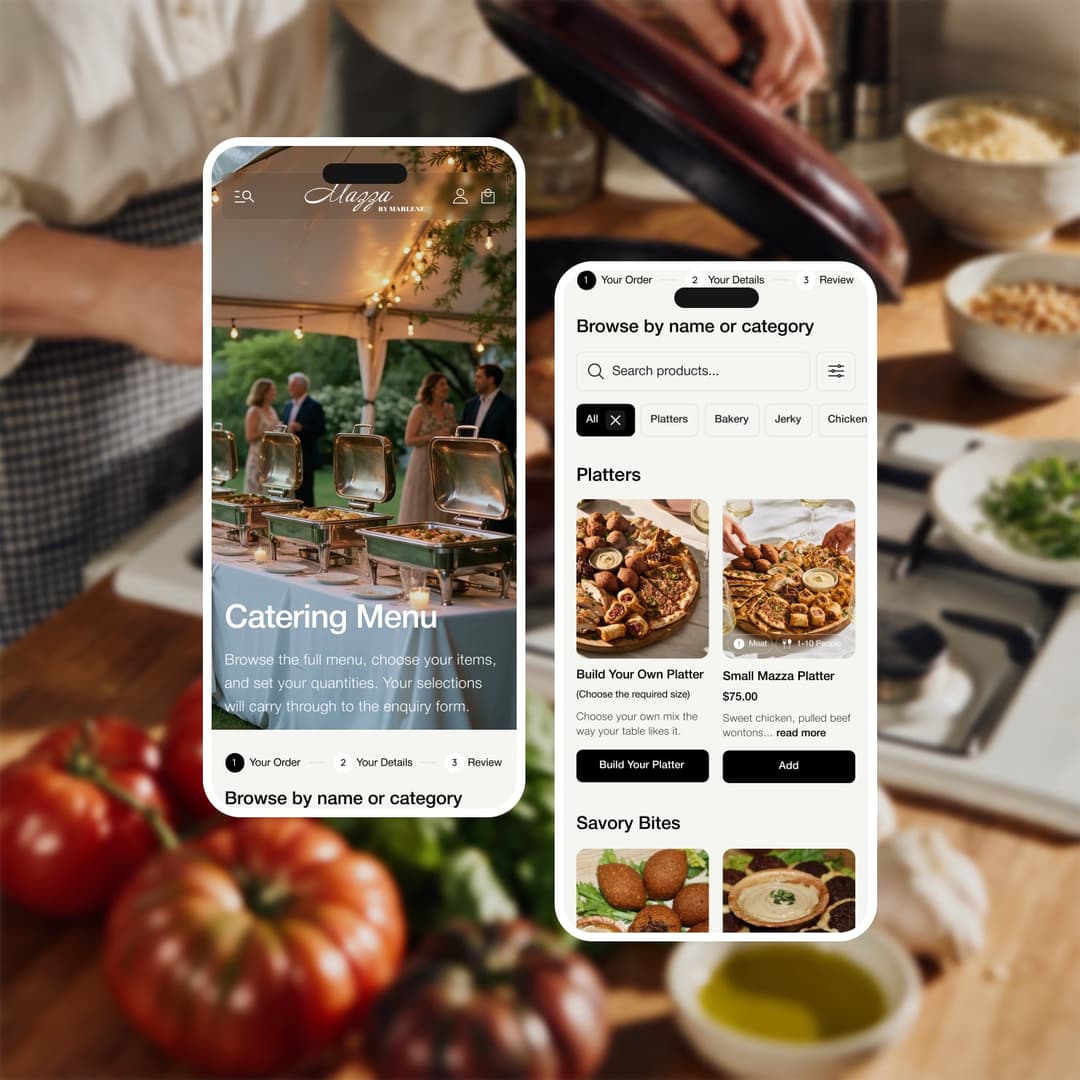
The case study lists the scope as an e-commerce website. The project page lists Shopify setup and customization, copywriting, and mobile-first design. The page says the site is built around a weekly Shabbos menu with pickup or delivery and a clear cutoff, a holiday menu, platters, and a catering menu that turns selections into an inquiry. The design leads with the food and the family. The case study does not report a sales figure, and this article does not add one.
What the work costs
Splash Creative is at 34 S Dean St, Suite 206, Englewood, NJ 07631. There is no New York City office. David Herskowitz leads the work, with a consistent senior team from the first conversation through the work that follows.
Project work is a fixed scope and a fixed fee, agreed in writing before the work starts. These are starting points. The proposal sets the fee for the scope. A Klaviyo setup price is not published.
| Scope | Starting point | Timing |
|---|---|---|
| Website | from $15,000 | Set in the written proposal |
| Brand identity | from $15,000 | A focused identity takes 4 to 6 weeks. Full brand strategy and identity takes 8 to 12 weeks. |
| Brand and website | from $30,000 | The website schedule is set in the written proposal |
| Shopify store | from about $20,000 | Set in the written proposal |
| Ongoing partnership | from $2,500/month | Set in the written agreement |
Pricing is where those starting points are explained. What a Shopify store costs uses the same Shopify floor. Brand identity is the identity engagement on its own. Branding is the wider practice when the position and the store are one scope. A focused identity takes 4 to 6 weeks. Full brand strategy and identity takes 8 to 12 weeks. How long a brand identity takes walks those phases. The store schedule stays in the proposal.
A store on its own uses the Shopify floor, from about $20,000, when the identity is already settled. Brand and website together, from $30,000, is the scope when the identity is open and the store is how people will meet the company. A marketing site that is not a store uses the website floor, from $15,000. If you want to talk through which of those fits, book a call and say what you are working on.
Frequently asked questions
Does an e-commerce agency need to be in my city?
No. A shared time zone and the option to meet can help. They do not tell you whether the agency can build the store. Splash Creative is at 34 S Dean St, Suite 206, Englewood, NJ 07631, and serves New York City from there. There is no New York City office. Remote clients in the US and worldwide are part of the same practice. Read the work first, then use location as a tiebreaker.
How much does Splash Creative charge for an e-commerce project?
Brand identity is from $15,000. A website is from $15,000. Brand and website together is from $30,000. A Shopify store is from about $20,000. Ongoing partnerships are from $2,500/month. These are starting points. The proposal sets the fee for the scope. Project work is a fixed scope and a fixed fee, agreed in writing. The same figures are on pricing. A Klaviyo setup price is not published.
How long does a Shopify store take?
The website schedule is the one in the written proposal. It depends on the catalog, the page list, and how fast approvals come back. Splash Creative does not publish a week count for a store. When the engagement also includes brand identity, a focused identity takes 4 to 6 weeks. Full brand strategy and identity takes 8 to 12 weeks. How long a brand identity takes walks those phases.
Is Splash Creative a Shopify Plus Partner?
No Shopify Plus Partner badge is published. Splash Creative builds Shopify stores. Whether a store needs a particular Shopify plan is a scope question. Shopify and Shopify store builds describe the work.
What should a case study show before I hire?
The client, the problem, and what was made, on a page you can open. A measured result counts only when that page already states it, with the window it was measured in. Huug is one published Shopify and Klaviyo project. This article does not restate the figures on that page.
Who should own the store and the customer data?
You should. Ask for the store, domain, and platform account in your name, custom code you can keep or a perpetual license to use and modify it, and an export path for customer and order data. Ask which paid themes and apps the build adds, and who holds each license. Have your attorney read the intellectual property and data clauses before you sign.
Have a related question?
Tell us what you're working on. We'll help determine whether there is a useful project to explore.
“Splash delivers powerful brand ID, slick websites and UX, beautiful graphic design, and intelligent software solutions. Great team, great experience, great creative partners.”