
Professional services proposal template
By David Herskowitz, Founder and Creative Director
A fill-in proposal for professional services firms: the ten sections, what to write in each, and a copyable HTML draft. Splash Creative works fixed scope, fixed fee, agreed in writing.
Key takeaways
- A proposal is for one buyer and one problem. A capabilities deck lists what the firm can do for many clients.
- The ten sections are business context, positioning, scope, deliverables, timeline, responsibilities, investment, proof, measurement, and approval.
- Proof is a project the buyer can open. Describe only what that project page states.
- At Splash Creative, brand identity is from $15,000, a website is from $15,000, and brand and website together is from $30,000.
- Project work is a fixed scope and a fixed fee, agreed in writing. Ongoing partnerships start at $2,500 per month.
Splash Creative
Have a related question?
Tell us what you're working on. We'll help determine whether there is a useful project to explore.

By David Herskowitz, Founder and Creative Director, Splash Creative. November 3, 2026.
A professional services proposal is a decision document for one buyer and one problem. It is not a capabilities deck with the client's name on the cover. The draft below is a template you can copy. Each section says what belongs there, what to leave out, and how to tell when the section is finished.
The examples further down are real Splash Creative projects. They show the kind of work a proposal for a firm like this has to be able to describe: a position, a site, a deck. They are not sample proposals, and this page does not add results, quotes, or scope beyond the project pages.
What this template is for
Use it when a firm sells judgment: advisory, investigations, finance, a practice, a consultancy. The buyer is comparing you with another firm, or with doing nothing. They need to see the situation, the recommendation, the work, the fee, and what they have to do.
A capabilities deck can sit in the appendix. It lists what the firm can do for many clients. The proposal is the page that asks this client to say yes to one scope.
B2B branding is the practice when the firm itself needs a position and a public face before the next proposal goes out. Web design is the practice when the page the proposal sends someone to is part of the work. How we work is the sequence Splash Creative uses: understand the business, put deliverables, timing, and fees in writing, agree the direction, then make the work.
The ten sections
Copy the headings. Replace every bracket. If you cannot fill a bracket with a fact, leave it empty. An empty slot is easier to fix than a sentence any competitor could sign.
| Section | What to write | Finished when |
|---|---|---|
| Business context | Who the buyer is, what just happened, and the objection in their words. | A colleague who was not on the call can say what the buyer is worried about. |
| Positioning | One sentence: who it is for, the category, the difference, and the evidence. | Swapping in a competitor's name makes the sentence false. |
| Scope | The problem this engagement addresses, and the problems it does not. | A reader can tell a related request is inside the fee or outside it. |
| Deliverables | The things the buyer will be able to open, in the order they will use them. | Each line is a file, a page, or a working system, not a capability. |
| Timeline | Phases, the date each one is due, and what the date depends on. | A missed client input has a named effect on the date. |
| Responsibilities | What you do, what the buyer does, and who approves. | The buyer can see the tasks that sit on their side. |
| Investment | One fee for this scope, what it covers, and how it is paid. | The number matches the deliverables above it, not a menu of extras. |
| Proof | Work the buyer can open that is the same kind of problem. | You are not describing a result the linked work does not state. |
| Measurement | The signal you will read after the work is in use, and when you will read it. | The signal is something the buyer already tracks, or you say that you will agree one. |
| Approval | What yes means, who signs, and the date the scope stays as written. | The document asks for a decision. |
Copyable proposal template
Paste this into a document or a page. Keep the headings. Replace the brackets.
<article>
  <h1>[Firm name]: proposal for [client name]</h1>
  <p>Prepared for [buyer name, role]. [Date]. Valid through [date].</p>

  <h2>Business context</h2>
  <p>[Buyer] is [role] at [organization]. They came to us because [situation, in their words]. The objection we have to answer is: "[the sentence they actually said]."</p>

  <h2>Positioning</h2>
  <p>For [specific buyer] who [problem], [firm] is the [category] that [difference] because [evidence the buyer can check]. Unlike [the alternative they compare you with], we [the one thing that alternative cannot say].</p>

  <h2>Scope</h2>
  <p>This engagement addresses [the problem in the sentence above]. It does not include [the adjacent work you are not doing]. A change to either line is a change to the fee, written down before the work changes.</p>

  <h2>Deliverables</h2>
  <ul>
    <li>[Deliverable]: [what the buyer can open, and what decision it supports].</li>
    <li>[Deliverable]: [what the buyer can open, and what decision it supports].</li>
  </ul>

  <h2>Timeline</h2>
  <p>[Phase] runs [start] to [end], and depends on [the access, content, or approval the buyer provides]. [Next phase] starts when [that input] is in.</p>

  <h2>Responsibilities</h2>
  <p>We will [the work]. You will [access, content, reviews, and a single approver]. Feedback comes back as one set of notes, by [date].</p>

  <h2>Investment</h2>
  <p>The fee for the scope above is [amount]. It covers [what is included]. It is payable [schedule]. Work outside the scope is quoted before it starts.</p>

  <h2>Proof</h2>
  <p>The closest published example is [name and link]. It shows [only what that example actually shows]. It is not a promise that your engagement will produce the same outcome.</p>

  <h2>Measurement</h2>
  <p>After [the work is in use], we will read [signal the buyer already tracks] on [date]. If that signal is not defined yet, we will name one before kickoff and put it in this document.</p>

  <h2>Approval</h2>
  <p>Approval means the scope, the fee, and the dates above are the engagement. Signed by [name] by [date]. Questions before that date change the draft. Questions after it are a new scope.</p>
</article>
How to fill each section
- Start from the last conversation, not from your services list. Write the business context from the call note. If the note says "the site makes us look smaller than the work," that sentence is the objection. Do not replace it with a slogan.
- Write the positioning sentence before the deliverables. If the sentence is still true with a competitor's name in it, the scope you are about to list is a menu. How to write a positioning statement is the longer version of that test.
- Make every deliverable a thing someone can open. "Brand strategy" is not a deliverable until you name the page, the deck, or the guideline the buyer receives. "A website" is not a deliverable until you name the pages and what those pages have to make clear.
- Put the buyer's work in the timeline. Content, access, and approvals move the date. Say which ones. A date with no dependency is a wish.
- One fee, next to the scope it pays for. If you offer two options, they are two scopes, each with its own fee. Do not hide a second price in a footnote.
- Proof is a link, not an adjective. Point to a project, a page, or a deck the buyer can open. Describe only what that page states. If you do not have a public example, say what you will show in the meeting, and do not invent a number.
- Measurement is a signal and a date. "We will improve perception" is not a measure. "We will read qualified conversations from the contact form for the 30 days after launch, against the 30 days before" is a measure, if the buyer already counts those conversations. If they do not, the proposal says you will agree the signal before kickoff.
- The last section asks for a signature. Name the person and the date. A proposal that ends with "we would be honored" has not asked for a decision.
Positioning the firm
Modality Advisors works across strategic advisory, execution, and capital formation. The positioning needed to make those connected activities understandable to an institutional audience. The work was a restrained identity and concise copy, brought together in a website that explains the firm's offer. The firm has a coherent way to introduce itself across identity, language, and digital experience.
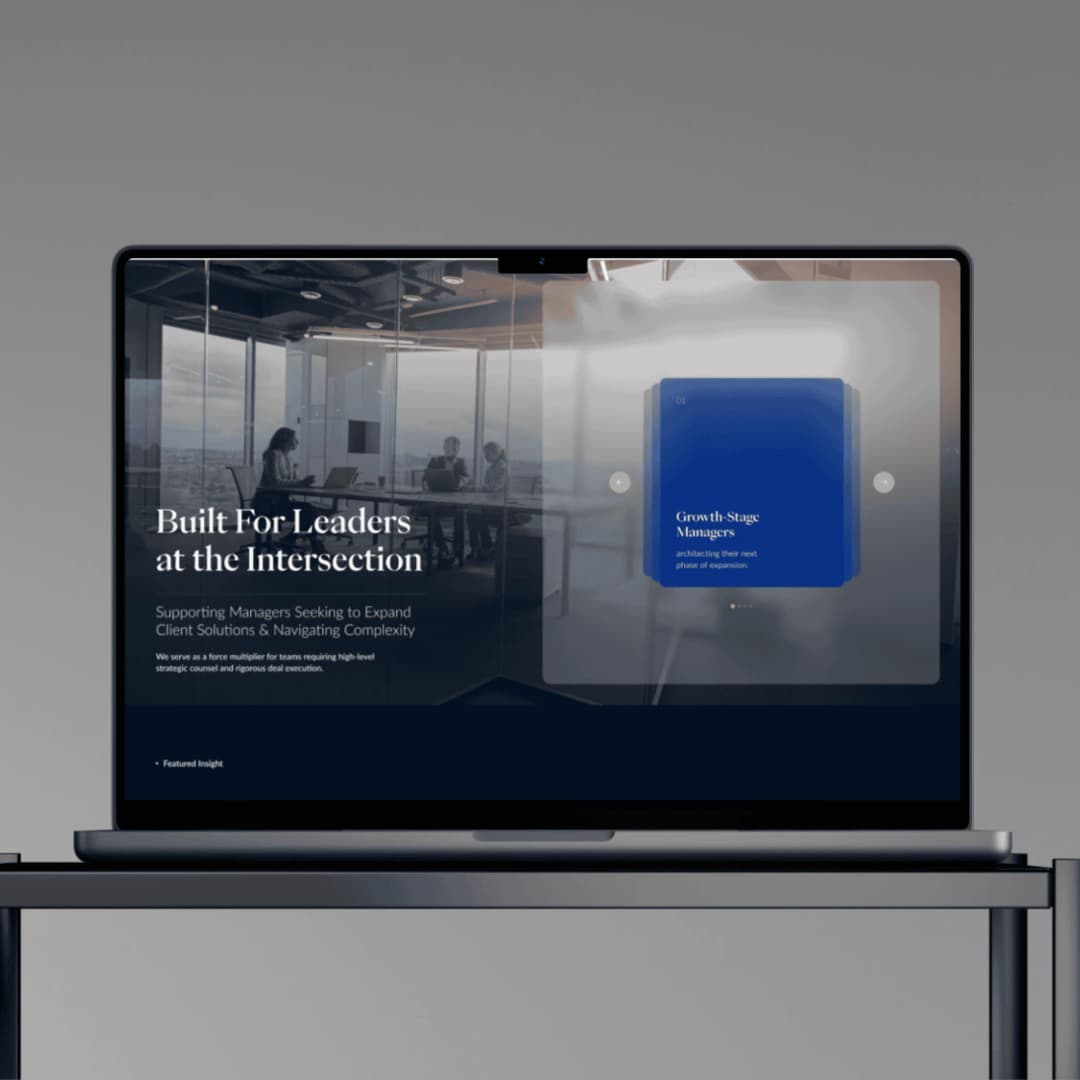
That is the job of the positioning section in a proposal. One reader. The activities the firm actually sells. A sentence specific enough that a generalist advisory firm could not sign it. The deliverables that follow (the identity, the copy, the site) are how that sentence becomes something a buyer can see. They are not a second strategy.
Scope the buyer can evaluate
Alias Intelligence provides due diligence, background screening, and investigative services. The website suggested innovation but did not explain the services or their value clearly enough. The content was rewritten around practical benefits and organized around how clients evaluate investigative services, with restrained design, clear hierarchy, and early credentials. Visitors get a more direct introduction to the business and a clearer structure for evaluating the services. The published scope is copywriting, content structure, and website design.
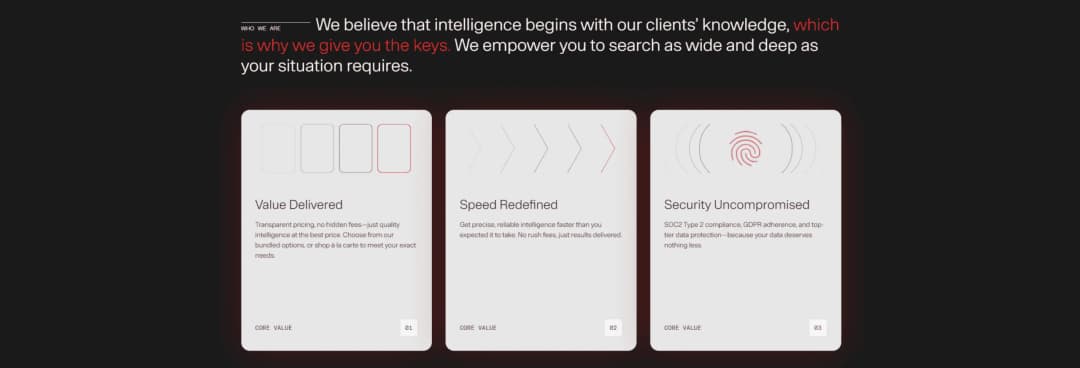
A scope section should be that plain. Say what the buyer is trying to judge, the order they judge it in, and the work that is in the fee. "Innovation" did not explain the services. A proposal that leads with a capability and never says what the buyer will be able to evaluate has the same problem.
Proof in the materials you already send
Golden Mountain Investments is a private equity firm investing in operating businesses. The existing identity and presentation materials had become inconsistent. The work was a logo and a wider identity, with the palette and typography carried into the website, and investor decks redesigned in the same system. The website and the investor presentations now share a coherent visual foundation. The published scope is brand identity, website, and investor decks.
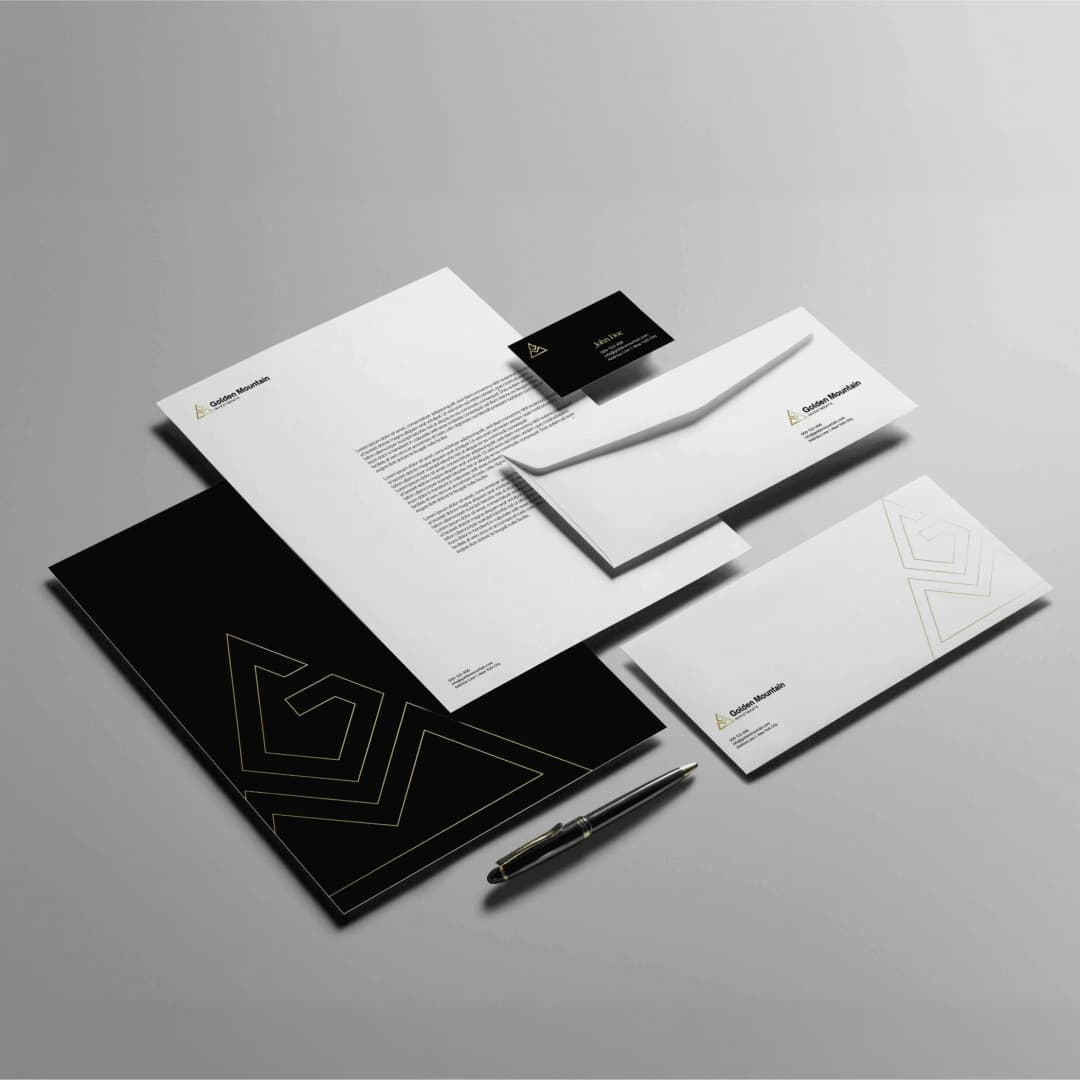
In a proposal, proof is one of those materials, linked. A deck the buyer already sends, a page they already have, or a project page that states the scope. Do not add a result the page does not state. If the proof is "the materials did not match," say that, and say which materials the engagement will bring into one system.
The page the proposal points to
Oak Funding works in real estate finance, with an owner's perspective as well as a lender's. The firm needed a brand that could introduce that point of view clearly. The identity is a hand-drawn oak tree mark with a hidden upward arrow and substantial roots. Forest green and warm gold carry the idea across the identity and the website. The business has a distinct visual language and a digital home that bring the positioning together. The published scope is identity and website.

If your proposal tells a buyer to look at the site, the site has to make the same case as the document. Web design is where that page is scoped. A proposal that describes a firm one way and links to a site that describes it another way fails on the first click.
How Splash puts this in a proposal
Splash Creative uses the same shape on our own proposals. We recommend a scope, explain the decisions behind it, and set out deliverables, responsibilities, timing, and fees in writing. Project work is a fixed scope and a fixed fee, agreed in writing before the work starts. If the work changes, we discuss the effect on timing and cost before proceeding.
Brand identity is from $15,000. A website is from $15,000. Brand and website together is from $30,000. These are starting points. The proposal sets the fee for the scope. A focused identity takes 4-6 weeks. Full brand strategy and identity takes 8-12 weeks. When a website is part of the engagement, that phase is timed in the written proposal.
Ongoing campaign work is a different arrangement. Creative partnership is an embedded partner or a committed block of hours each month. Ongoing partnerships start at $2,500 per month. The proposal sets out the fee, scope, and terms before we start.
How we work is the sequence those dates sit on. Pricing is where the starting points are explained. Branding is strategy and identity. B2B branding is the page for firms whose buyers decide from a site, a deck, and a first meeting.
Splash Creative is in Englewood, NJ. There is no New York City office. David Herskowitz leads the work.
You can send the template above without us. Bring us in when the positioning sentence stays generic, or when the next step is an identity and a website that have to agree with the proposal.
Frequently asked questions
What is the difference between a proposal and a capabilities deck?
A capabilities deck shows the range of work a firm can do for many clients. A proposal is for one buyer and one problem. It names the situation, the recommendation, the scope, the fee, and the decision you are asking for. The deck can sit in the appendix. It does not replace the proposal.
How should a proposal present fixed-scope work?
State the deliverables, the timeline, the responsibilities on both sides, and one fee as a single package. Say what is included and what would be a change to the fee. At Splash Creative, project work is a fixed scope and a fixed fee, agreed in writing before the work starts. Brand identity is from $15,000. A website is from $15,000. Brand and website together is from $30,000. The proposal is where the fee for a specific scope is written down.
How do you tie a recommendation to an objection?
Put the objection in the buyer's words in the business context. Then point the scope at that objection. If the objection is that a buyer cannot tell what the firm does, the deliverables should name the pages or the deck that will make it clear, and the proof should be a project where that was the problem. A longer capabilities list does not answer a specific objection.
What should the investment section include?
One fee for the scope in the document, what that fee covers, and how it is paid. If you have two options, they are two scopes with two fees. At Splash Creative the published starting points are brand identity from $15,000, a website from $15,000, and brand and website together from $30,000. Ongoing partnerships start at $2,500 per month and are scoped separately. The number in the proposal is the fee for the work described above it.
Have a related question?
Tell us what you're working on. We'll help determine whether there is a useful project to explore.
“Splash delivers powerful brand ID, slick websites and UX, beautiful graphic design, and intelligent software solutions. Great team, great experience, great creative partners.”





Related articles
- Branding Agency for Professional Services Firms in New Jersey: Identity Refresh for Established NJ CompaniesInsights
- Web Design Agency NYC for Professional Services Firms: Custom Websites That Work for B2B BuyersInsights
- Web Design Agency NYC for Financial Services and Fintech Companies: Websites That Signal Credibility to Sophisticated BuyersInsights