Website Development Agency: 7 Types and How to Choose
By David Herskowitz, Founder and Creative Director
Seven website development agency types, a six-step way to choose, and four Splash Creative sites. Websites from $15,000.
Key takeaways
- The seven types are boutique, full-service, specialized, offshore, freelancer collective, in-house hire, and platform or ecommerce specialist. Match the type to the outcome, the scope, and the budget before you compare firms.
- A new build, a redesign, and a site that connects to other systems need different skills. Name the scope, and list the systems, before you ask for quotes.
- At Splash Creative, a website is from $15,000. Brand identity is from $15,000. Brand and website together is from $30,000. A Shopify store is from about $20,000.
- The four projects below are Splash Creative websites. Each note stays inside that case study. None of them adds a traffic or sales figure.
Web design
Your website should reflect how the business works.
We design and build websites that help people understand your offer, find the information that matters, and take a considered next step. Brand, content, user experience, and development inform each other.
Websites from $15,000.
By David Herskowitz, Founder and Creative Director, Splash Creative. November 9, 2026.
The seven types of website development agency are boutique, full-service, specialized, offshore, freelancer collective, in-house hire, and platform or ecommerce specialist. Choose by writing the business outcome, the scope, and a budget range, then matching those to one type and asking the same questions of two or three candidates.
The four projects after the steps are Splash Creative websites: Agus Holdings, Alias Intelligence, Eurotech, and The Absolute Collagen. The case study is the record. This article does not add a result the case study does not state.
The seven types
| Type | Fits when | Tradeoff |
|---|---|---|
| Boutique agency | You want a small studio and direct access to the people doing the work | A small team has limited capacity, so the schedule depends on who is free |
| Full-service agency | The project needs strategy, design, development, and other marketing coordinated together | The fee covers more disciplines, and at a larger firm the work can move between teams |
| Specialized agency | The constraint is specific, such as a regulated industry or one kind of build | Less useful once the work leaves that specialty |
| Offshore agency | The specification is written down and you can manage across time zones | Distance adds coordination, and a vague brief is harder to settle across time zones |
| Freelancer collective | The work is custom and you can direct the specialists, or a named lead will | Coordination falls to you unless someone is accountable for the whole |
| In-house hire | The work is steady enough for a designer or developer on payroll | Salary, recruiting time, and the range of one person's skills |
| Platform or ecommerce specialist | The site lives on one platform, such as Shopify | Less flexibility if you later leave that platform |
An in-house hire is a staffing choice, listed here because it is the alternative many companies weigh against an agency. The other six are outside partners. Sort by type before you sort by name. Each type trades off cost, speed, senior attention, and breadth in a different way, and the wrong category creates problems that a polished pitch does not fix.
The steps below build toward the choice in order. Steps 1 and 2 define what the site must do and how much work it involves. Step 3 sets the budget range. Step 4 maps those answers to one type. Steps 5 and 6 cover how to vet candidates and what to ask about the schedule.
Step 1: What business outcome should the website deliver?
Start with the result you want. Before you contact anyone, write the business outcome the site has to produce, such as more qualified leads or a shorter sales cycle.
Agencies respond to outcomes. Ask for a modern website and the quotes will describe different projects. Ask for a site that shortens the path from a first visit to a booked call, and every candidate has the same target.
Turn a vague goal into a sentence you can reuse:
- Vague: "We want a better website."
- Usable: "We want more demo requests from organic traffic within six months of launch." Name the number you will treat as success once you know your current baseline.
- Usable: "We want buyers to see pricing and scope before the first call."
A strong outcome names what will change, where it will be measured, and by when. It also gives you a way to judge the work after launch. Your result depends on the current site and on how well the new one matches what buyers need. Treat the sentences above as a way to write the goal. They are examples of wording, and they are not a forecast.
Write the outcome in one sentence. You will use it in Step 5, when you ask each agency how it would measure success.
Step 2: Do you need a new build, a redesign, or integrations?
Scope decides which types are even in the running. A new build, a redesign, and a project full of connections each call for different skills, so name yours before you ask for quotes.
A new build starts from nothing: strategy, structure, design, development, and content. It suits a new business or a brand that has outgrown its site completely.
A redesign keeps the content and structure that work and replaces what does not. It still needs a reason. If the current site converts and only looks dated, you may need a refresh of the presentation, and you may still keep the structure.
Integrations and ecommerce add work that has little to do with how the site looks. Connecting a CRM, a booking system, a payment processor, or a Shopify store means more technical risk and more testing. List every system the site must connect to before you talk to anyone.
You also need to know which skills you are buying. A web designer decides how the site looks and how people move through it: layout, typography, user flows, and the visual system. A web developer builds it: writing the code, connecting systems, and making the site fast, secure, and stable. Some people do both. Most agencies staff both roles, and a good project needs both.
Ask each agency why it recommends its platform for your project. Be wary of an answer that amounts to "it is what we always use." Website design and development is the Splash Creative scope for that work: structure, content, design, and build, with the platform named in the proposal. Web design is the same practice described from the visitor's side.
Step 3: How much does a website development agency cost?
Write two numbers before you start outreach. The first is the least this scope is worth to you. The second is the most you will spend before the return stops making sense. Without both, every quote is hard to judge.
Cost follows the type and the complexity. A focused marketing site and a custom build with a store, a configurator, or several integrations are different projects, and they should be quoted as different projects. Ask how the team, and where it sits, changes the quote. AI tooling changes how some teams work. It does not set a universal discount. Ask how a team uses those tools, and how that changes your scope and your date.
At Splash Creative, a website is from $15,000. Brand identity is from $15,000. Brand and website together is from $30,000. A Shopify store is from about $20,000. Ongoing partnerships are from $2,500/month. These are starting points. The proposal sets the fee for the scope. The same figures are on pricing. What a website costs is the longer page on why quotes vary. What a Shopify store costs is the store version.
Step 4: Which of the 7 agency types fits your project?
Match your outcome, scope, and budget range to one row in the table above, then shortlist two or three candidates inside that type.
- Boutique agency. A small studio. It suits a founder-led company that wants close attention and a tailored result. Ask who will actually be on the project.
- Full-service agency. Several disciplines under one roof. It suits a project that has to stay coordinated. Ask how the work moves between people after the sale.
- Specialized agency. One industry or one kind of build. It suits a constraint you cannot afford to explain from scratch, such as a clinical practice or a large catalog. Ask what the team does when a project sits outside that lane.
- Offshore agency. A team in another region. It suits a written specification. Ask how decisions get made across the time difference, and who on your side owns that.
- Freelancer collective. Specialists assembled for this project. It suits custom work when you can direct it. Ask who is accountable if one person drops out.
- In-house hire. A full-time designer or developer. It suits ongoing work with steady demand. Ask whether one person can cover design and development, or whether you will still need outside help.
- Platform or ecommerce specialist. A team built around one platform. Shopify is that kind of work when the store is the site. Ask what happens if you outgrow the platform.
For a custom product, a freelancer collective or a specialized team usually fits better than a general marketing site shop. Pick the type first. Then compare candidates only inside it.
Step 5: How do you vet an agency before signing?
Ask every candidate the same questions, and compare the answers side by side.
- Who does the work? Ask who will be on the project, and whether they are the people on the call.
- How will you measure success? Read them the outcome sentence from Step 1 and ask how they would track it.
- What happens when the scope changes? Ask how a new request is priced and approved before anyone starts on it.
- What is in the written scope? Get deliverables, revision rounds, and exclusions in a proposal before any work begins.
- Who owns the code and content? Confirm you keep ownership at launch.
Then read the portfolio for what is missing:
- Case studies that show screenshots and never say what the problem was.
- Metrics that stop at traffic, with nothing on leads or revenue. Leave out any number the page cannot document.
- No mention of whether accessibility was part of the work.
- Every project looks identical.
- No client willing to speak with you.
A case study should name the client, the problem, and the approach, and it should state a result only when that result is already in the project record. Creative agency websites is the longer note on that structure. For a question list aimed at a web design hire, see How to choose a web design agency.
Step 6: What does the timeline look like?
A website project moves through discovery, design, development, and launch with testing. Rushing discovery is a common reason later phases slip. The date depends on the scope, how fast you give feedback, and how many systems the site connects to.
Ask every agency for that sequence in writing, and ask what happens to the date if feedback arrives late. How long a website redesign takes is a separate guide to redesign schedules.
Splash Creative is a branding and web design agency in Englewood, NJ. There is no New York City office. David Herskowitz leads the work, with a consistent senior team from the first conversation through the work that follows. The studio serves New York City and Northern New Jersey, and remote clients in the US and worldwide. Project work is a fixed scope and a fixed fee, agreed in writing before the work starts.
The website schedule is set in that proposal. When the engagement also includes brand identity, a focused identity takes 4 to 6 weeks. Full brand strategy and identity takes 8 to 12 weeks. How long a brand identity takes is the phase-by-phase version. Brand identity is that engagement. How we work is the sequence: understand the business, put the scope and the fee in writing, agree the direction, then make the work.
If the project is a new build or a redesign, web design is the place to start. Websites are from $15,000.
Websites from Splash Creative
The steps above are a way to choose a partner. The projects below are websites Splash Creative has designed. Web design and development projects is the archive for that type of work. Custom site design is the service tag. Shopify setup and customization is the store tag. Our work is the full set. Each note below stays inside the case study.
Agus Holdings
Agus Holdings is a family-run real estate investment and development firm focused on retail and mixed-use properties. The case study says the existing uninterrupted scroll gave visitors little help understanding the portfolio's scale, geography, or focus.
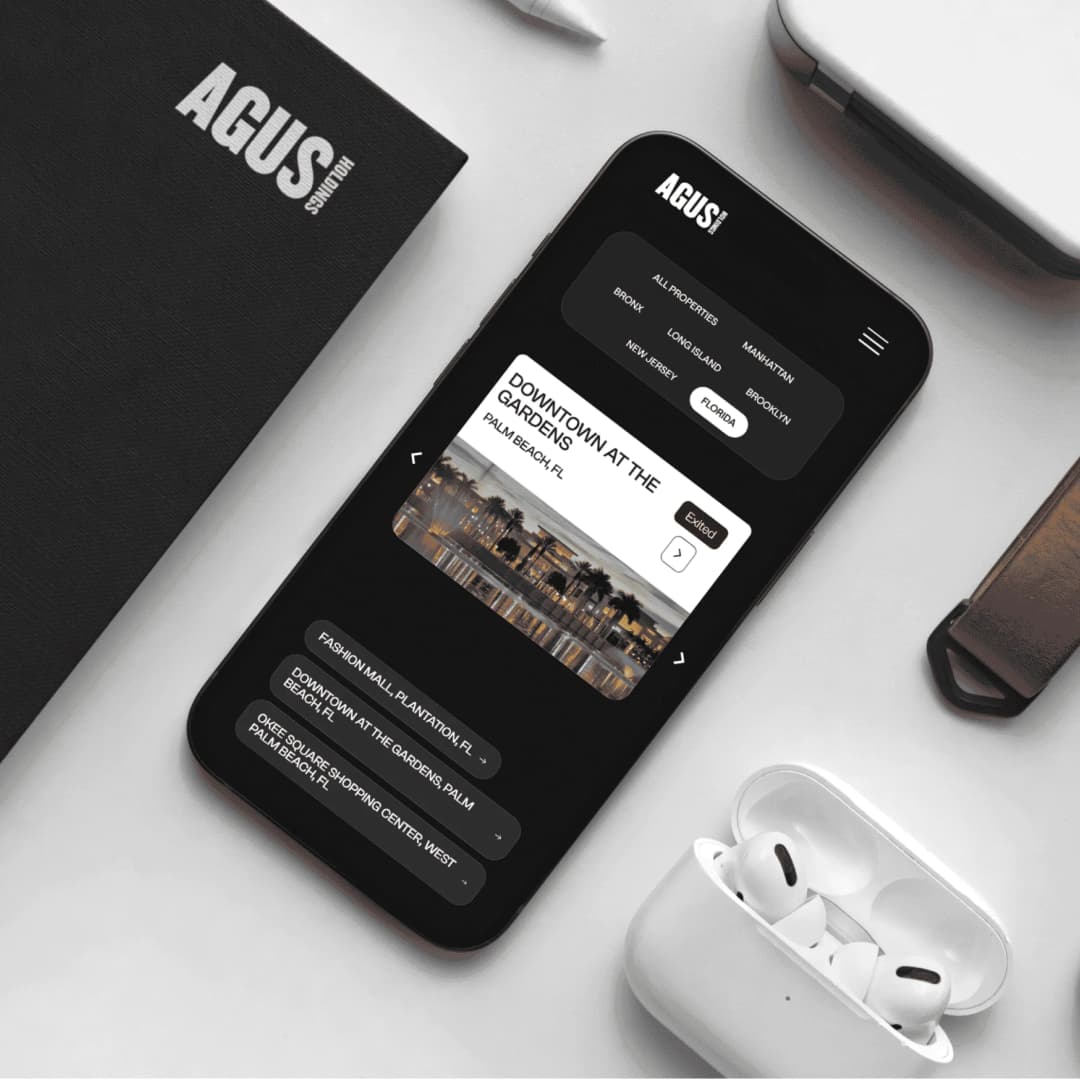
The case study says the portfolio was reorganized and the navigation was redesigned around those distinctions, with messaging and asset information working together. It says visitors have a structured way to explore the holdings and understand individual properties in context. The published scope is website structure, messaging, and design. The case study does not report a traffic or inquiry figure, and this article does not add one.
Alias Intelligence
Alias Intelligence provides due diligence, background screening, and investigative services. The case study says the website suggested innovation but did not explain the services or their value clearly enough.
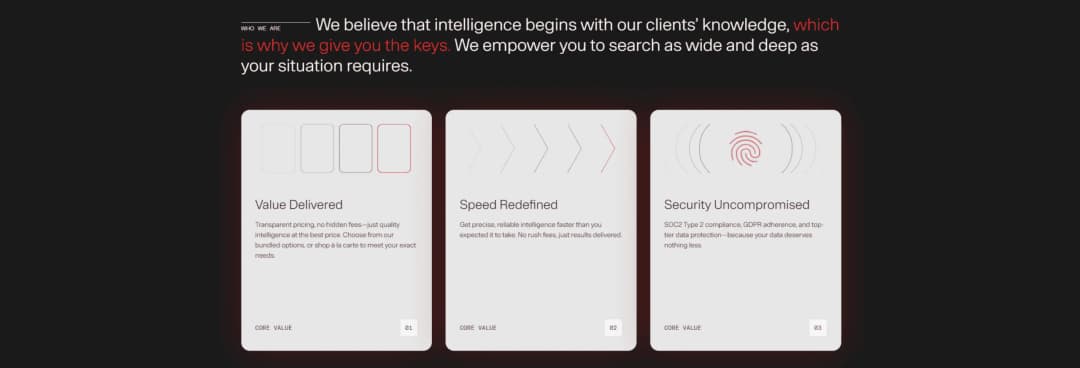
The case study says the content was rewritten around practical benefits and organized around how clients evaluate investigative services, with restrained design, a clear hierarchy, and early credentials. It says the experience gives visitors a more direct introduction to the business and a clearer structure for evaluating the services. The published scope is copywriting, content structure, and website design. The case study does not report a lead figure, and this article does not add one.
Eurotech
Eurotech has designed ergonomic office seating for more than four decades, from task chairs to executive, conference, and specialty seating. The case study says a large catalog is easy to appreciate in a showroom and can look like rows of similar chairs online.
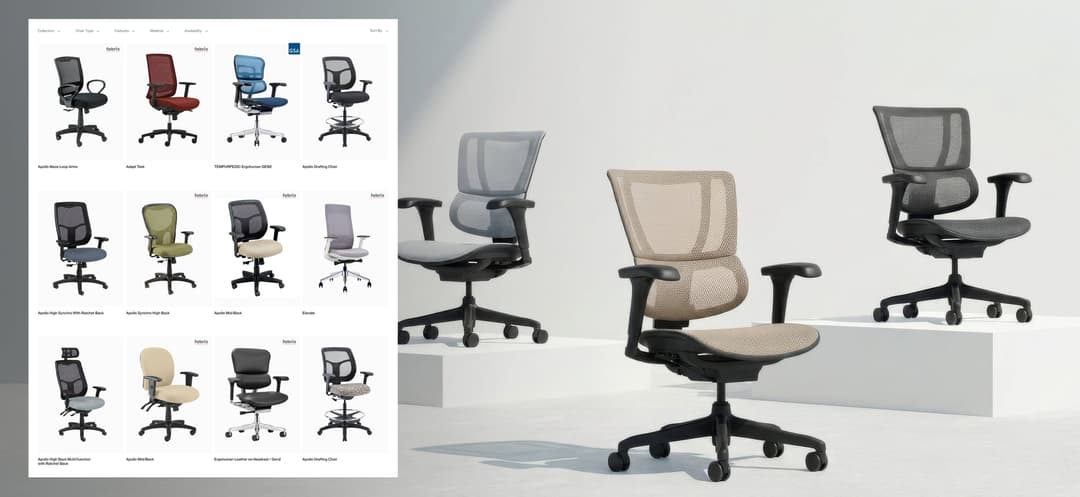
The case study says the website is designed around how people shop for seating. Buyers filter by collection, chair type, features, and material, then compare models. Flagship chairs get a features page that shows each adjustment in motion, and a configurator lets buyers build their own. The same case study says sales presentations for Eurotech's commercial partners use the same visual language. It describes the result as a site that turns a deep catalog into a clear route to the right chair, and sales materials that carry the same story into commercial conversations. The published scope is website design and sales presentations. The case study does not report a sales figure, and this article does not add one.
The Absolute Collagen
The Absolute Collagen is a women-owned supplement brand founded by Aliza and Shana. The case study says it makes one product, hydrolyzed bovine collagen from grass-fed, grass-finished cattle, with every lot independently tested, and that the previous site did not show the restraint the brand is built on.
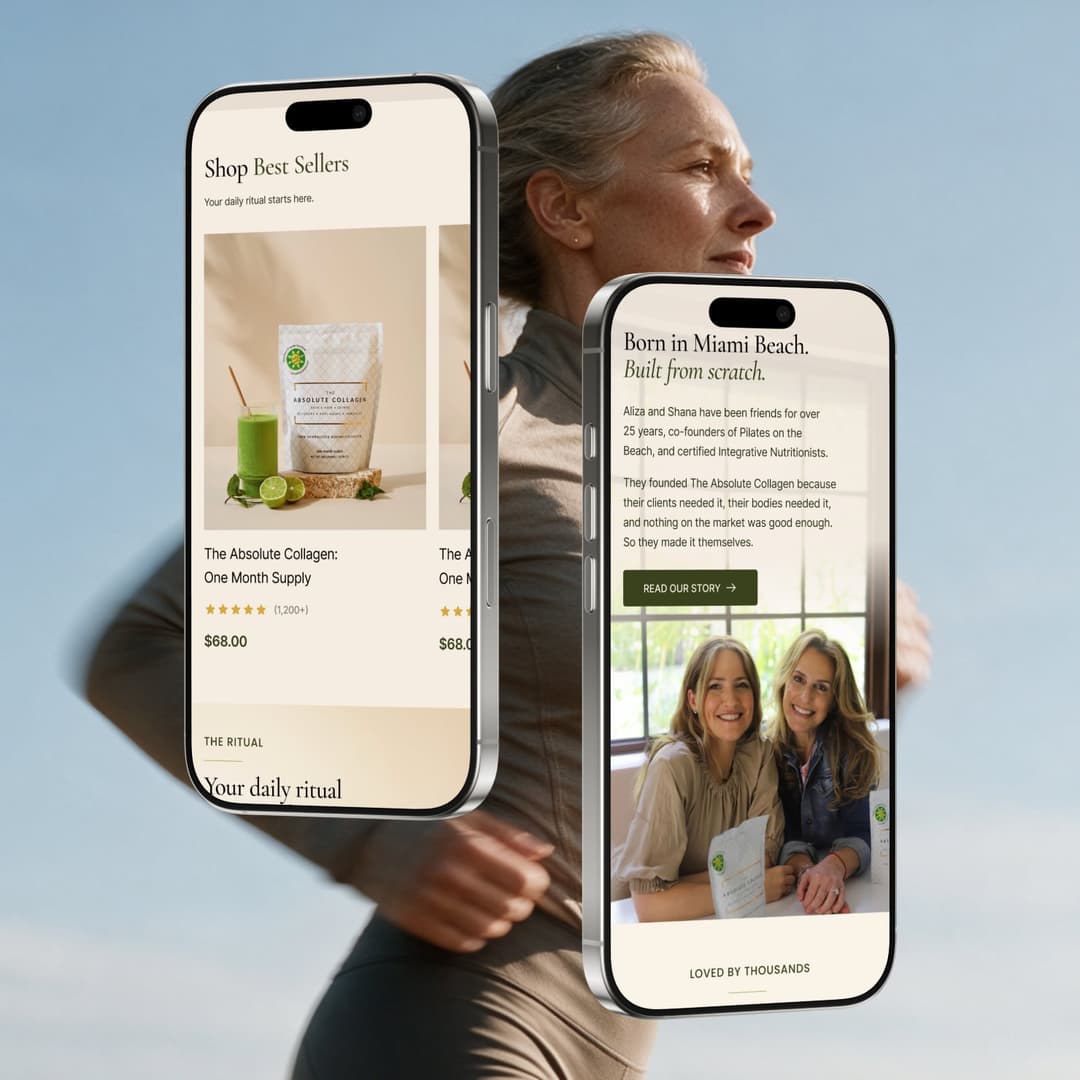
The case study says the Shopify store was redesigned in a warmer, more editorial direction: cream, olive, and soft gold, sunlit photography, and a calm layout that lets the product and the founders lead. The copy explains what grass-finished means and what the testing covers. The emails carry the same voice through launches, restocks, and subscription reminders. The case study says the brand now presents itself the way its founders talk about it: simple, specific, and personal, from a first visit to the monthly reorder. The published scope is Shopify website redesign and email design. The case study does not report a revenue figure, and this article does not add one.
What the work costs
Splash Creative is in Englewood, NJ. There is no New York City office. David Herskowitz leads the work.
Project work is a fixed scope and a fixed fee, agreed in writing before the work starts. These are starting points. The proposal sets the fee for the scope.
| Scope | Starting point | Timing |
|---|---|---|
| Website | from $15,000 | Set in the written proposal |
| Brand identity | from $15,000 | A focused identity takes 4 to 6 weeks. Full brand strategy and identity takes 8 to 12 weeks. |
| Brand and website | from $30,000 | The website schedule is set in the written proposal |
| Shopify store | from about $20,000 | Set in the written proposal |
| Ongoing partnership | from $2,500/month | Set in the written agreement |
Pricing is where those starting points are explained. Branding is the wider practice when the position and the language are part of the same work as the site. If you want to talk through a build or a redesign, book a call and tell us what you are working on. We will help determine whether there is a useful project to explore.
Frequently asked questions
What is the difference between a web designer and a web developer?
A web designer decides how the site looks and how visitors move through it: layout, typography, user flows, and the visual system. A web developer builds it by writing the code, connecting systems such as payments or a CRM, and making the site fast and secure. Many agencies staff both roles, and most projects need both.
Should I hire a freelancer or an agency for a custom SaaS project?
A freelancer or a freelancer collective suits a tightly scoped build when you can manage the pieces yourself. An agency suits a project that needs design, development, and project management under one team. Choose by how much coordination you can take on.
How much does Splash Creative charge for a website?
A website is from $15,000. Brand identity is from $15,000. Brand and website together is from $30,000. A Shopify store is from about $20,000. Ongoing partnerships are from $2,500/month. These are starting points. The proposal sets the fee for the scope. Project work is a fixed scope and a fixed fee, agreed in writing. The same figures are on pricing.
What are the red flags in an agency portfolio?
Watch for case studies that show screenshots and no account of the problem, metrics that stop at traffic, and projects that all look alike. Ask what the agency measured after launch, whether accessibility was part of the work, and whether a client will speak with you.
How long does a website development project take?
It depends on the scope, the systems the site connects to, and how fast you give feedback. Ask each agency for discovery, design, development, and launch in writing, and ask how a late approval changes the date. At Splash Creative, the website schedule is set in the written proposal. When the engagement includes brand identity, a focused identity takes 4 to 6 weeks. Full brand strategy and identity takes 8 to 12 weeks. How long a brand identity takes walks those phases.
Do AI tools make website projects cheaper or faster?
AI tools change how some teams work. They do not set a universal discount or a guaranteed shorter timeline. Ask each candidate how it uses those tools and how that changes your scope, schedule, and price, then compare the written answers.
Have a related question?
Tell us what you're working on. We'll help determine whether there is a useful project to explore.
“Splash delivers powerful brand ID, slick websites and UX, beautiful graphic design, and intelligent software solutions. Great team, great experience, great creative partners.”