The Simchat Torah Project: Building a Global Jewish Initiative From Scratch on a Deadline

The Simchat Torah Project is a global Jewish initiative led by Mizrachi-UK. The concept: each participating synagogue receives a commemorative Torah scroll cover embroidered with the name of a fallen Israeli soldier or civilian. A permanent memorial, distributed across Jewish communities worldwide, connecting every participating shul to the memory of October 7th.

The emotional stakes were as high as any project gets. And the deadline was immovable — Simchat Torah comes once a year.


The Challenge: Build a Movement, Fast

The project needed more than a brand. It needed a full operational engine built quickly enough to matter: a website to explain the initiative and drive synagogue signups, campaign materials to spread across communities globally, and creative that could move fast enough to reach shuls in time for the chag.

Every design decision — the Torah covers, the typography, the campaign materials — had to honor the weight of what was being commemorated. There was no room for anything that felt generic, rushed, or unworthy of the occasion.


The Work

Splash Creative built the complete Simchat Torah Project identity and digital presence — brand, website, and campaign assets — on a compressed timeline that matched the urgency of the initiative. The design is reverent without being heavy, accessible without being casual. The site organized the participation process clearly so any synagogue, anywhere in the world, could sign up and receive a cover without friction.

The campaign materials gave community leaders what they needed to spread the word — in their newsletters, their social channels, and their shul communications — in a voice that matched the gravity of the project.


FAQ

Does Splash Creative work with Jewish organizations and community initiatives?

Yes — Jewish organizations, nonprofits, educational institutions, and community initiatives are a meaningful part of our client base. We understand the cultural context, the communal sensitivities, and the specific trust signals that matter in these communities. We’re a partner who gets it without needing it explained.

If you’re building something for the Jewish community and need a creative partner who understands the context, let’s talk.

Wise Family Pastures: Packaging and Photography That Finally Match the Product

Wise Family Pastures has been delivering pasture-raised, organic kosher meat and poultry since 1992. The brand has a loyal following, a genuine commitment to quality, and a decades-long reputation built on the product itself. What it didn’t have was packaging and photography that matched.

In retail, shelf presence is everything. A product that looks generic gets treated as generic — regardless of what’s inside. Wise Family Pastures had the story and the standards. The visual identity wasn’t telling either.


The Work: Packaging Redesign and Product Photography

Splash Creative redesigned the packaging across every SKU — bringing warmth, clarity, and a premium feel that communicates quality and trust at a glance. The new packaging positions Wise Family Pastures where it belongs: among the premium, values-driven food brands that consumers who care about what’s in their food actively seek out.

The photoshoot gave the brand a visual library of product and lifestyle imagery that finally reflects the care and craft behind the product. Real food, real quality, presented in a way that earns its price point on the shelf and online.

Together, the work brings the brand’s external presentation in line with the internal reality — and gives Wise Family Pastures the visual foundation to grow into new retail channels and new audiences.


FAQ

Does Splash Creative handle packaging design and food photography?

Yes — packaging design and creative direction for product photography are both part of our scope. For food and CPG brands, packaging is often the highest-leverage brand touchpoint. It’s what makes the decision at the shelf or in the online cart. We approach packaging the same way we approach all brand work: strategy first, then design that earns its place in context.

If your packaging isn’t reflecting the quality of your product, let’s talk.

Yid to Yid: Building a Peer-to-Peer Fundraising Brand That Feels Human

Yid to Yid is built on a simple idea: tzedakah is most powerful when it’s personal. One person helping another, directly, without institutional middlemen or generic donation pages. The platform connects donors with families in need, campaign by campaign, in the Jewish community.

The challenge Splash Creative was brought in to solve: how do you build a brand and website for a platform rooted in human connection that actually feels human? And beyond the brand, how do you build campaigns that move people to give — with copy and strategy tight enough to convert at every touchpoint?


The Challenge: Standing Apart in a Crowded Nonprofit-Tech Space

The nonprofit technology space is full of platforms that look and feel identical — generic donation flows, institutional messaging, design that prioritizes compliance over connection. Yid to Yid operates from a fundamentally different philosophy, and the brand had to communicate that difference immediately.

Warm enough to earn trust. Credible enough to handle real fundraising. Specific enough to feel like it was built for this community, not adapted from a generic template.


The Approach: Brand and Campaigns Built Around Connection

Splash Creative built the Yid to Yid brand around the core truth of the platform: this is one person helping another. The visual identity is warm and approachable without being saccharine. The messaging is direct and honest — it doesn’t dress up the ask or over-explain the mission. It says what it is and trusts the community to respond.

The campaign strategy was built around conversion at every touchpoint — from the first awareness moment through the donation confirmation. Copy that meets people where they are emotionally, structure that makes giving feel easy and meaningful, and a voice that sounds like the community it serves.


FAQ

Does Splash Creative work with nonprofit and community organizations?

Yes — across brand identity, web design, copywriting, and campaign strategy. Nonprofit branding requires a specific approach: the emotional stakes are high, the audience is often skeptical of institutional language, and trust has to be earned through authenticity rather than polish. We’ve built brands for community platforms, educational initiatives, and advocacy organizations across the tri-state area.

If you’re building a community platform or fundraising initiative that needs to feel genuinely human, let’s talk.

How Splash Creative Built RosettiStarr’s Digital Presence for the World’s Most Demanding Clients

There’s a category of professional services firms where the work is so sensitive that the brand has to communicate everything through implication. You can’t describe your clients. You can’t detail your methods. You can’t use case studies in the traditional sense.

And yet the website still has to work. It still has to convince a General Counsel at a major law firm, a Managing Director at a private equity fund, or a CEO navigating the worst situation of their career that this is the right firm to trust.

Industry: Intelligence / Investigations / Cybersecurity  |  Deliverables: Web Design & Development, Copywriting


The Client: Global Intelligence for the Highest-Stakes Situations

RosettiStarr serves AmLaw Top 100 law firms, major private equity funds, and C-suite executives navigating sensitive situations that require intelligence, investigation, and cybersecurity expertise at the top of the field. Their work spans corporate due diligence, litigation support, competitive intelligence, executive protection, and cyber threat response — across jurisdictions and time zones, often under extreme time pressure.

RosettiStarr website by Splash Creative


The Challenge: Communicate Everything Through Restraint

The RosettiStarr brief had a paradox at its center: the firm needed a digital presence that demonstrated depth of capability and sophistication of methodology — without being able to show most of the evidence that would normally support those claims. No client names. No case details. No specific outcomes.

What remains is the firm itself — the team’s backgrounds, the breadth of service capability, the seriousness of the methodologies, and the quality of the presentation. The website has to communicate: these people are at a different level, and you can tell without them having to tell you.


The Approach: Sophistication Through Precision

Design Language Built for the Boardroom

Strong typographic choices that communicate authority. A palette that signals intelligence and sophistication. Precise layout and spacing that communicates every element was placed intentionally. Nothing is decorative. Everything carries weight.

Copy Written for the Audience’s Intelligence

The clients who evaluate RosettiStarr are sophisticated readers. They’ll notice copy that’s generic. They’ll notice hedging. Splash Creative wrote the RosettiStarr copy for the people actually reading it: legal, financial, and corporate professionals who make high-stakes decisions for a living. The language is precise, substantive, and confident.

RosettiStarr website design detail by Splash Creative


Frequently Asked Questions

Does Splash Creative work with professional services and B2B firms?

Yes — law firms, advisory firms, investment firms, intelligence and risk firms, and other professional services businesses are a significant part of our client base.

How do you build a compelling website for firms that can’t share client work?

By making the firm itself the evidence. Team depth, methodology, service breadth, and the quality of the presentation all do the work that case studies would otherwise do. When a website is designed and written with genuine attention to the sophistication of the audience, it communicates credibility without needing to show proof of specific engagements.

If you’re building a brand or website for a firm where the audience is sophisticated and the stakes of getting it wrong are high, let’s talk.

How Splash Creative Built SwiftHealth’s Brand and Website Around One Promise: Your Health, On Your Terms

Concierge healthcare is a compelling offer. Mobile IV therapy, in-home medical care, telehealth visits, at-home blood draws, GLP-1 weight loss programs — all delivered to your door, no waiting rooms, no unnecessary office visits. The product sells itself, once someone understands what it is.

That last part is where most concierge health brands struggle. The brand and website have to do the work of introduction, explanation, and conversion — all at once, and fast.

Industry: Concierge Healthcare  |  Location: New York / New Jersey  |  Deliverables: Brand Identity, Web Design & Development, Copywriting


The Client: Healthcare That Comes to You

SwiftHealth operates across New Jersey and New York City, serving a genuinely wide range of customers — someone hungover on a Sunday morning, a pregnant woman battling nausea, an athlete in recovery, a busy professional who can’t afford to sit in urgent care for two hours. Each arrives with a different need and a different threshold for trust. The brand and site had to speak to all of them without feeling generic to any of them.

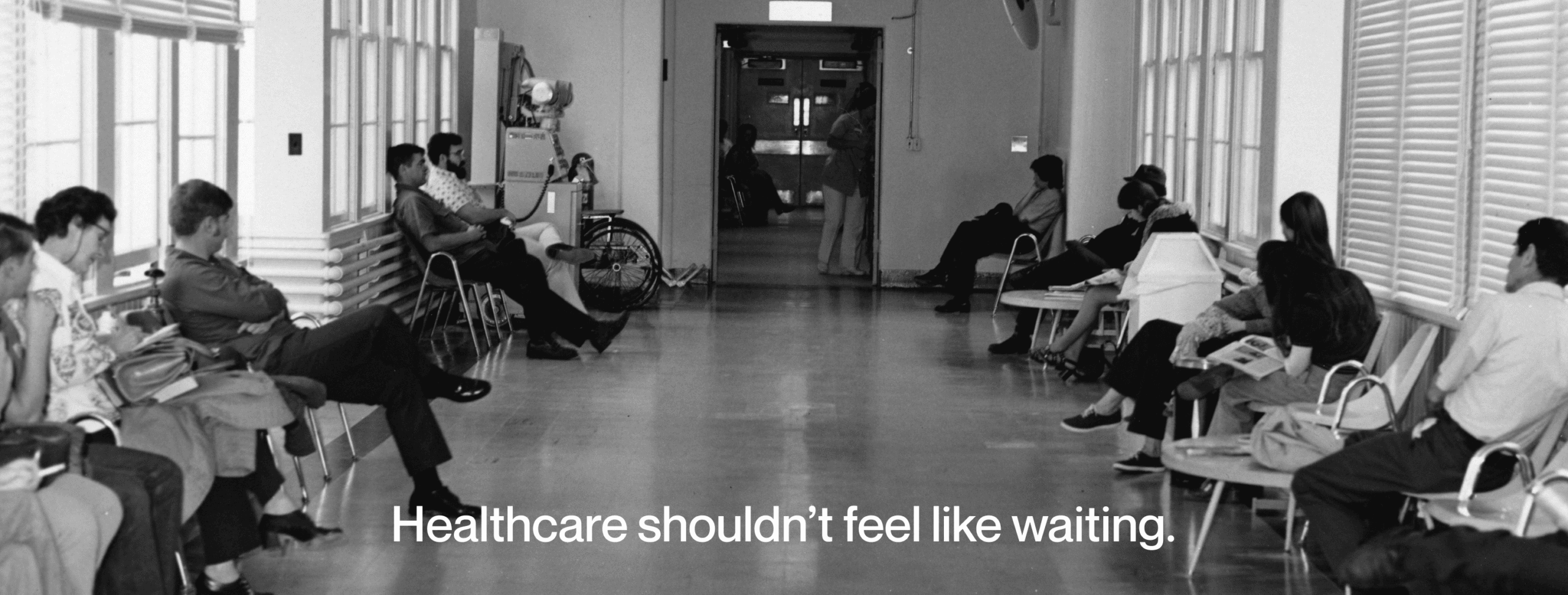
SwiftHealth brand and website by Splash Creative


The Approach: “Your Health, On Your Terms”

Splash Creative built the SwiftHealth brand and website around a single organizing idea: your health, on your terms. Not just convenience — agency. You don’t have to rearrange your life around the healthcare system. The healthcare system comes to you.

Visual Identity: Clinical Without Cold

Clean and medical — signaling professionalism and credibility — while staying approachable and modern. The color palette, typography, and design language sit at the intersection of healthcare authority and consumer friendliness. This isn’t an easy register to find. Most healthcare visual identities lean too clinical or too consumer-brand. SwiftHealth’s identity holds the middle ground deliberately.

Website Architecture: Organized Around the Customer

Built around how SwiftHealth’s customers actually think — by symptom, by service, by how much time they have. The IV menu is treated as a product catalog: each drip named, described, and priced clearly so visitors can self-select and book without friction.

Copy: “Just Show Up” Energy Throughout

Every headline, every service description, every CTA was written to make booking feel easier and more obvious than not booking. Direct, warm, and consistently moving toward the next step.

SwiftHealth website design detail by Splash Creative


Frequently Asked Questions

Does Splash Creative work with healthcare brands?

Yes — across concierge health, telehealth, wellness, and healthcare technology. We’ve built brands for concierge healthcare platforms, pediatric practices, behavioral health providers, and biotech companies.

How important is copywriting in healthcare brand and web projects?

Critical. Healthcare customers are making decisions about their bodies and their trust. The words have to earn that trust sentence by sentence. Generic copy undermines even strong design. Copy written specifically for the customer’s psychology, at each stage of the decision, is what actually converts.

If you’re building or relaunching a healthcare brand, let’s talk.

How Splash Creative Became Huug’s Full-Stack Digital Partner: Shopify, Klaviyo, and Copy

The most valuable agency relationship isn’t the one that delivers a project. It’s the one that stays inside the business — understanding the brand deeply enough to operate like an in-house team, moving as fast as the business moves, and improving everything it touches over time.

That’s what Splash Creative built with Huug.

Huug is a New York-based intimates brand with a growing ecommerce presence and a distinct brand identity. They needed a partner who could own the full digital stack — custom Shopify functionality, Klaviyo email flows built to retain and recover revenue, and copywriting that sounds consistently, recognizably Huug across every touchpoint.

Industry: Fashion / E-Commerce  |  Location: New York, USA  |  Deliverables: Shopify Development, Email Marketing, Copywriting


The Challenge: A Fashion Brand With Momentum That Needed Digital to Keep Up

Huug operates in a competitive corner of fashion ecommerce — intimates and loungewear, where the visual and sensory quality of the brand experience is inseparable from the product itself. The Shopify store, the email program, and the copy all had to work together to create that experience — and they had to stay current as the brand evolved, new collections launched, and the customer base grew.

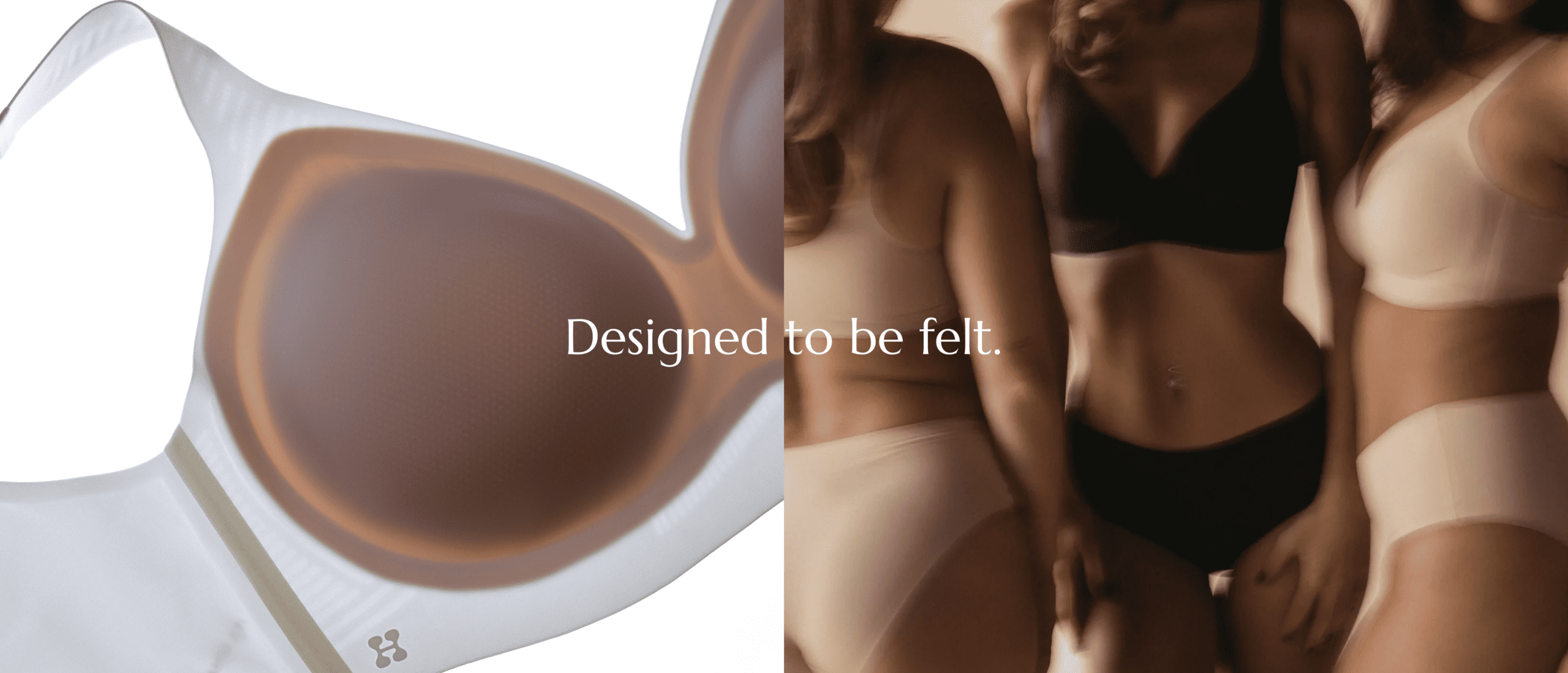
Huug ecommerce Shopify design by Splash Creative


The Shopify Work: Custom Development Built for How Huug Sells

For Huug, Splash Creative built:

  • Custom style selectors — allowing customers to navigate product variations the way they actually think about intimates
  • Pack size logic — clean, intuitive UI for multi-pack purchasing that reduced friction at a high-conversion moment
  • Unified badge system — consistent visual signaling across the catalog for new arrivals, bestsellers, and promotional items
  • Visual product menus — navigation that leads with imagery rather than text, fitting for a brand where visual identity drives the purchase decision

The Klaviyo Work: Rebuilding for Revenue Recovery

When Splash Creative came onto the Huug account, the Klaviyo email program was leaving money on the table. We started with a full audit, then rebuilt the core flow architecture:

  • Welcome series rebuilt around the Huug brand voice and new subscriber purchase behavior
  • Abandoned cart sequence restructured for timing, tone, and incentive logic
  • Post-purchase flows extended to include cross-sell, review requests, and retention sequences
  • Segmentation rebuilt to separate active customers from lapsed, high-value from one-time purchasers

Huug Klaviyo email marketing by Splash Creative


The Copy Work: Sounding Like the Brand Across Everything

Product descriptions, email copy, site copy — all written by Splash Creative in a voice that’s consistently, recognizably Huug. Because we own both the Shopify build and the Klaviyo program, the copy stays coherent across channels without anyone having to police it. The same team writes everything.


Frequently Asked Questions

Does Splash Creative offer ongoing Shopify and Klaviyo retainers?

Yes — and for most ecommerce brands, the retainer model produces better results than project-based work. The brands that get the most from their Shopify and email programs are the ones with a partner who stays inside the business and continuously improves what’s there.

Can Splash Creative handle both Shopify development and email marketing?

Yes — and the combination is one of our strongest service pairings. When your Shopify store and your Klaviyo program come from the same team, the data flows both ways and the customer experience stays coherent across every touchpoint.

If your ecommerce brand needs a partner who can own the full digital stack, let’s talk.

Isaac Mizrahi x Splash Creative: Building Campaigns With a Voice Like No One Else in Fashion

Some briefs are hard because the category is difficult. Some briefs are hard because the creative bar is unusually high. The Isaac Mizrahi brief was the second kind.

Isaac Mizrahi New York is one of fashion’s most iconic names — a brand built on wit, color, and a distinctly joyful point of view that has remained consistent across decades and categories. When a brand has a voice that specific and that strong, the creative work has one job: match it without diluting it.

Industry: Fashion / Retail  |  Location: New York, USA  |  Deliverables: Ad Design, Copywriting


The Challenge: A Specific Kind of Energy to Get Right

Splash Creative was brought in to design and write ad campaigns that would drive tune-in to live QVC events while stopping the scroll in a crowded digital feed. The work had to feel fun and irreverent — but it couldn’t lose the brand’s polish. It had to move fast — but it had to be unmistakably Isaac.

Fashion advertising that tries to be fun usually ends up being one of two things: aggressively quirky in a way that feels forced, or blandly cheerful in a way that communicates nothing. Isaac Mizrahi’s voice is neither of those. It’s specific — sharp, warm, visually confident, and never trying too hard.

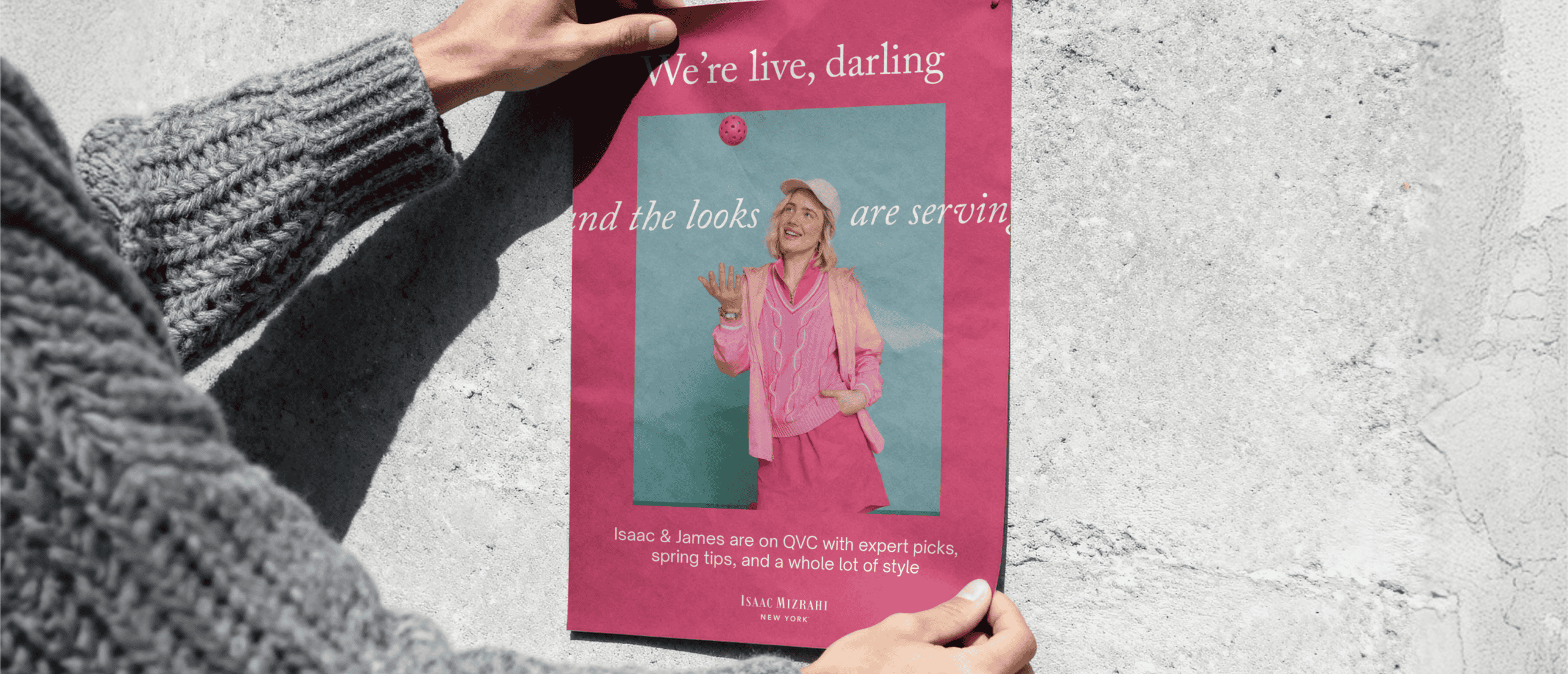
Isaac Mizrahi campaign by Splash Creative


The Approach: Lean Into the Personality

Splash Creative’s approach was simple in principle and demanding in execution: lean all the way into the personality and don’t look back. We developed two distinct campaign directions that gave the creative range while keeping the voice consistent throughout.

The Clubhouse Collection

Breezy, warm, summer-social energy. Copy that felt like something Isaac might actually say to a friend, design that used color and typography to communicate joy rather than describe it. Confident without effort — which is exactly what the brand embodies at its best.

The Pickleball Series

Sporty, irreverent, and more playful — drawing on the cultural moment around pickleball to give the campaign a timely hook without feeling like it was chasing a trend.

Design Language

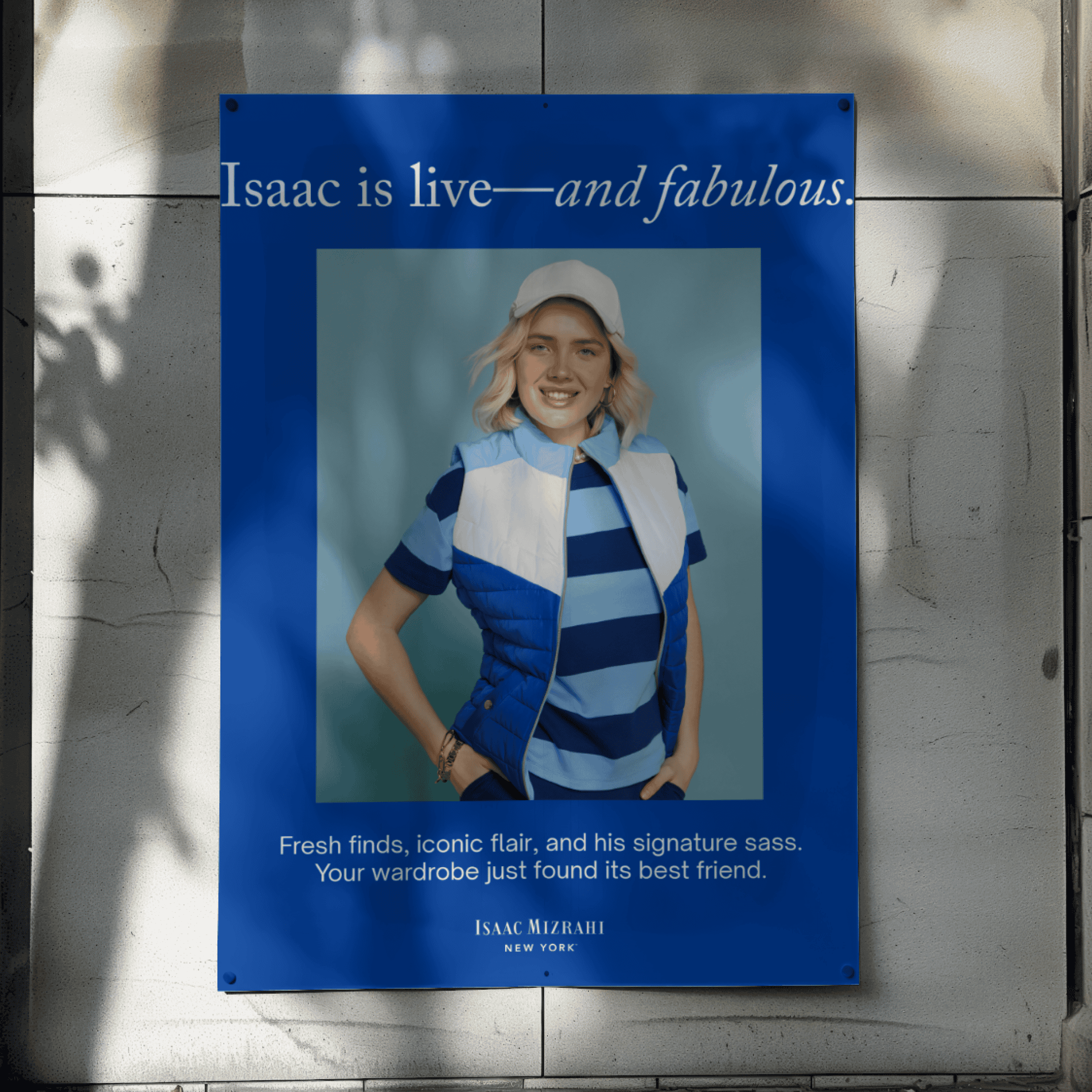
Bold copy, bright color, and a playful mix of serif and script typography kept every ad feeling unmistakably Isaac. Animation added energy and gave the QVC tune-in messaging a sense of urgency that static creative couldn’t achieve alone.

Isaac Mizrahi ad campaign creative direction by Splash Creative


What This Project Demonstrates

The Isaac Mizrahi engagement demonstrates something that gets underestimated in creative work: the ability to write and design in someone else’s voice without losing what makes that voice distinctive. Brand-consistent creative at scale is harder than it looks. The Isaac Mizrahi campaigns stayed sharp because Splash Creative treated the brand voice as the primary brief, not the product details.


Frequently Asked Questions

Does Splash Creative work with fashion brands?

Yes — across brand identity, web design, campaign creative, copywriting, and ecommerce. We’ve worked with brands ranging from emerging DTC labels to established names like Isaac Mizrahi.

How do you write in a brand’s voice without losing what makes it distinctive?

By treating the voice as the brief. Before any copy gets written, we immerse ourselves in how the brand actually sounds. We’re looking for the specific things that make this brand different from every other brand in the category — then we write from that place rather than toward a general idea of what the brand is like.

If you need campaign creative or copywriting that actually sounds like your brand, let’s talk.

How Splash Creative Built Campaigns for RexMD in One of Advertising’s Hardest Categories

There are categories where advertising is hard because the market is crowded. And then there are categories where advertising is hard because the subject itself is loaded — where the stigma around the problem is the primary obstacle between a person who needs help and a product that can help them.

Men’s sexual health is firmly in the second category.

RexMD is a men’s telehealth platform that makes prescription ED medication accessible, affordable, and discreet — online assessment, no waiting rooms, no awkward conversations, fast delivery to your door. The product is genuinely good. The problem it solves is real and widespread. And the men who need it most are often the least likely to search for it, click on an ad about it, or tell anyone they bought it.

Industry: Men’s Telehealth / DTC Health  |  Deliverables: Campaign Design, Copywriting


The Challenge: Advertising What Men Don’t Talk About

The category has two failure modes and most brands find one of them.

The first is clinical detachment — white backgrounds, medical photography, copy that reads like a drug insert. The second failure mode is overcorrection — leaning so hard into humor or irreverence that the brand starts to feel like a joke. Neither extreme converts. What RexMD needed was something in the middle — campaigns that were honest about the subject, confident in the solution, and targeted precisely enough to reach the men who needed to see them.

RexMD campaign creative by Splash Creative


The Approach: Honest, Confident, Precisely Targeted

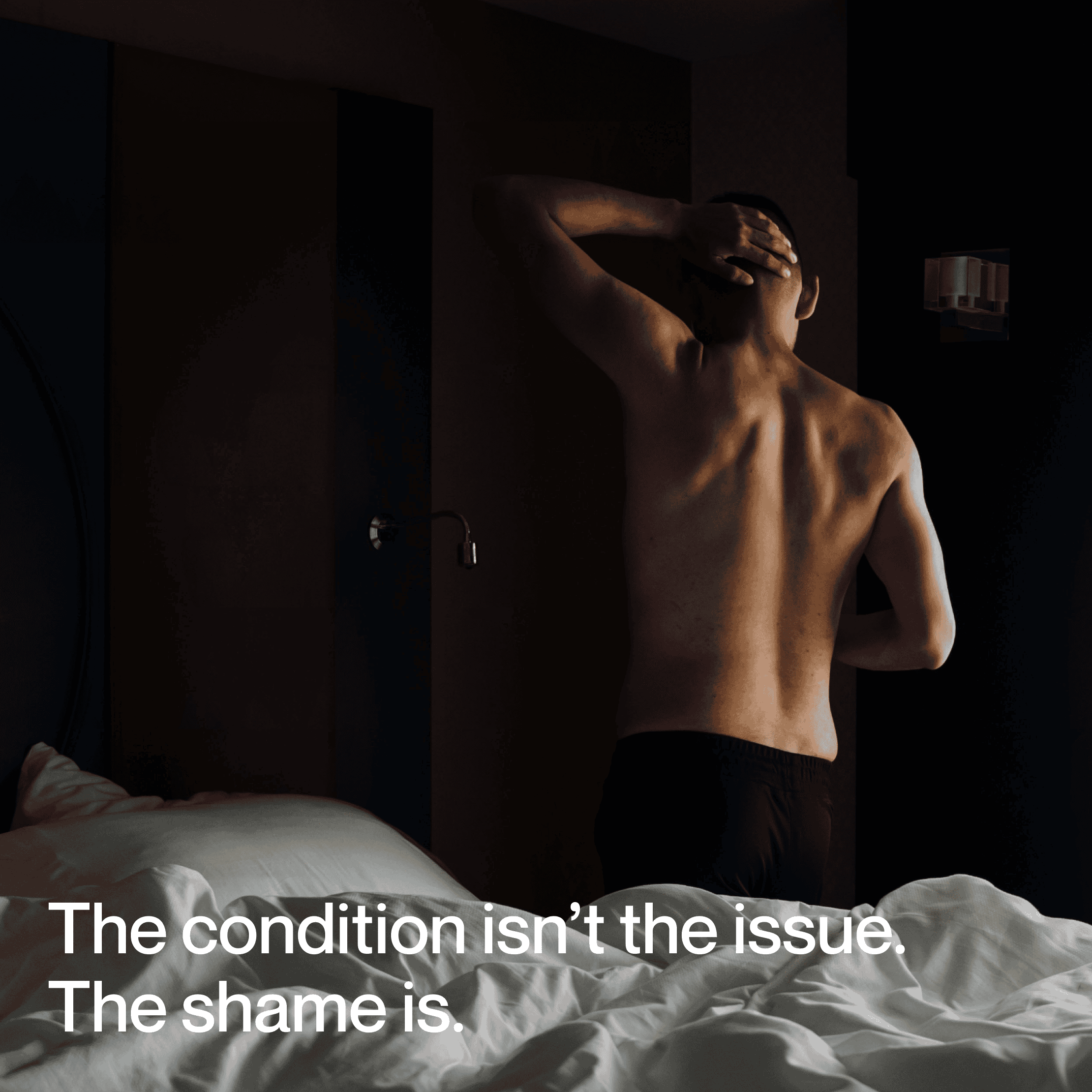
The insight that shaped the work: men dealing with ED aren’t primarily embarrassed about the condition itself. They’re embarrassed about what it might mean about them. The best creative for this category doesn’t focus on the problem. It focuses on the solution and the version of themselves that solution enables.

Copy That Doesn’t Flinch

We wrote copy that was direct without being clinical, confident without being dismissive of the emotional weight involved. Language that acknowledged the reality of the situation while immediately pivoting to what RexMD makes possible. No euphemism, no medical jargon, no humor that undercuts the message.

Creative That Stops the Scroll

In a category where most creative is either sterile or awkward, work that feels confident and visually distinctive stands out immediately. We developed ad creative that was bold enough to register in a feed without being sensational — design that communicated the brand’s confidence in its product.

RexMD advertising campaign by Splash Creative


What This Project Demonstrates

The RexMD engagement demonstrates one of the things Splash Creative does best: finding the tone that converts in categories where getting the tone wrong is catastrophic. Most categories have some margin for creative error. Men’s health advertising doesn’t. The window is narrow and the only way to find it is through real creative thinking — understanding the audience’s psychology before picking up a pen.

The same principle applies across DTC health, wellness, and any category where the purchase decision involves personal vulnerability.


Frequently Asked Questions

Does Splash Creative work with DTC health and wellness brands?

Yes — and it’s one of the categories where full-service creative work has the clearest impact. DTC health brands live or die on the quality of their creative and copy across every touchpoint. When the same team handles brand, web, email, and campaign creative, the message stays consistent and the tone doesn’t drift between channels.

How do you approach sensitive or stigmatized product categories?

With more research and less assumption. The biggest mistake in sensitive categories is projecting how you think the audience feels rather than understanding how they actually feel. We spend real time on audience psychology before any creative work begins.

If you’re building or scaling a DTC brand in a category where creative quality is the difference between growth and stagnation, let’s talk.

How Splash Creative Built the Oathe Group Brand: Discretion as a Design Principle

Some brands need to be loud. Oathe needed to be the opposite.

Co-founded by NBA star Kyle Kuzma, The Oathe Group is a private office for elite athletes and visionary founders — quietly supporting complex business decisions where discretion matters. The entire value proposition is built on trust, confidentiality, and operating below the radar. Which made the branding challenge unusually precise: how do you build a digital presence for a firm whose clients specifically don’t want to be seen?

Too much visibility and you undermine the brand. Too little and you fail to convert the right people when they find you. The site had to communicate exclusivity and credibility to exactly the right audience — without broadcasting anything to everyone else.


The Client: A Private Office Built for Elite Athletes

The Oathe Group operates at the intersection of private equity, strategic advisory, and personal wealth management — serving professional athletes and high-net-worth founders who need sophisticated guidance on complex decisions without the noise of a large institutional firm.

Based in Miami and operating internationally, Oathe came to Splash Creative needing two things: a brand identity and a website. Both had to work together to thread an unusually narrow needle.

Industry: Financial Services / Private Equity  |  Location: Miami, FL  |  Deliverables: Brand Identity, Web Design & Development


The Challenge: Communicating Without Oversharing

Most branding projects ask: how do we say more about who we are? The Oathe brief asked something harder: how do we say exactly enough — and nothing more?

Financial services and private equity branding tends to go one of two directions. Either it’s aggressively corporate — navy blue, sans-serif, stock photography of handshakes — or it’s trying too hard to feel exclusive, with overwrought design that signals wealth rather than embodying it.

Neither was right for Oathe. The firm’s clientele — professional athletes, founders, executives operating at the highest levels — have finely tuned instincts for authenticity. What they respond to is something that doesn’t try at all. The brand had to feel inevitable, not aspirational.

Oathe Group brand identity by Splash Creative


The Approach: Brand Identity Built on Restraint

Splash Creative started where we always start: strategy before design. Before any visual work began, we worked through the positioning questions that would shape every decision downstream.

Who is Oathe for? What do those people already believe about the world? What would make them feel immediately recognized — understood — rather than sold to? What should someone feel five seconds after landing on the page?

The answers pointed clearly toward restraint as a design principle. Not minimalism for its own sake, but deliberate understatement as an expression of confidence. A firm that doesn’t need to explain itself at length. A brand that trusts its audience to read between the lines.

Visual Identity

The visual identity was built around precision and weight. Strong typographic choices that communicate authority without decoration. A color palette that signals sophistication without the clichés of the category. A mark that holds up in every context — from a pitch deck to a business card to a mobile screen — without losing its edge.

Oathe Group website design by Splash Creative

Web Design and Development

The website had one primary job: make the right person feel immediately that they’re in the right place, and make the wrong person feel immediately that this isn’t for them. That filtering function is itself a form of brand communication.

We designed and built the Oathe site on WordPress — structured around the firm’s actual value proposition rather than a standard financial services template. The architecture communicates what Oathe does without exhaustively explaining it. Copy is tight, precise, and written for an audience that doesn’t need things spelled out.

The result is a site that functions like the firm itself: present, credible, and discreet.


What This Project Demonstrates

The Oathe Group engagement is a clear example of branding where the strategic constraint is the creative brief. Most agencies would have approached this project by trying to make it look impressive. The right answer was to make it feel inevitable.

That distinction — between trying to impress and simply being — is at the center of every brand decision Splash Creative makes. For a firm co-founded by one of the NBA’s most recognized names, the brand needed to match the caliber of the people behind it — without borrowing from that celebrity to do the heavy lifting. The identity stands on its own.


Frequently Asked Questions

What does a private office branding project look like?

Private office and family office branding requires a different approach than consumer or startup branding. The audience is smaller and more sophisticated. Trust signals matter more than awareness signals. The design language tends toward restraint and precision rather than bold differentiation. Strategy has to come before anything visual — because the positioning questions are harder and the stakes of getting them wrong are higher.

How does Splash Creative approach financial services branding?

The same way we approach everything — strategy first, then design. We spend time understanding the audience, the competitive landscape, and the specific trust signals that move decision-making in the category before we open a design file. Financial services branding often fails because it defaults to category conventions. The firms that stand out do so because they made deliberate decisions about what they wanted to communicate.

Can Splash Creative work with high-profile or celebrity-adjacent clients discreetly?

Yes — and we understand why that matters. Projects appear in our portfolio with client approval only.

If you’re building a brand that needs to communicate credibility and exclusivity to a specific audience — without shouting about it — let’s talk.

AI Implementation for Business: How to Find the Right Partner and What to Expect

The AI implementation market is filling up fast with consultants, agencies, and software vendors all claiming they can transform your business with AI. Most of them are selling one of two things: a strategy deck that tells you what to do without doing it, or a software subscription that assumes your workflow fits their template. Neither produces the results that are actually possible.

Real AI implementation — the kind that eliminates manual work, accelerates revenue-generating activities, and compounds over time — requires a partner who understands your business specifically, builds solutions that fit how you actually operate, and stays close enough to iterate as things change. Here’s how to find one and what to expect.


Implementation vs. Consulting: The Critical Difference

The most important distinction in the AI services market right now is between consulting and implementation. It sounds obvious but it’s easy to miss in a sales conversation.

AI consulting tells you what to do. You get a strategy document, a prioritized list of opportunities, maybe a vendor recommendation. Then you’re on your own to execute it. For companies with internal technical teams, that can work. For most small and mid-size businesses, it produces a very expensive shelf document.

AI implementation does it. The partner builds the systems, configures the tools, tests against real scenarios from your business, trains your team, and doesn’t leave until it’s running. The engagement ends when the system is live and producing results — not when the presentation is delivered.

At Splash Creative, we don’t do AI consulting. We design and deploy AI systems inside your business. The distinction is the whole point.


What a Proper AI Implementation Engagement Includes

Process Audit First

The right starting point is never a tool. It’s a map of how your business actually operates — every significant workflow, step by step. Where work enters, how it moves, who touches it, where it slows down, where it breaks. Most businesses have never done this. The audit alone surfaces problems worth fixing regardless of AI.

This is the AI Audit: a 2-week structured engagement that produces a full workflow map, a ranked list of AI opportunities by ROI, and a concrete implementation plan. It runs $2,000–$5,000 and pays for itself in the first workflow that gets fixed.

Prioritization by Impact, Not Complexity

The easiest workflows to automate aren’t always the most valuable ones. A good implementation partner ranks opportunities by business impact first — time saved, revenue generated, cost eliminated — and builds in that order. Quick wins that prove the model come first. Complex infrastructure comes after the organization has seen results and trusts the approach.

Building on Your Existing Stack

Replacing your tools is almost never the right starting point. The right AI implementation connects to what you already use — your CRM, your project management system, your email platform, your data sources — and adds AI capability where it’s missing. No ripping and replacing. No 18-month ERP migration. Just AI layers on top of the infrastructure you’ve already built.

Training and Adoption

An AI system that your team doesn’t use is expensive shelf furniture. Implementation includes training your people on what was built, documenting how it works, and staying close through the transition. Adoption is part of the deliverable — not a bonus if there’s time left.

Ongoing Optimization

AI systems improve with use. The best implementation partners offer a retainer model for ongoing optimization — tuning what was built as your business evolves, adding new systems as new opportunities emerge, and continuously improving performance. This is the AI Operating System model: AI as a permanent competitive advantage, not a one-time project.


What Businesses Benefit Most

AI implementation produces the clearest, fastest ROI for businesses with these characteristics:

  • Service businesses — agencies, advisory firms, real estate companies, professional services. High volume of repetitive client communication, reporting, and document generation.
  • DTC and ecommerce brands — marketing automation, content at scale, customer segmentation, campaign generation.
  • Founder-led companies doing $1M–$20M — the founder is personally bottlenecking growth because too much runs through them. AI removes that ceiling without adding headcount.

The common thread: enough operational volume that automation creates meaningful leverage, and a decision-maker who can say yes without a six-month approval process.


Frequently Asked Questions

How do I know if my business is ready for AI implementation?

If someone on your team is doing the same type of task more than once a week and it follows a predictable pattern, you’re ready. Client intake, data entry, reporting, content creation, proposal generation, follow-up sequences — these are all automatable at high quality with today’s AI tools. The question isn’t whether AI can help. It’s where it creates the most leverage in your specific business.

How long does an AI implementation take?

A focused quick-win engagement — automating 2–3 specific workflows — runs 30 days from audit to live system. A broader AI Growth Stack covering marketing, sales, and operations automation runs 60–90 days. The AI Audit that should precede any implementation takes 2 weeks. Total time from first conversation to meaningful operational change: 6–10 weeks for most businesses.

Will AI replace my team?

No — and this is worth saying clearly. The goal is to eliminate the work that shouldn’t require a human, so your team can focus on the work that does. Every AI system we build is designed to make your people more effective, not redundant. The businesses that use AI well don’t have smaller teams — they have teams doing higher-value work.

How is AI implementation different from just using ChatGPT?

ChatGPT is a tool. AI implementation is a system. A system is ChatGPT (or Claude, or another model) connected to your CRM, trained on your voice and your data, triggered by your business processes, and integrated into your existing workflow. The tool alone changes nothing. The system changes how your business operates.

If you’re not sure where AI creates the most leverage in your business, start with an AI Audit. Two weeks. Clear output. You’ll know exactly what to do next.