There are categories where advertising is hard because the market is crowded. And then there are categories where advertising is hard because the subject itself is loaded — where the stigma around the problem is the primary obstacle between a person who needs help and a product that can help them.
Men’s sexual health is firmly in the second category.
RexMD is a men’s telehealth platform that makes prescription ED medication accessible, affordable, and discreet — online assessment, no waiting rooms, no awkward conversations, fast delivery to your door. The product is genuinely good. The problem it solves is real and widespread. And the men who need it most are often the least likely to search for it, click on an ad about it, or tell anyone they bought it.
Industry: Men’s Telehealth / DTC Health | Deliverables: Campaign Design, Copywriting
The Challenge: Advertising What Men Don’t Talk About
The category has two failure modes and most brands find one of them.
The first is clinical detachment — white backgrounds, medical photography, copy that reads like a drug insert. The second failure mode is overcorrection — leaning so hard into humor or irreverence that the brand starts to feel like a joke. Neither extreme converts. What RexMD needed was something in the middle — campaigns that were honest about the subject, confident in the solution, and targeted precisely enough to reach the men who needed to see them.

The Approach: Honest, Confident, Precisely Targeted
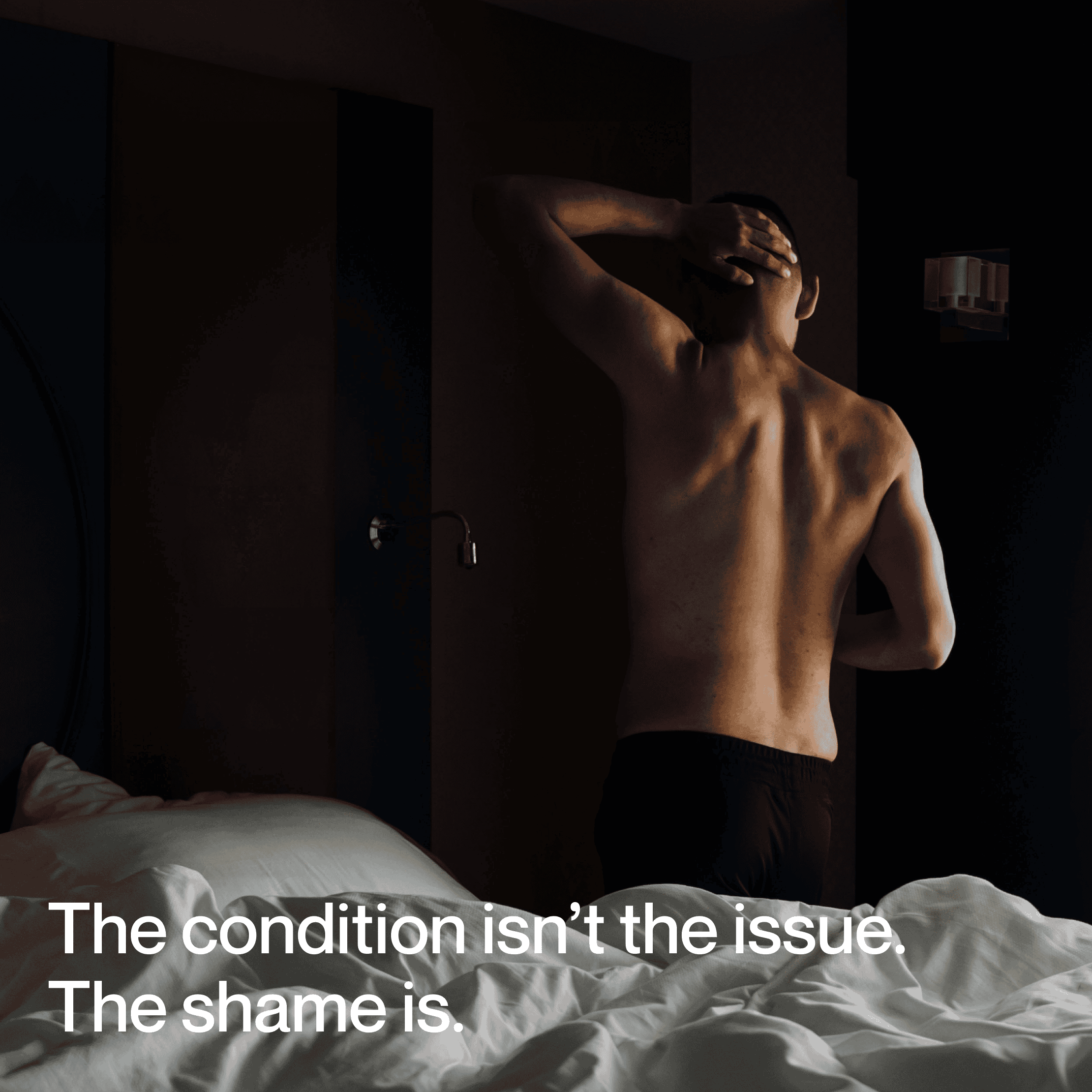
The insight that shaped the work: men dealing with ED aren’t primarily embarrassed about the condition itself. They’re embarrassed about what it might mean about them. The best creative for this category doesn’t focus on the problem. It focuses on the solution and the version of themselves that solution enables.
Copy That Doesn’t Flinch
We wrote copy that was direct without being clinical, confident without being dismissive of the emotional weight involved. Language that acknowledged the reality of the situation while immediately pivoting to what RexMD makes possible. No euphemism, no medical jargon, no humor that undercuts the message.
Creative That Stops the Scroll
In a category where most creative is either sterile or awkward, work that feels confident and visually distinctive stands out immediately. We developed ad creative that was bold enough to register in a feed without being sensational — design that communicated the brand’s confidence in its product.
What This Project Demonstrates
The RexMD engagement demonstrates one of the things Splash Creative does best: finding the tone that converts in categories where getting the tone wrong is catastrophic. Most categories have some margin for creative error. Men’s health advertising doesn’t. The window is narrow and the only way to find it is through real creative thinking — understanding the audience’s psychology before picking up a pen.
The same principle applies across DTC health, wellness, and any category where the purchase decision involves personal vulnerability.
Frequently Asked Questions
Does Splash Creative work with DTC health and wellness brands?
Yes — and it’s one of the categories where full-service creative work has the clearest impact. DTC health brands live or die on the quality of their creative and copy across every touchpoint. When the same team handles brand, web, email, and campaign creative, the message stays consistent and the tone doesn’t drift between channels.
How do you approach sensitive or stigmatized product categories?
With more research and less assumption. The biggest mistake in sensitive categories is projecting how you think the audience feels rather than understanding how they actually feel. We spend real time on audience psychology before any creative work begins.
If you’re building or scaling a DTC brand in a category where creative quality is the difference between growth and stagnation, let’s talk.