- The Core Services a Creative Studio Offers
- How a Creative Studio Works: The Process
- What Makes a Full-Service Studio Different
- What a Creative Studio Is Not
- Questions to Ask Before Hiring a Creative Studio
- What to Expect From the Relationship
- FAQs
- Start With a Clear Scope
A lot of businesses reach out to a creative studio without being entirely sure what they're buying. You know you need a logo, or a website, or maybe a full rebrand — but "creative studio" covers a wide range of capabilities depending on who you ask. Some studios focus purely on visual identity. Others handle strategy, web builds, and ongoing marketing. A few do all of it under one roof.
Knowing what a creative studio actually does — and how the process runs from brief to delivery — helps you decide whether it's the right fit and what to expect once you sign on.
The Core Services a Creative Studio Offers
Most full-service creative studios organize their work around a few interconnected disciplines, and they're rarely sold in isolation. The real advantage of a studio over a freelancer or a platform is that those disciplines talk to each other.
Brand Strategy and Visual Identity
This is where most studio engagements begin. Before anything gets designed, a studio needs to understand who you are, who you're competing with, and who you're trying to reach. Strategy work typically covers positioning, audience definition, messaging frameworks, and competitive analysis.
Visual identity follows from there — your logo, color palette, typography system, iconography, and brand guidelines. A brand guidelines document isn't just a style sheet. It's the rulebook that keeps every touchpoint looking and sounding like the same company, whether that's a billboard, a packaging label, or a social post.
At Splash Creative, this phase produces a complete identity system — not just a logo file — so the brand holds up across every medium you'll actually use.
Web Design and Development
Once the brand exists, it needs a home. Web design at a creative studio isn't template-picking. It's designing a site that reflects the brand, performs for the audience, and turns visitors into customers.
Full-service studios handle both design and build — wireframes, visual design, copy structure, and front-end development, often on platforms like Shopify for ecommerce clients. When the same studio that built your brand also builds your site, nothing gets lost in translation. The visual language is already defined.
Graphic Design
Graphic design covers the ongoing output a brand needs to stay visible: marketing materials, packaging, pitch decks, social templates, print collateral, trade show assets, and more. For many clients, this work never fully stops.
Studios handle it differently. Some scope graphic design per project. Others build retainer arrangements for clients who need consistent creative output over time.
Email Marketing
Email is one of the highest-return channels available to product and ecommerce brands, and it's also one of the most design-dependent. A creative studio that handles email typically covers template design, campaign strategy, list segmentation, automation flows, and platform setup.
Klaviyo is the platform of choice for most ecommerce email work. A studio that already knows your brand can build email templates that feel like natural extensions of your site — not afterthoughts.
How a Creative Studio Works: The Process
The process varies by studio, but most full-service engagements follow a recognizable arc. Knowing what to expect at each stage helps you prepare and avoids surprises mid-project.
Discovery and Briefing
Every serious studio starts with discovery. You bring your goals, constraints, existing assets, and competitive context. The studio asks questions — sometimes a lot of them. This isn't busywork. The quality of the brief directly shapes the quality of the work.
Some studios send a formal questionnaire. Others run a kickoff call or workshop. Either way, the output is a shared understanding of what success looks like before any design work begins.
Scoping and Proposal
After discovery, the studio scopes the project. Deliverables, timelines, revision rounds, and fees get defined in writing. Fixed-fee projects — where the scope is agreed upfront rather than billed by the hour — give clients a clear picture of what they're getting and what it costs.
This is also the right moment to ask hard questions. What's included in revisions? What happens if scope changes? Who owns the final files? A studio that scopes carefully is a studio that manages projects well.
Creative Development
This is the design phase. Depending on the project, it might open with mood boards or strategic frameworks, then move into initial concepts, then refinement rounds. Feedback loops are structured, not open-ended — you're reviewing specific concepts at specific stages, not watching a continuous stream of iterations.
Good studios present work with rationale. They explain why a direction was chosen, not just what it looks like. That context helps you give useful feedback rather than reacting on instinct.
Delivery and Handoff
At the end of a project, you receive final files, documentation, and everything else specified in the scope. For brand projects, that typically means source files in multiple formats, a brand guidelines PDF, and sometimes a usage guide. For web projects, it means a live site, access credentials, and often a walkthrough of how to manage it.
Most studios treat the handoff as the finish line. The better ones treat it as the start of an ongoing relationship.
What Makes a Full-Service Studio Different
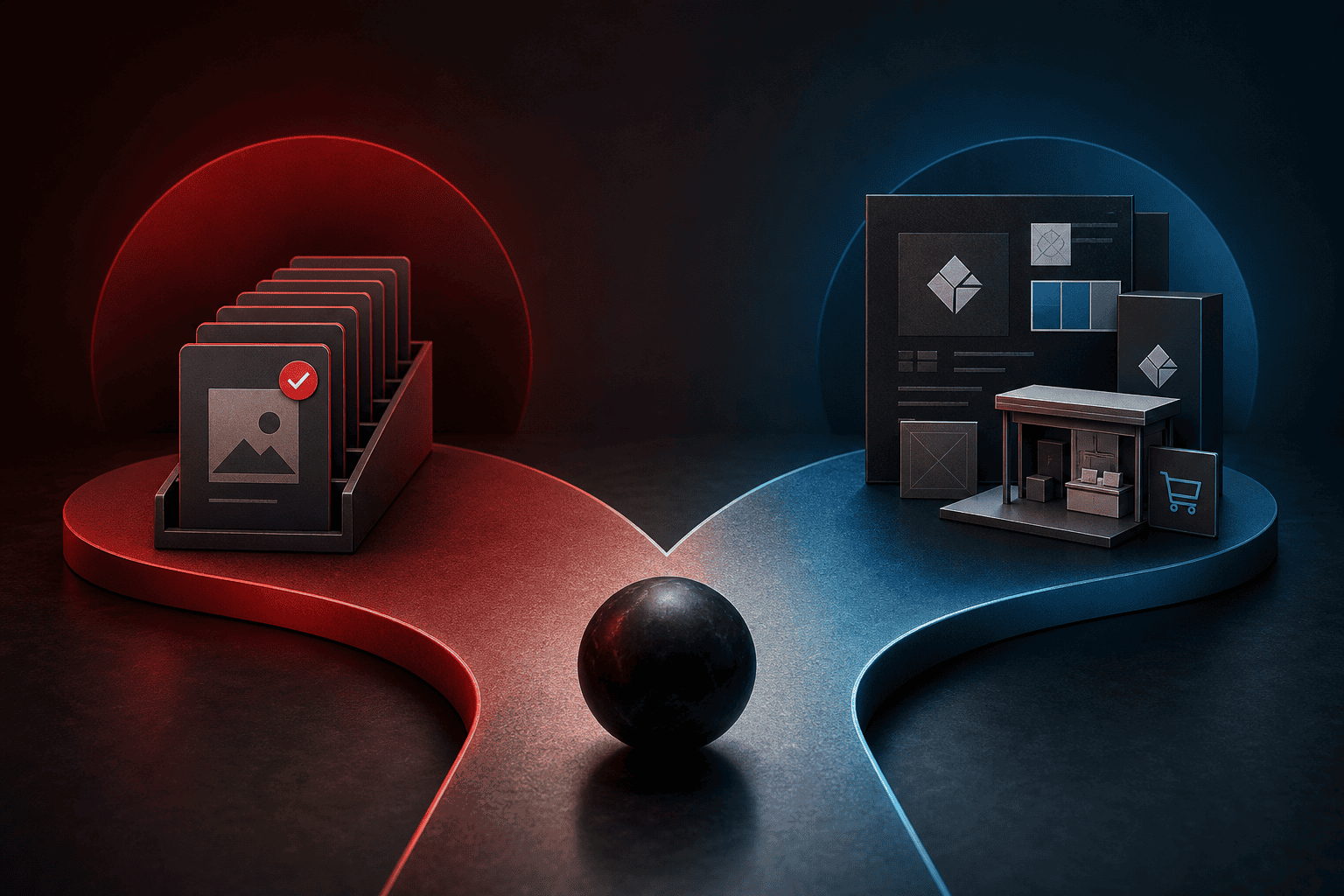
The alternative is assembling a team yourself: a freelance strategist, a separate identity designer, a web developer, and an email specialist who may never have seen your brand before. That works for some businesses. It's also a lot to coordinate.
A studio that handles strategy, identity, web, and email under one roof means the work is coherent by design. The person building your Shopify store is working from the same brand system the identity designer created. The email templates reflect the same visual language as your site. There's no translation layer, and no version drift.
There's also a cleaner accountability structure. One point of contact, one scope document, one relationship to manage — which matters when a project spans multiple disciplines and runs for several months.
What a Creative Studio Is Not
A creative studio isn't a content farm, a subscription design service, or an on-demand asset factory. Those services exist and serve a purpose, but they're built for volume and speed, not for brand-defining work that requires strategic thinking.
A studio is also not an advertising agency, a PR firm, or a media buyer. The work is focused on brand and design — not media placement or earned coverage. Some studios partner with agencies that handle those disciplines, but the core offering is creative.
If you need 50 social posts a week at low cost, a subscription design platform might be the right tool. If you're building a brand from scratch, relaunching after a pivot, or creating a site that needs to perform, a studio is the more appropriate choice.
Questions to Ask Before Hiring a Creative Studio
Before you sign a scope, a few things are worth clarifying with any studio you're considering.
How is the project scoped? Fixed-fee projects with a written scope protect both sides. Hourly billing without a cap can lead to unpredictable costs.
Who does the work? Some studios use a small senior team. Others route work through junior designers or offshore contractors. Ask who will actually be designing your brand.
What does the revision process look like? Unlimited revisions sounds appealing but usually signals a vague process. Defined revision rounds with clear feedback stages produce better work.
What do you own at the end? You should own the final files and all associated intellectual property. Confirm this is in the contract before you start.
Have they worked with businesses like yours? A studio with experience in your category — whether that's ecommerce, professional services, consumer goods, or something else — will ask better questions and make fewer wrong assumptions.
What to Expect From the Relationship
Working with a creative studio is collaborative. The best outcomes happen when clients come prepared, give specific feedback, and trust the process enough to let the studio do its job.
That doesn't mean handing over the keys and disappearing. It means being responsive at review stages, being honest when something isn't working, and staying open to directions you didn't anticipate. A good studio will push back when your instincts conflict with what the strategy calls for. That's part of what you're paying for.
Timelines depend on scope. A full brand identity project typically runs four to eight weeks. A Shopify build on top of that adds time. Email setup and automation can often run concurrently with web development. A studio that scopes carefully will give you a realistic timeline at the start — not an optimistic one that slips.
FAQs
What does a creative studio do that a freelancer can't?
A studio brings multiple disciplines together under one roof with a shared process and consistent quality standards. A freelancer typically specializes in one area. If your project spans strategy, identity, web, and email, a studio coordinates all of it without you managing separate relationships.
How long does a typical creative studio project take?
It depends on scope. A brand identity project usually takes four to eight weeks. Adding a web build extends the timeline. Studios that scope carefully will give you a realistic estimate before work begins.
Do I need to have a brief ready before approaching a creative studio?
You don't need a polished brief, but you should have a clear sense of your goals, your audience, and your constraints. A good studio will help you sharpen the brief during discovery. Coming in with nothing makes that process harder and slower.
What's the difference between a creative studio and a design agency?
The terms are often used interchangeably. In practice, "creative studio" tends to signal a smaller, more integrated team focused on brand and design. "Design agency" can mean anything from a one-person shop to a large firm. What matters more than the label is what they offer and how they work.
Who owns the work a creative studio produces?
In most professional engagements, the client owns the final deliverables and all associated intellectual property upon final payment. This should be stated explicitly in the contract. Ask before you sign.
What is a fixed-fee project and why does it matter?
A fixed-fee project means the price is agreed upfront based on a defined scope. You know what you're getting and what it costs before work begins — as opposed to hourly billing, where costs can grow as the project evolves.
How do I know if a creative studio is the right fit for my business?
Look at their portfolio, ask about their process, and pay attention to how they handle the initial conversation. A studio that asks good questions, scopes carefully, and communicates clearly is far more likely to produce work that actually serves your business.
Start With a Clear Scope
A creative studio handles the brand and design work that defines how your business looks, sounds, and shows up in the world. The best ones do it with a clear process, honest scoping, and work that holds up across every channel you use.
If you're building a brand, relaunching a site, or looking for a team that can handle identity, web, and email without losing coherence between them, Splash Creative is worth a conversation.