Table of Contents
- Why SEO Without Creative Strategy Falls Flat
- What a Creative Agency SEO Optimization Service Actually Includes
- The Problem With Hiring an SEO-Only Agency
- How Splash Creative Approaches SEO Differently
- What to Look for in an SEO Optimization Service in 2026
- FAQs
- Conclusion
Getting to page one is only half the battle. The other half is making sure the people who land on your site actually do something — fill out a form, book a call, buy your product. Most SEO optimization services obsess over the first half and ignore the second entirely.
That's the gap. And it costs businesses real money.
If you're a startup or growth-stage company evaluating SEO partners, this article breaks down what a strong SEO optimization service actually looks like, why creative execution matters just as much as keyword strategy, and what separates agencies that build traffic from agencies that build revenue.
Why SEO Without Creative Strategy Falls Flat
Rankings are a means to an end. The end is conversion.
When SEO gets treated as a purely technical discipline — keyword research, backlinks, meta tags — it tends to produce traffic that bounces. Pages rank, people visit, nothing happens. The brand feels generic. The copy is flat. The design doesn't build trust fast enough to matter.
Search engines in 2026 reward pages that satisfy intent, hold attention, and earn real engagement. That means your SEO and your creative work have to function as one system — not two separate workstreams handed off between vendors who barely talk to each other.
A great SEO optimization service doesn't just optimize for crawlers. It optimizes for people who are ready to buy.
What a Creative Agency SEO Optimization Service Actually Includes
Technical SEO and Site Architecture
This is the foundation. Before anything else, your site needs to be fast, crawlable, and structurally sound.
Core technical work includes:
- Site speed and Core Web Vitals optimization
- Clean URL structures and internal linking
- Mobile responsiveness across all devices
- Schema markup for rich results
- XML sitemaps and proper indexing setup
- Fixing crawl errors and broken links
None of this is glamorous. All of it matters. A site built on WordPress gives you a solid technical base — but only if it's configured correctly from day one.
On-Page Optimization That Reads Like a Human Wrote It
On-page SEO covers everything visible on the page itself: title tags, headers, meta descriptions, image alt text, internal links, and keyword placement.
The difference between on-page SEO done well and done poorly comes down to copywriting. Keyword-stuffed pages that feel robotic don't rank the way they used to. Pages that answer real questions, in clear language, with a strong point of view — those rank and convert. Every heading needs to earn its place. Every paragraph needs to move the reader forward.
Content That Earns Rankings and Drives Action
Content strategy is where most SEO programs either win or waste money.
Strong SEO content in 2026 means:
- Targeting keywords with real commercial or informational intent
- Writing for a specific reader, not a general audience
- Covering topics with enough depth to actually satisfy search intent
- Building topical authority across related subjects
- Connecting content to product pages and conversion points
Blog posts that rank but never link to anything useful are a missed opportunity. Every piece of content should have a job — whether that's capturing top-of-funnel awareness or nudging a bottom-of-funnel prospect to reach out.
Design and UX as SEO Signals
Google tracks behavior. If people land on your page and immediately leave, that's a signal. If they stay, scroll, click, and engage — that's a very different signal.
Good design directly affects SEO performance. A cluttered layout, slow-loading images, or a confusing navigation structure all push bounce rates up. A clean, fast, visually credible site keeps people on the page longer and guides them toward action.
This is why SEO and web design can't be treated as separate conversations. They're the same one.
The Problem With Hiring an SEO-Only Agency
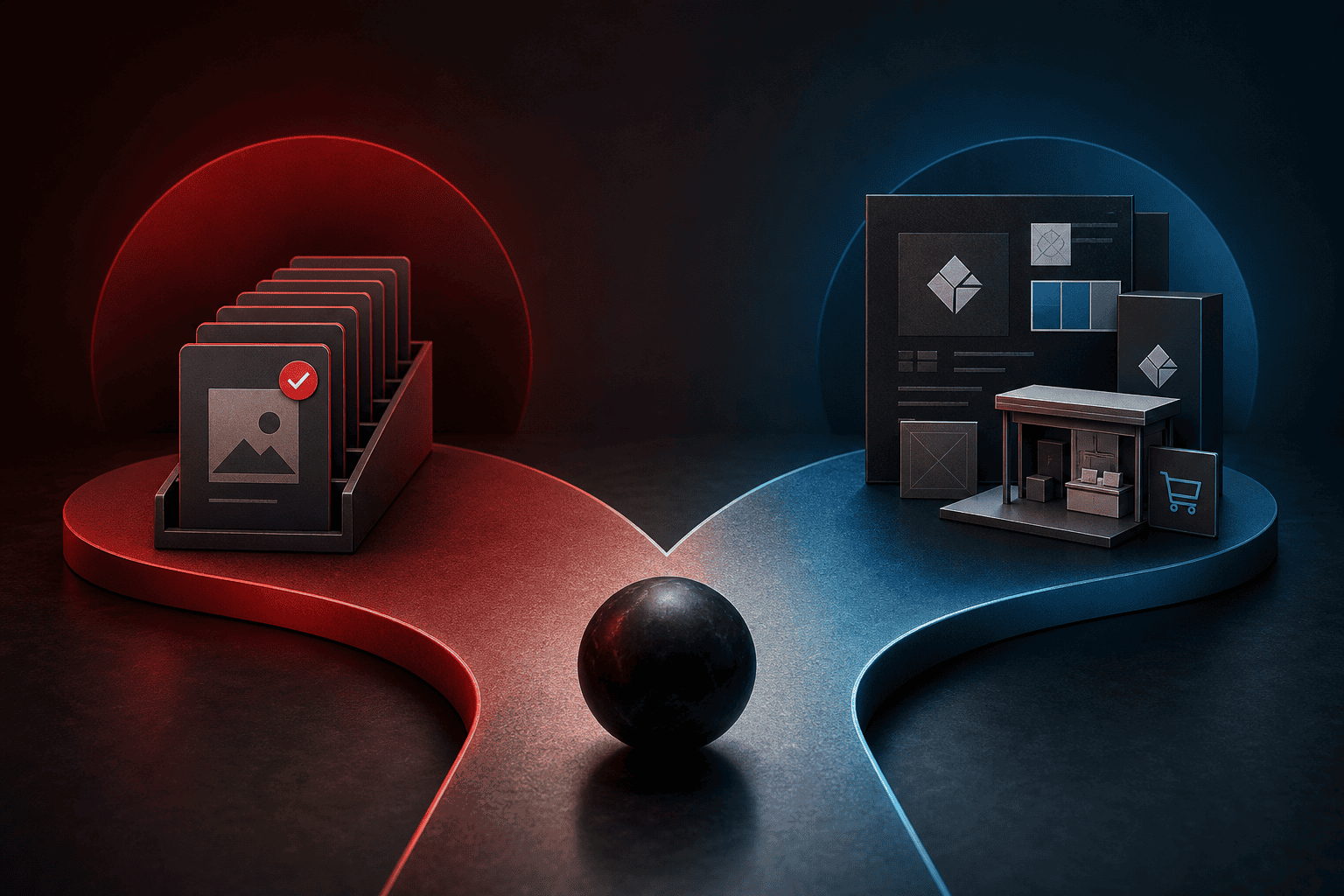
Most SEO agencies don't design. Most design agencies don't do SEO. Businesses caught in the middle end up managing two vendors who rarely coordinate — and paying for the friction that creates.
Here's what that looks like in practice:
- Your SEO agency recommends a new landing page. Your web designer builds it six weeks later with no input from the SEO team.
- Your content team writes blog posts. Your design team never touches them, so they look like afterthoughts.
- Your site gets a redesign. No one told the SEO agency, and half your rankings disappear overnight.
Vendor fragmentation kills momentum. It also kills accountability — when something goes wrong, everyone points at someone else.
Subscription-based design services like Design Pickle or ManyPixels can handle graphic assets, but they don't offer the strategic depth or SEO integration that a growth-stage business actually needs. Premium agencies like Digital Silk or Lounge Lizard can do both — but often at price points that don't fit a Series A startup's budget.
The mid-market gap is real. And it's exactly where a full-service creative studio earns its value.
How Splash Creative Approaches SEO Differently
At Splash Creative, SEO isn't a bolt-on service. It's built into how we design and build from the start.
When we work with a startup or growth-stage business, the same team handling your brand strategy, web design, and copywriting also handles your SEO. That means:
- Your site is built for speed and structure from day one
- Your copy is written to rank and to convert — not one or the other
- Your content strategy connects to your actual brand voice, not a generic keyword list
- Your design reinforces credibility and keeps visitors engaged long enough to act
We've applied this approach across industries — from insurance (CoverWhale) to healthcare (RexMD) to consumer brands (Nerve). Branding, web design, copywriting, and SEO, all executed under one roof with no handoff chaos.
When strategy, design, and SEO come from the same team, the output is tighter, faster, and more consistent. That's not a pitch — it's just how integrated work performs.
What to Look for in an SEO Optimization Service in 2026
Evaluating SEO partners? Here's a practical checklist worth running through:
Strategic alignment
- Do they ask about your business goals before talking about keywords?
- Can they explain how SEO connects to revenue, not just traffic?
Creative capability
- Can they write copy that actually sounds like your brand?
- Do they have designers who understand conversion?
Technical competence
- Do they audit your existing site before making recommendations?
- Can they handle WordPress builds or work within your current stack?
Accountability
- Is there one point of contact, or will you be managing multiple teams?
- Do they track rankings, traffic, and conversions — or just rankings?
Portfolio evidence
- Have they done this for businesses like yours?
- Can they show work across design, content, and SEO together?
An SEO optimization service that checks all of these boxes is genuinely rare. Most agencies are built around one discipline. The ones that can integrate creative and SEO without losing either are the ones worth talking to.
FAQs
What is an SEO optimization service?
An SEO optimization service improves your website's visibility in search engine results. It typically includes technical SEO, on-page optimization, content strategy, and link building — all aimed at driving more qualified traffic to your site.
How long does SEO take to show results?
Most SEO programs take three to six months to show meaningful movement in rankings and organic traffic. Competitive markets or sites with significant technical issues may take longer. Consistent execution over time is what produces lasting results.
Why does design matter for SEO?
Search engines measure how people behave on your site. If visitors leave quickly because the page is slow, confusing, or visually weak, that signals poor quality. Strong design improves engagement metrics, which supports better rankings over time.
What's the difference between SEO and creative marketing?
SEO focuses on organic search visibility. Creative marketing is broader — it includes brand strategy, content, design, and paid channels. The most effective programs combine both, so your brand looks credible and your content ranks for the right terms.
Can a creative agency handle technical SEO?
Yes, if they have the right team. A full-service creative studio with web development capabilities can handle technical SEO as part of building and maintaining your site. The advantage is that design, development, and SEO decisions get made together rather than in isolation.
How do I know if my current SEO is working?
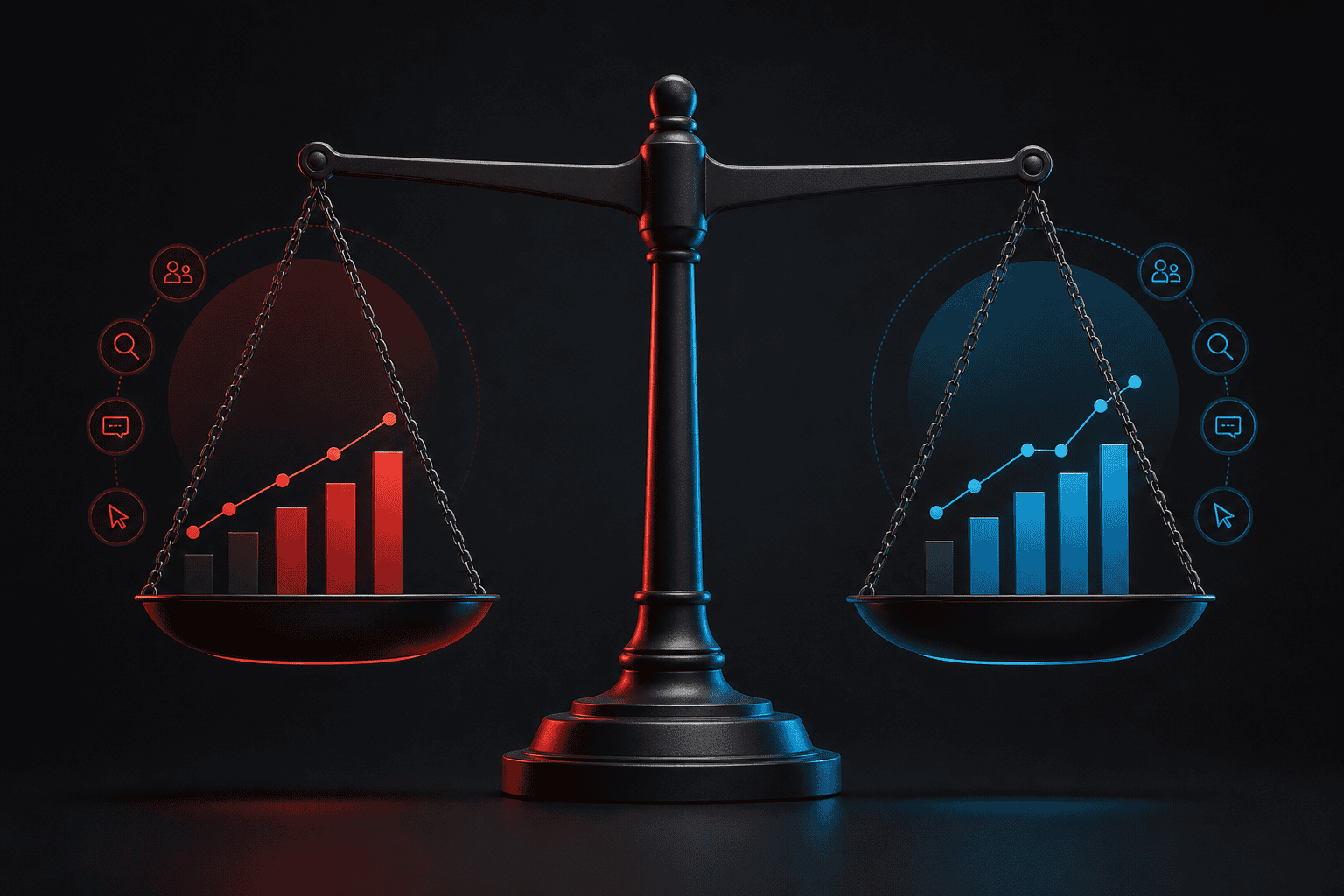
Track organic traffic, keyword rankings, and conversions from organic search in Google Analytics 4 and Search Console. If traffic is growing but conversions aren't, the problem is usually on-page — copy, design, or user experience.
What should I budget for an SEO optimization service?
Budgets vary widely. Project-based SEO audits and site optimizations can start in the $5K range. Ongoing monthly retainers for growth-stage businesses typically run higher depending on scope, content volume, and how competitive your market is. The right number depends on your goals and what it actually takes to win in your space.
Conclusion
SEO that ranks but doesn't convert is just expensive traffic. The fix isn't more keywords — it's better integration between strategy, design, and content.
If you're a startup or growing business ready to build search visibility that actually drives revenue, the approach matters as much as the tactics. One team, one strategy, no vendor chaos.
Ready to build something that ranks and converts? Let's talk about your project at splashcreative.com.