Table of Contents
- Why Brand Consistency Matters More Than Ever
- What Brand Consistency Actually Means
- Digital vs. Print: The Same Brand, Different Surfaces
- The Real Cost of Inconsistent Branding
- How to Build a Consistent Brand System
- Brand Consistency for Startups and Growing Businesses
- FAQs
- Final Thoughts
Why Brand Consistency Matters More Than Ever {#why-brand-consistency-matters}
Your brand shows up everywhere — your website, business cards, Instagram ads, pitch deck, packaging, email signature. Every single one is a touchpoint. And every touchpoint either builds trust or quietly chips away at it.
In 2026, attention is short and audiences move fast. When your brand looks different across channels, something feels off — even if people can't put their finger on why. That friction adds up faster than most businesses realize.
Consistency isn't about being rigid. It's about being recognizable. It's the difference between a brand people remember and one they scroll right past.
What Brand Consistency Actually Means {#what-brand-consistency-means}
Brand consistency means your visual identity, voice, and messaging stay coherent across every surface your brand touches — including:
- Your logo and how it's used
- Your color palette
- Your typography
- Your tone of voice in copy
- Your photography and illustration style
- Your layout and design principles
It doesn't mean every piece of content looks identical. It means every piece feels like it came from the same place.
Think of it like a person's personality. They dress differently for a job interview than a weekend brunch, but they're still recognizably themselves. Your brand works the same way.
Digital vs. Print: The Same Brand, Different Surfaces {#digital-vs-print}
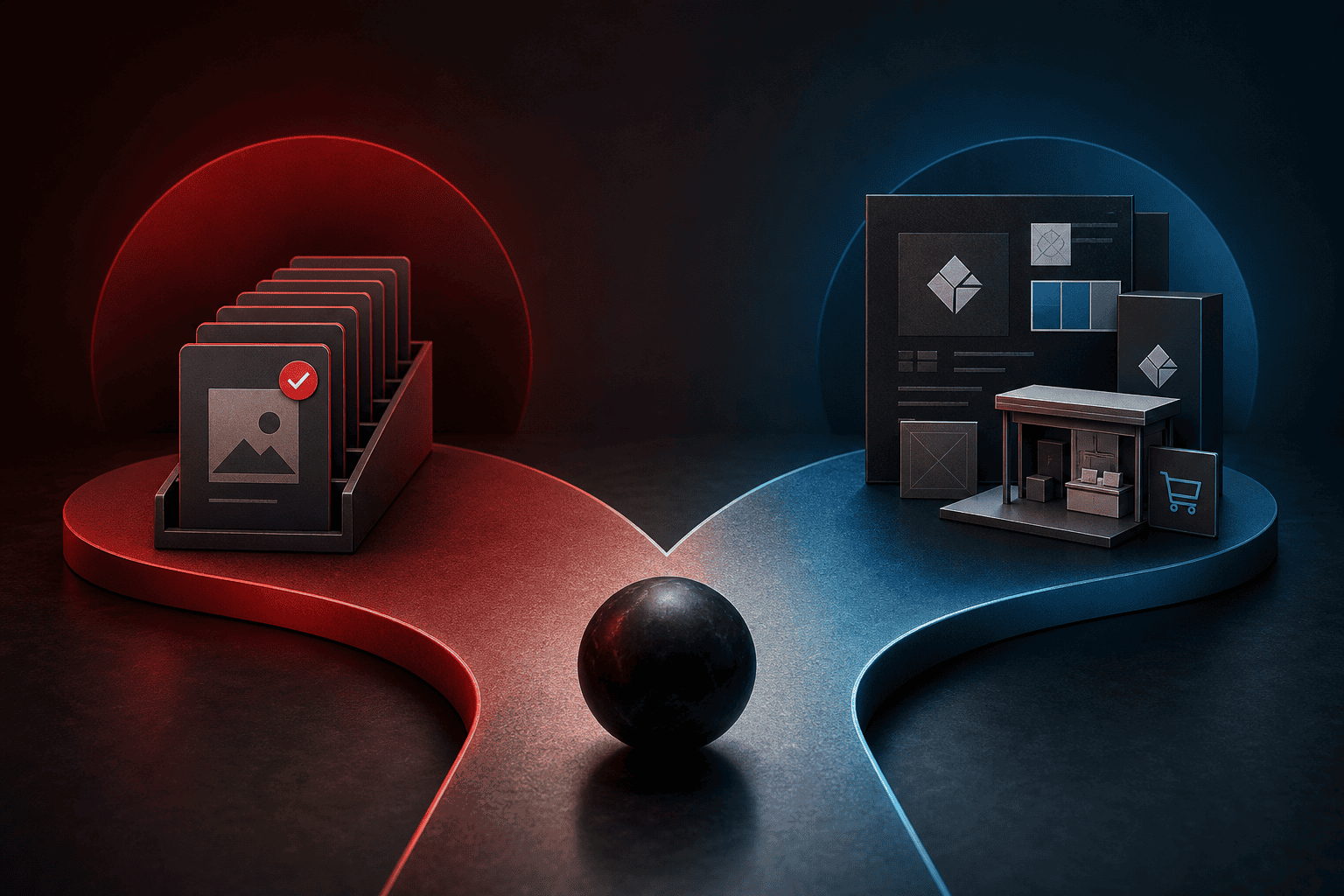
Digital and print are fundamentally different mediums. Screen resolution, color rendering, physical texture, viewing distance, context of use — all of it varies. A brand built with only one in mind will look off in the other.
Getting both right requires intentional decisions from the start, not patches applied after the fact.
Color and Typography Across Mediums {#color-and-typography}
Colors behave differently on screen (RGB) versus in print (CMYK). That vibrant electric blue on your website might print as a flat, muted tone on a brochure if your color system wasn't built to account for both. It's a common problem when design work is split across freelancers who aren't coordinating.
Typography runs into the same issues. Web-safe fonts and print fonts don't always overlap. A typeface that looks sharp on a retina display may not hold up at small print sizes — or may require a separate license for physical use.
A proper brand system defines both digital and print specifications so nothing gets lost in translation.
Logo Usage and Visual Hierarchy {#logo-usage}
Your logo needs to work at multiple sizes and on multiple backgrounds. A detailed mark might look great on a large banner but fall apart as a favicon or app icon. Print materials like business cards and packaging require high-resolution vector files, while digital assets need optimized formats for fast loading.
Visual hierarchy — how you guide the eye through a layout — also needs to adapt. A landing page and a printed flyer have different reading patterns. Good brand design accounts for both without abandoning the core visual language.
Tone of Voice and Messaging {#tone-of-voice}
Brand consistency isn't just visual. Your copy needs to sound like you, whether it's a paid social ad, a product brochure, or the headline on your homepage.
Startups often end up with fragmented messaging because different people wrote different pieces at different times. The website says one thing, the sales deck says another, and the print materials are running on language from two years ago. Customers notice the disconnect even when they can't name it.
A clear messaging framework — built alongside your visual identity — keeps everything aligned.
The Real Cost of Inconsistent Branding {#cost-of-inconsistency}
Inconsistent branding has a direct business cost. Here's where it shows up:
Lower trust. When a brand looks different across touchpoints, it feels less established. Prospects — especially in B2B and healthcare — make quick judgments about professionalism based on visual quality alone.
Wasted spend. You pay for print materials that don't match your website. You run ads with visuals that don't align with your landing page. Every misalignment reduces conversion efficiency.
Longer sales cycles. Inconsistency creates confusion. Confused prospects take longer to decide — or they don't decide at all.
Brand dilution over time. Every off-brand piece that goes out makes it harder to build something recognizable. You end up starting over more often than you should.
For startups and growing businesses, these costs hit harder. Resources are tighter, and first impressions carry more weight.
How to Build a Consistent Brand System {#build-consistent-brand-system}
Start With a Brand Guide {#brand-guide}
A brand guide is the foundation. It documents your logo usage rules, color palette with both RGB and CMYK values, typography hierarchy, photography style, and voice guidelines. Anyone producing content — internally or externally — works from this document.
Without one, you're relying on memory and good intentions. Neither scales.
Design for Both Mediums From the Start {#design-for-both}
When you build a brand identity, digital and print should be considered together — not as an afterthought. That means selecting typefaces with both screen and print licenses, building a color system that translates across mediums, and creating logo variations for different contexts.
It also means thinking through the full range of materials upfront: website, social templates, business cards, signage, presentations, packaging. A brand system built for all of these from day one saves real time and money down the road.
Keep One Team Accountable {#one-team}
This is where most businesses run into trouble. They hire one freelancer for the logo, another for the website, someone in-house for social, and a print shop for collateral. Nobody owns the whole picture.
When one team handles strategy, design, copy, and production together, the brand stays tight. There's no handoff chaos. Decisions get made with the full context of the brand in mind — not just one piece of it.
Brand Consistency for Startups and Growing Businesses {#startups-and-growing-businesses}
Early-stage companies often deprioritize brand consistency because there are so many other fires to put out. That's understandable. But the brands that build consistency early have a real advantage.
By the time you're raising a Series A or scaling your sales motion, your brand is already doing work for you. Prospects who've seen your ads, your website, and your deck all feel the same level of polish. That cohesion signals maturity and credibility — which matters when you're asking someone to trust you with their money or their business.
This challenge shows up across industries. A pediatric practice with a polished website and outdated print materials sends mixed signals to parents making trust-based decisions. A fintech startup with sharp digital ads and a generic pitch deck leaves real opportunity on the table.
At Splash Creative, we build brand systems designed to hold up across every surface — from the first logo file to the final web launch. Our work with CoverWhale, RexMD, and Nerve spans branding, web design, copywriting, and graphic design, because brand consistency requires all of those pieces working together.
FAQs {#faqs}
What is brand consistency and why does it matter?
Brand consistency means your visual identity, messaging, and tone stay coherent across every channel and format. It matters because it builds recognition and trust. When your brand looks and sounds the same everywhere, people remember it — and feel confident in it.
How do digital and print branding differ?
Digital branding uses RGB color, screen-optimized typography, and interactive formats. Print uses CMYK color, high-resolution files, and physical materials. A strong brand system accounts for both so nothing looks off when it moves between mediums.
What is included in a brand guide?
A brand guide typically covers logo usage rules, color palette specifications for both digital and print, typography hierarchy, photography and illustration style guidelines, and voice and messaging principles.
How often should a brand be updated for consistency?
There's no fixed schedule, but brands should be audited whenever you launch a new product, enter a new market, or notice visual drift across your materials. Most growing businesses benefit from a consistency review every one to two years.
Can a small business maintain brand consistency without a large team?
Absolutely. The key is having a clear brand guide and a reliable creative partner who understands the full picture. You don't need a large in-house team — you need one accountable team that handles all the pieces.
What is the biggest mistake businesses make with brand consistency?
Splitting creative work across too many vendors with no single owner. When one freelancer does the logo, another builds the website, and a third handles print, nobody is responsible for the whole brand. The result is visual drift that compounds over time.
How does brand consistency affect conversion rates?
Consistent branding builds familiarity and trust, which directly supports conversion. When your ad, landing page, and follow-up email all feel like the same brand, prospects move through the funnel with more confidence. Inconsistency introduces friction that slows decisions.
Final Thoughts {#final-thoughts}
Brand consistency isn't a design detail. It's a business decision. The brands that win in 2026 show up the same way everywhere — whether someone finds them on Google, picks up a brochure, or sees an ad on their phone.
Building that consistency takes a system, not just good intentions. It takes a brand guide, design that accounts for both digital and print from the start, and a team that owns the whole picture.
If your brand has grown faster than your visual identity — or you're starting fresh and want to build it right the first time — we can help. See our work and get in touch at splashcreative.com.