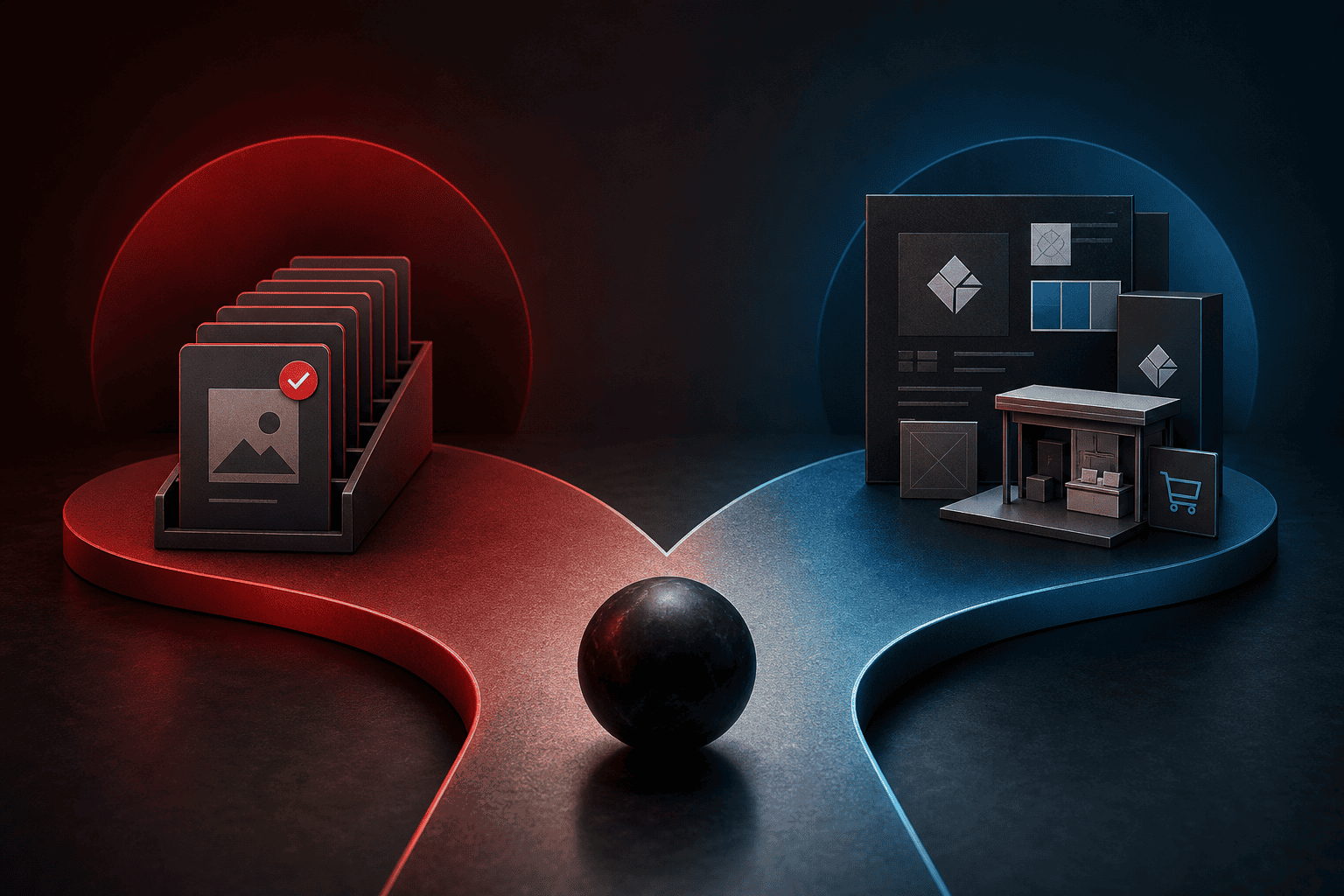
Why a Restaurant Group Needs a Different Kind of Branding
A single restaurant location and a restaurant group are fundamentally different branding problems. A standalone concept needs one voice, one visual language, one story. A group needs all of that, multiplied, and then structured so the pieces relate to each other without collapsing into sameness or fracturing into chaos.
When you are launching a new restaurant group in Miami, you are making decisions that will compound. Every brand architecture choice you make in month one will shape how easily you can open a third concept in year three. Getting those decisions right early is substantially cheaper and faster than unraveling them later.
Brand Architecture: The Foundational Decision
The first question a group-level identity system has to answer is not “what does our logo look like.” It is “how do our brands relate to each other at all?”
There are three common structures, each with real trade-offs:
- Branded house: A strong parent brand with sub-concepts that live clearly under it. Think of a hotel group where each property carries the parent name in the wordmark. The advantage is concentrated brand equity. The risk is that one underperforming location drags the whole portfolio.
- House of brands: Fully independent concepts with no visible parent connection. Each restaurant is its own universe. This maximizes concept flexibility and insulates concepts from each other, but it requires full creative and marketing investment in every launch independently.
- Hybrid (endorsed brand): Concepts have their own identity but are clearly connected to the parent, often through a subtle lockup, shared design language, or a “by [Group Name]” credit. This is the most common structure for ambitious Miami hospitality groups because it builds group-level credibility while letting each concept breathe.
The right answer depends on your concept mix, your investor relations, your social media strategy, and how much differentiation you actually need between locations. A branding agency working at the group level should be helping you stress-test these options before a single logo is sketched.
Parent Brand vs. Concept Brands: Consistency vs. Differentiation
Once you have chosen a structure, you face a continuous tension: how much should your concepts look and feel like each other?
Pure consistency builds recognition and reduces per-launch design costs. But in Miami’s saturated hospitality market, sameness is a liability. A Wynwood taqueria and a Brickell omakase counter should not feel like siblings who dress identically. Guests, press, and influencers need each concept to feel specific and intentional.
The discipline is building a shared grammar rather than a shared look. This might mean the group’s concepts share a typography philosophy (modern, high-contrast, never nostalgic) but use entirely different typefaces. Or they share an approach to photography direction but shoot in completely different color palettes. The group-level identity system defines the rules of the grammar so that future concepts can be designed quickly and still feel coherent within the portfolio.
For operators expanding their restaurant brand in Miami, this kind of documented design system is what separates groups that scale gracefully from those that look like a collection of unrelated experiments.
Miami-Specific Considerations
Miami is not a generic major market. The city’s hospitality environment has specific pressures that shape identity decisions in ways that agencies without local fluency can miss.
Multilingual Audiences
Miami’s restaurant-going public is meaningfully bilingual. Spanish-language social media, Spanish-speaking front-of-house staff, and Spanish-language press coverage are not edge cases. They are core channels. A group identity system should account for how brand names, taglines, and signage copy read in both English and Spanish, and should define a policy for how the brand appears in each context. This is not just translation. It is brand voice consistency across languages.
Luxury vs. Neighborhood Positioning
Miami operates at extremes. Brickell, the Design District, and South Beach carry price tolerances and guest expectations that are globally competitive. Meanwhile, Little Havana, Hialeah, and Allapattah support deeply local, community-rooted concepts. A restaurant group launching across multiple positioning tiers needs brand architecture that can hold both without either concept feeling diminished.
Social Media as Primary Discovery
In most markets, a new restaurant gets discovered through press, word of mouth, and Google. In Miami, Instagram and TikTok are often the first channel. This means environmental design, plating, signage, and even staff uniforms need to be photographed before they are finalized. Your identity system is not just what you hang on the wall. It is what shows up in 10,000 guest-generated posts over the first year of operation. A Miami branding agency with hospitality experience will build this into the design process from the start.
What a Group-Level Identity System Actually Includes
A single-location rebrand and a group-level identity system are different scopes of work. Here is what a thorough group engagement typically covers:
- Master brand strategy: Naming (or name review), brand positioning, audience definition, competitive landscape, brand architecture recommendation
- Parent brand identity: Logo system, color palette, typography, iconography, brand voice and tone guidelines
- Concept brand identities: Individual visual systems for each concept, designed within the parent brand grammar
- Environmental and print direction: Menu design, signage hierarchy, packaging, staff uniforms — all governed by the identity system
- Digital presence: Website design and development for the group and for individual concepts. For South Florida groups needing a web presence that matches their brand, see our Miami web design work.
- Brand guidelines: A document that governs every future application and makes onboarding new vendors straightforward
What This Work Costs
A group-level identity system is a larger scope than a single-concept rebrand. Realistic ranges:
- Single concept full rebrand (brand strategy, identity, guidelines): $15,000 to $35,000 at a senior-led boutique
- Single concept brand plus website: $35,000 to $65,000
- Two to three concept group system (parent brand plus individual concept identities): $45,000 to $90,000
- Full group system with website: $65,000 to $120,000
The investment reflects the architecture decisions that get made early and compound over every subsequent launch. Operators who underspend on brand architecture at the group level typically spend more correcting it after the second or third concept opens. For a full cost breakdown by tier and scope, see how much branding costs in 2026.
How to Start
If you are building a restaurant group in Miami and need a brand system designed to scale, start a conversation here. David Herskowitz leads every engagement personally — from the architecture decision in week one to the guidelines handoff at launch.