- What Is Brand Identity?
- What Is Brand Messaging?
- Why the Confusion Happens
- How They Work Together
- A Practical Example
- When to Prioritize One Over the Other
- What a Branding Agency Actually Does
- The Bottom Line
- FAQs
Most founders use "brand messaging" and "brand identity" interchangeably. That's a problem, because they do very different jobs — and confusing them leads to brands that look polished but say nothing, or say the right things in completely the wrong visual language.
If you're preparing for a launch, a rebrand, or a fundraise, getting clear on this distinction is one of the most practical things you can do before spending a dollar on design or copy.
What Is Brand Identity?
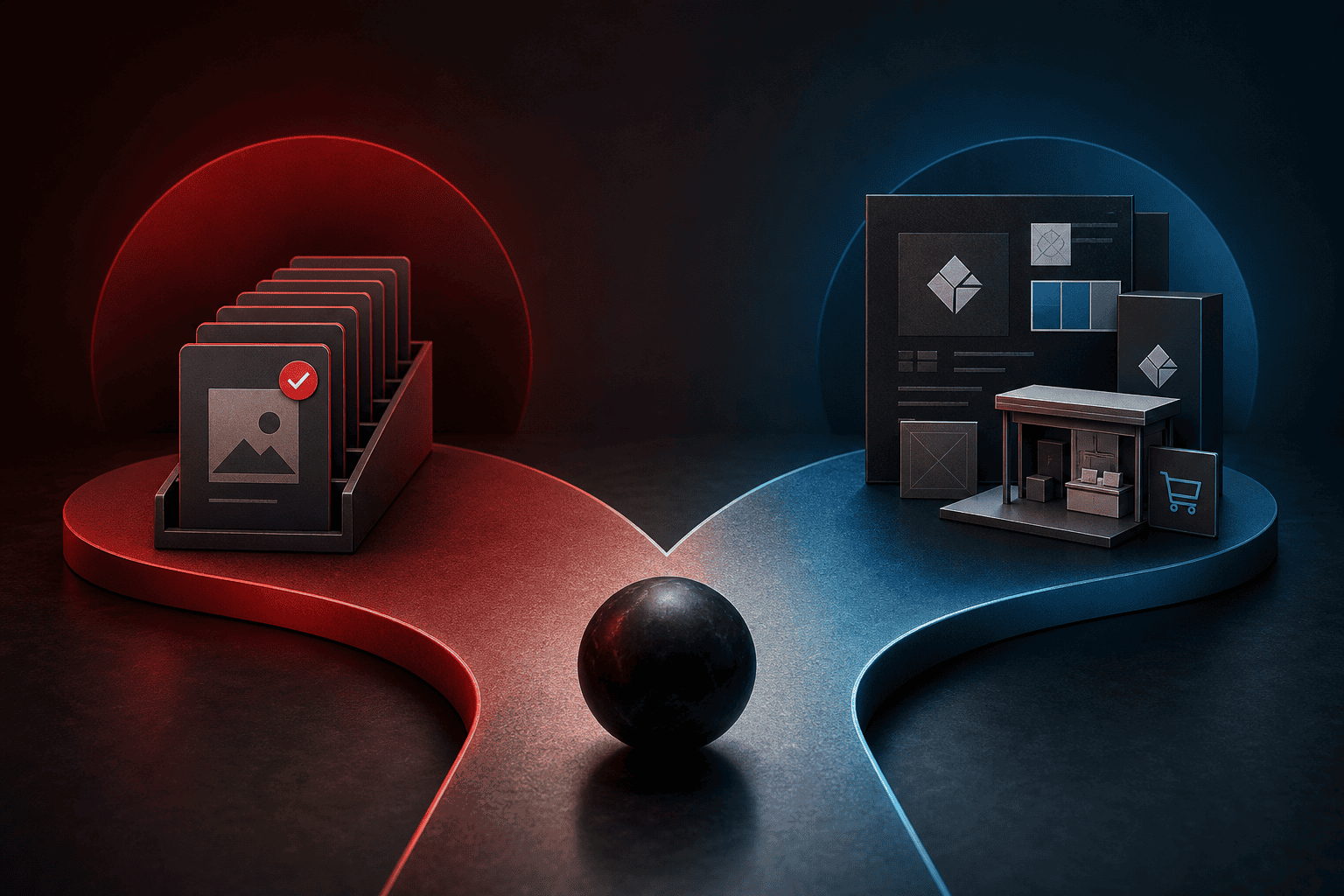
Brand identity is everything your audience sees. It's the visual system that makes your brand recognizable across every surface.
The core elements include:
- Logo — the primary mark and its variations
- Color palette — primary, secondary, and neutral tones with specific hex or Pantone values
- Typography — the typefaces you use and the rules for how they're applied
- Imagery and photography style — the visual tone of photos, illustrations, and graphics
- Brand guidelines — the document that codifies all of the above so every designer, vendor, and platform applies them consistently
Brand identity answers the question: What does this brand look like?
Done well, it creates instant recognition. A customer scrolling through Instagram, opening a Klaviyo email, or landing on your Shopify store should feel the same brand presence at every touchpoint — without reading a single word.
What Is Brand Messaging?
Brand messaging is everything your audience reads or hears. It's the verbal system that communicates who you are, what you stand for, and why someone should choose you over every alternative.
The core elements include:
- Brand positioning — where you sit in the market relative to competitors
- Value proposition — the specific outcome you deliver for a specific audience
- Tagline or brand line — a short, memorable phrase that captures your positioning
- Tone of voice — the personality and register you use across all written communication
- Messaging pillars — the 3 to 5 themes that anchor every piece of content you create
- Audience-specific messaging — how you speak differently to different segments
Brand messaging answers the question: What does this brand say, and why does it matter?
Without strong messaging, your identity is just decoration. A beautiful logo sitting above vague copy doesn't convert. Messaging is what makes someone feel like a brand was built specifically for them.
Why the Confusion Happens
The two get conflated because they're typically developed at the same time and delivered together. A branding agency usually produces both as part of a single engagement — which is the right approach. But that doesn't make them the same thing.
Part of the confusion also comes from how loosely the word "brand" gets used. When a founder says "we need to work on our brand," they might mean a new logo, a clearer value proposition, a better website, or all three. Unpacking which problem you're actually solving is the first job of any serious brand strategy process.
How They Work Together
Think of brand identity and brand messaging as two sides of the same coin. One without the other creates a gap your audience will notice, even if they can't name it.
A brand with strong identity but weak messaging looks credible and then loses people. Customers admire the design and leave because nothing on the page told them why it matters to them.
A brand with strong messaging but weak identity sounds smart but doesn't stick. The words land in the moment, but nothing visual reinforces the memory.
The brands that build real traction get both right — and make sure they're aligned. Your color palette should feel like an extension of your tone of voice. Your typography should carry the same personality as your tagline. Your Shopify product pages should feel as considered as your brand guidelines document.
That alignment is what a branding agency builds. Not a logo file and a messaging deck delivered separately, but a system where every element reinforces every other element.
A Practical Example
Take a health and wellness startup preparing for a Series A. They've been running with a logo made in Canva and a pitch deck that describes what they do but not why anyone should care.
The brand identity work produces: a refined logo, a clean color system built around trust and energy, a type pairing that signals both scientific credibility and consumer accessibility, and a photography direction centered on real people rather than stock imagery.
The brand messaging work produces: a positioning statement that carves out a specific lane in a crowded market, a value proposition that speaks directly to the target customer's actual frustration, messaging pillars that guide everything from Instagram captions to investor decks, and a tone of voice guide that keeps the brand consistent whether a founder or a contractor is writing.
The result isn't just a better-looking brand. It's a brand that can walk into a fundraise, a retail partnership conversation, or a paid acquisition campaign with a consistent, credible presence.
This is the kind of work Splash Creative handles for founder-led brands — brand strategy and identity developed together, scoped in writing before kickoff, with no hourly billing and no surprises.
When to Prioritize One Over the Other
Most brands need both. But there are moments when one takes priority.
Prioritize messaging first if:
- You're not sure who your audience is or what makes you different
- Your sales conversations go well but your website doesn't convert
- You're entering a crowded category where positioning is everything
- You're preparing a fundraise and need a clear, defensible narrative
Prioritize identity first if:
- Your messaging is clear but your visual execution is inconsistent across channels
- You're launching a physical product where packaging and shelf presence matter
- You've outgrown a DIY logo and need a system that scales
- You're expanding into new markets and need brand materials that hold up
In practice, the most efficient approach is to develop both together. Messaging informs identity. The positioning you land on shapes the visual direction. Trying to design a logo before you know what the brand stands for is one of the most common — and expensive — mistakes early-stage founders make.
What a Branding Agency Actually Does
When people ask what a branding agency is, the honest answer is: it depends on the agency.
Some handle only visual identity. Some handle only messaging and strategy. A smaller number handle both — and fewer still connect that brand work to the downstream execution on your website, email program, and marketing assets.
That distinction matters. Brand strategy without implementation is just a document. A strong identity without a Shopify build that reflects it is a missed opportunity. Messaging pillars that never make it into your Klaviyo flows are wasted thinking.
A full-service branding partner takes the strategy through to execution — brand guidelines that actually get used, a website that reflects the identity and converts, and email flows that carry the brand voice into every customer touchpoint.
The Bottom Line
Brand messaging and brand identity are different disciplines serving the same goal: making your brand clear, credible, and worth choosing.
Messaging defines what you say. Identity defines how it looks. Strategy aligns them. Execution puts them into the world.
If you're building a brand in 2026 and you're not sure which problem to solve first, the answer is usually: both, together, with someone who can see the whole picture.
FAQs
What is the difference between brand messaging and brand identity?
Brand messaging is the verbal system — your positioning, value proposition, tone of voice, and messaging pillars. Brand identity is the visual system — your logo, color palette, typography, and brand guidelines. Both are essential, and they should be developed in alignment with each other.
Which comes first, brand messaging or brand identity?
Ideally, messaging strategy comes first because it informs the visual direction. Your positioning, audience, and tone of voice should shape decisions about color, typography, and logo design. In practice, many branding agencies develop both simultaneously as part of a single integrated engagement.
Can I have a strong brand identity without brand messaging?
You can have a visually polished brand without strong messaging, but it will underperform. Customers will admire the design and then leave because nothing on the page gave them a reason to stay, buy, or trust you. Both elements are necessary for a brand to do real business work.
What does a branding agency actually deliver?
It depends on the agency. Some deliver only visual identity — logo, colors, typography, and brand guidelines. Others include messaging strategy, positioning, and tone of voice. Full-service studios also handle downstream execution like website design, Shopify builds, and email marketing setup. The scope varies widely, so it's worth clarifying what's included before you engage.
How do I know if my brand messaging is working?
Strong messaging shows up in conversion rates, sales conversations, and how clearly your team can explain what you do. If your website doesn't convert, your pitch gets confused reactions, or different team members describe the company differently, your messaging needs work.
How much does brand strategy and identity work cost in 2026?
Pricing varies by scope and agency. A logo and identity system for an early-stage startup starts around $15,000 at a studio like Splash Creative. A full brand strategy, identity, and website typically runs $40,000 to $75,000 and above, depending on complexity.
Do I need to redo my brand identity and messaging at the same time?
Not always. If your visual identity is strong but your messaging is unclear, you can update messaging without a full visual rebrand. If your messaging is solid but your identity is inconsistent or outdated, a visual refresh may be all you need. A brand strategy session can help you identify which gap is actually costing you the most.
If you're ready to build a brand where the messaging and identity actually work together, let's talk about your project.