- What a Design Agency Actually Does for a Startup
- The Design Problem Most Founders Hit
- What to Look for When Evaluating Agencies
- What Startup Branding Actually Costs in 2026
- What the Engagement Process Looks Like
- Questions Worth Asking Before You Sign
- A Note on Scope Creep
- FAQs
You've got a product worth building around. Maybe you're heading into a raise, a launch, or a rebrand. You know the brand needs to look and feel like the real thing — not a Canva template someone threw together over a weekend.
So you start thinking about hiring a design agency. And then the questions pile up fast. What do they actually do? What does it cost? What's the difference between a studio and a subscription service? How do you know if an agency is the right fit for where you are right now?
Here's a direct answer to all of it.
What a Design Agency Actually Does for a Startup
A design agency isn't just a logo shop. The right one functions as your entire creative department — handling strategy, visual identity, web, and marketing assets without you needing to hire, manage, or coordinate a rotating cast of freelancers.
For a startup, that typically means:
- Brand strategy and positioning — figuring out how your brand sits in the market, who it speaks to, and what it stands for before a single pixel gets designed
- Visual identity — logo, color palette, typography, and a brand guidelines document your whole team can actually use
- Web design and development — a site built to convert, not just one that looks good in a screenshot
- Marketing and campaign assets — pitch decks, social graphics, print collateral, and whatever else you need to go to market
- Email marketing — Klaviyo flows, automation sequences, and campaign design that drives repeat revenue
What separates a strong agency from a generic one is whether they connect those outputs to a real business result. A logo isn't just a logo — it's the first thing an investor sees on your deck. A Shopify build isn't just a website — it's your primary revenue channel.
The Design Problem Most Founders Hit
Most founders at the seed-to-Series A stage run into the same wall. They've outgrown Squarespace and Canva, but they're not ready to build an in-house creative team. So they piece things together with freelancers.
The result is usually a brand that looks different on every channel. The Instagram graphics don't match the website. The pitch deck uses a different font than the product. The email templates feel like they came from a different company entirely.
It's not a talent problem. It's a coordination problem. Freelancers work in silos. Nobody owns the whole brand.
That's the gap a full-service agency fills. One team, one visual system, one point of contact.
What to Look for When Evaluating Agencies
Not every agency is built for startups. Some are structured for enterprise clients with 12-month retainers and dedicated account teams. Others are subscription design services that turn assets around quickly but don't touch strategy, web builds, or email.
Here's what actually matters when you're comparing options:
Fixed-Fee vs. Hourly vs. Subscription
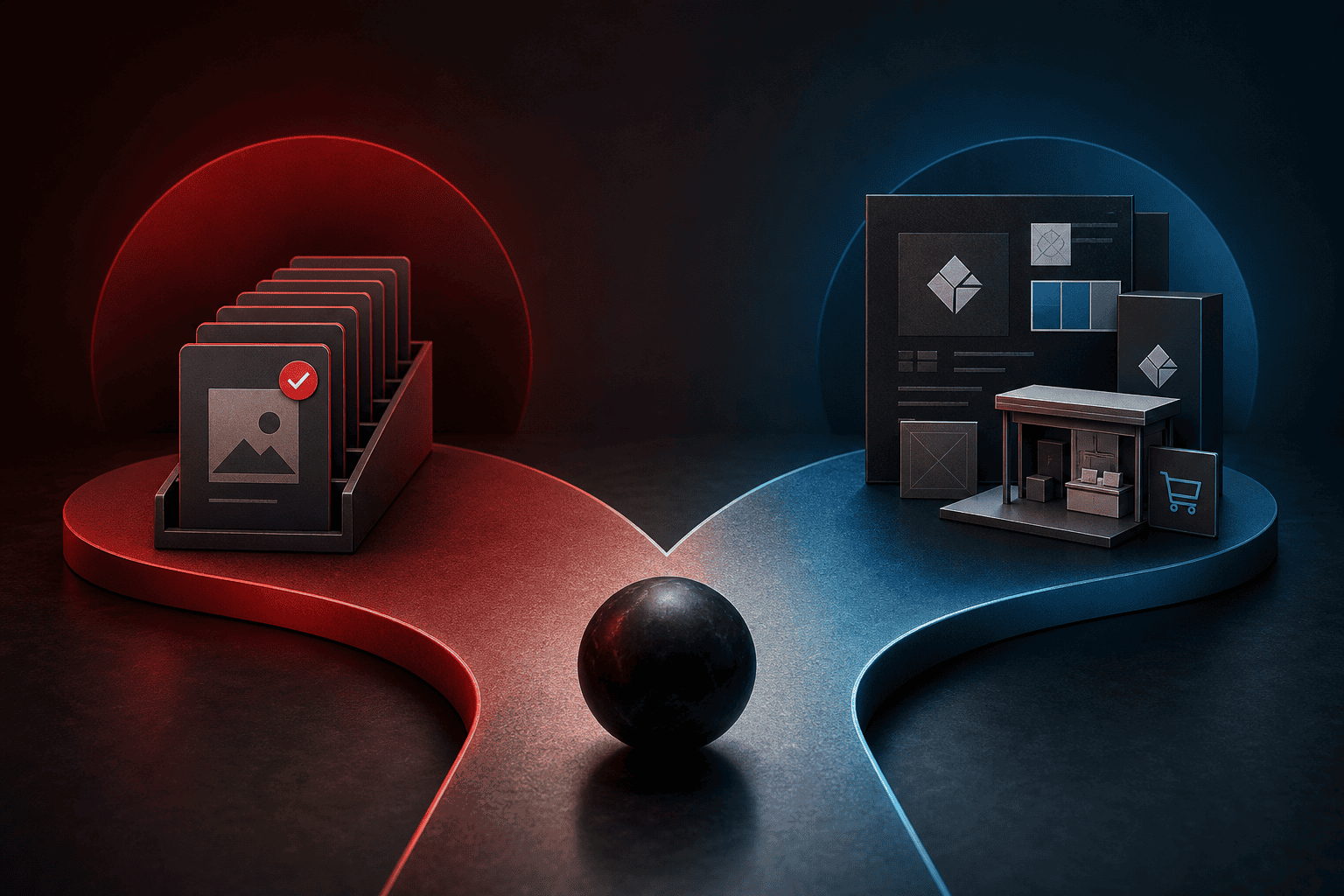
Subscription services like ManyPixels and Penji start around $499 to $500 per month. They're useful for production tasks, but they don't offer brand strategy, Shopify builds, or Klaviyo integration. You get design output — not a strategic partner.
Hourly billing is unpredictable. A project scoped at 40 hours can quietly become 80. For a startup managing runway, that's a real risk.
Fixed-fee projects scoped in writing before kickoff give you cost certainty. You know exactly what you're getting and what it costs before anything starts. No surprises.
Strategy Before Execution
If an agency jumps straight to logo concepts without asking about your positioning, your competitors, or your audience, that's a warning sign. Visual decisions made without strategic context often need to be redone six months later.
The right agency asks hard questions first. What's the business goal? Who's the customer? What does success look like after launch?
Full-Stack Coverage
Startups move fast. Hiring one agency for brand identity, a separate developer for your Shopify store, and a third for Klaviyo email setup creates handoff problems — and brand consistency suffers every time a new team touches the work.
A studio that covers brand strategy through Shopify build through Klaviyo automation in a single engagement saves time, reduces friction, and produces a more consistent result across every channel.
What Startup Branding Actually Costs in 2026
Here's a realistic breakdown:
| Scope | Typical Range |
|---|---|
| Logo and identity system only | Starting at $15,000 |
| Brand strategy + identity + website | $40,000 to $75,000+ |
| Ongoing retainer (continuous creative support) | Varies by scope |
| Subscription design service (no strategy, no web) | $499 to $500/month |
| Enterprise agency (Superside-tier) | $10,000 to $100,000+/month |
The $499/month subscription model sounds appealing until you realize it doesn't include strategy, doesn't build your Shopify store, and doesn't set up your Klaviyo flows. You'll still need to hire for all of that separately.
The $15,000 to $75,000 range is where most serious seed-to-Series A startups land when working with a full-service studio. It's a meaningful investment — and it's also where you get a complete brand system you can use across every channel from day one.
What the Engagement Process Looks Like
Every agency runs differently, but a well-structured startup branding engagement typically moves through these phases:
Kickoff and discovery. This is where strategy happens. A good agency runs a workshop — in person or remote — to understand your market, your audience, and your goals. For NYC and tri-state area clients, in-person workshops are often available.
Brand strategy. Positioning, messaging framework, audience definition. This document drives every design decision that follows.
Visual identity. Logo, color, typography, and brand guidelines. The guidelines document is what keeps your brand consistent whether it's your team, a printer, or a social media manager using it.
Web design and development. Custom site, Shopify build, or landing page — depending on what the business needs. This phase includes conversion optimization, not just visual design.
Email and marketing assets. Klaviyo setup, automation flows, campaign templates, pitch decks, social graphics. Everything you need to go to market.
Post-launch support. Analytics setup, site updates, and ongoing retainer options for brands that need continuous creative support after launch.
Questions Worth Asking Before You Sign
Before committing to any agency, ask these:
- Is the project scoped in writing before kickoff?
- Is pricing fixed-fee or hourly?
- Do you handle brand strategy, web development, and email in a single engagement — or will I need to hire separately for each?
- Can you show work in my category — CPG, health and wellness, DTC, or professional services?
- Who actually does the work — senior designers or junior staff?
The answers will tell you quickly whether you're talking to a strategic partner or a production service.
A Note on Scope Creep
Scope creep is the single biggest source of budget overruns in agency work. It happens when deliverables aren't defined clearly at the start, and new requests get added without a formal change order.
The fix is straightforward: get the scope in writing before anything begins. Every deliverable, every revision round, every milestone. If an agency can't give you that, it's a preview of how the engagement will go.
At Splash Creative, every project is scoped in writing before kickoff. One scope document, one invoice. No hourly billing, no open-ended retainers, no surprises.
FAQs
What does a design agency do for a startup?
A full-service design agency handles brand strategy, visual identity, web design, and marketing assets. For startups, that typically means a logo and brand guidelines, a website or Shopify build, and marketing materials like pitch decks and email campaigns.
How much does a design agency cost for a startup in 2026?
A logo and identity system starts around $15,000 at a full-service studio. A complete brand strategy, identity, and website runs $40,000 to $75,000 and above. Subscription design services start around $499 per month but don't include strategy, web development, or email marketing.
What's the difference between a design agency and a subscription design service?
Subscription services like ManyPixels and Penji produce design assets quickly at a low monthly cost, but they don't offer brand strategy, Shopify builds, or Klaviyo integration. A full-service agency handles strategy and execution together, producing a complete brand system rather than individual assets.
When should a startup hire a design agency?
Usually before a major launch, rebrand, or fundraise. If your brand looks inconsistent across channels, or you're still relying on DIY tools, those are clear signals it's time to bring in a professional team.
What should I look for in a design agency as a startup?
Fixed-fee pricing, a defined scope document before kickoff, and full-stack coverage across brand, web, and email. Ask for case studies in your category and confirm who does the actual work.
How long does a startup branding project take?
Timelines vary by scope, but a full brand strategy, identity, and website typically runs eight to sixteen weeks — depending on complexity and how quickly your team can turn around feedback and approvals.
Do I need to be in New York to work with a NYC design agency?
No. Many full-service studios work with clients remotely. In-person kickoff workshops are available for local clients, but the full engagement can run remotely for founders anywhere.
Your brand is one of the few things that compounds over time. A strong identity built on a clear strategy makes every other marketing dollar work harder. If you're at the stage where the brand needs to match the ambition of the business, let's talk about your project.